

Pump Depth Setting in a Water Well

There are two main types of well pumps used in home water wells. Each operates quite differently and the pump depth for each system reflects this. Determining the proper depth setting for a submersible well pump is one parameter that is used to determine the correct pump size.
Submersible Pumps
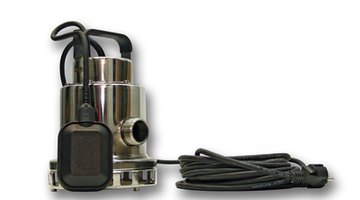
The American Ground Water Trust asserts that about of 60 percent of home wells in the U.S. use submersible pumps. These pumps are long cylinders attached to a water delivery pipe that may be set hundreds of feet below the water level in a well. Most submersible pumps are set 20 feet from the bottom of the well but are sometimes set higher if the standing water height is near the surface. The depth of the well can be determined with a well driller's log or by tying a heavy weight to a string and lowering it until it hits the bottom. The distance to water from ground level can also be determined using this method and noting the water line on the string.
Shallow Well Jet Pumps
According to the American Ground Water Trust, about 32 percent of U.S. homes with wells use shallow well jet pumps. In this system, the well pump is generally not in the well but instead close to the wall in the basement or a utility room. Shallow well jet pumps are not effective at depths greater than 25 feet and use more electricity than submersible pumps, but can be used in narrow-diameter wells. The jet pumps pressurized water into a discharge pipe coming up from the well, creating a vacuum and causing water to be drawn from the well.
Deep Well Jet Pump
Deep well jet pumps account for 8 percent of wells in U.S. homes. They are similar to shallow well jet pumps but the ejector is installed in the well and the pump can pull water up from depths of up to 75 feet. Convertible pumps can be used for either shallow or deep well applications.
Important Consideration
In submersible wells, the pump setting depth does not generally determine how well a pump performs. The water pumping level (depth to water), or the level of standing water in the well when the pump is operating, is the primary factor influencing performance; the distance of the pump below the water pumping level does not matter in relation to gallons and pressure of water. To determine the water pumping level add the total vertical feet from the ground level to the highest service outlet and the total feet from ground level to pump depth.
References
Writer Bio
Angela Ryczkowski is a professional writer who has served as a greenhouse manager and certified wildland firefighter. She holds a Bachelor of Arts in urban and regional studies.
Photo Credits
- Italian water pump. Isolated on white. image by diter from Fotolia.com
More Articles

