How to Read an Eye Test

Your eye doctor may perform a variety of tests when examining your eyes. However, you may not really understand what these tests are and how to read the eye test results. It is important that you know and understand the results of your eye tests. Ask your eye doctor to explain your eye test results to you.

Instructions

    • 1

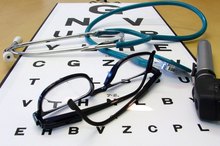
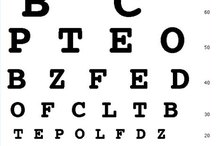
      Ask your doctor about your visual acuity. Your doctor will ask you to read the letters on a chart that you can see. The result of this test is noted in fractions like 20/20 or 20/50. If your visual acuity is 20/20, then this means the smallest letter you can see is at a test distance of 20 feet. Many people think 20/20 is perfect vision, but some people have 20/18 or 20/15 test results which are better than 20/20. If your result is 20/40, this means the smallest letter you can read at 20 feet could be ready by a person with perfect vision if they were 40 feet away. Most states require at least a 20/40 acuity for you to get a driver's license. If your test result is 20/200 this means the smallest size letter you can see is 20 feet away, but a person with perfect vision could see it at 200 feet away. You are considered "legally blind" if your visual acuity with corrective lenses is 20/200 or worse.

    • 2

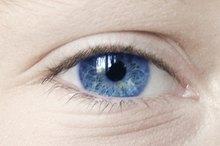
      Ask your doctor what your PERRLA rating is. This stands for "Pupils Equal Round Reactive to Light and Accommodation." This is how your pupils (the dark circle in the center of your eye) constrict or dilate in reaction to light and dark, and how they react when looking at an object in close proximity. The normal change in the size of an adult's pupil is from 2 to 4 mm in diameter in bright light, to 4 to 8 mm in the dark. The pupils typically dilate and constrict to the same degree, and are equal in size.

    • 3

      Ask your doctor about your diopter rating. This is the degree your eye can focus. The power of a lens with a length of 1 meter (39 inches) is equal to 1 diopter. A 2-diopter lens is equal to 1/2 meter, a 3-diopter lens is 1/3 meter, and so on. Magnification gets stronger as the focal length gets shorter, so the higher the diopter correction, the more magnification you need.

      The human eye has the a diopter capacity of 40. The eye of a young person can typically adjust an additional 20 diopters. But as this person ages, diopters typically decline. At the age of 25 the eye can adjust to about 10 diopters; and by the age of 50, this same person may only be able to adjust to 1 diopter. When this happens, the person has presbyopia (where close-up vision is blurred making it difficult to read), and needs reading glasses. The level of magnification in your reading glasses is called diopter strength. A lower magnification is found in reading glasses with a diopter strength of +0.75 or +1.00. Reading glasses sold in drug stores usually start with +1.50.

    • 4

      Ask your doctor if your peripheral vision is adequate. This is what you can see from side to side without moving your head. Your doctor will test this by raising one or two fingers to the left or right of your eyes and have you state how many fingers you see.

    • 5

      Ask your doctor about your glaucoma test results. An instrument called a tonometer is used to measure your IOP (intraocular pressure, or pressure within your eye). Normal IOP should be below 21 mm Hg (millimeters of mercury). If it is higher than 30 mm Hg, your risk of glaucoma damage is 40 times higher than someone with an IOP of 15 mm Hg or lower. If this is the case, your doctor may prescribe eye drops to lower the pressure in your eye.

    • 6

      Ask your doctor if you have any cataracts, a clouding of the lens of the eye that is located behind the iris (colored part of your eye) and your pupil. Cataracts may grow as you age, making it harder to see. If your doctor thinks that it is warranted, surgery will be performed to remove the cataract; the clouded lens will be removed and in most cases replaced with a clear, plastic intraocular lens (IOL). Cataract surgery is the most frequently performed surgery in the U.S. It is a very successful surgery as nine out of 10 people who have cataract surgery end up with vision between 20/20 and 20/40.

Related Searches:

References

Resources

You May Also Like

  • How Do I Read My Eye Exam Results?

    It's easy to be confused after an eye exam when your doctor hands you a prescription. It might contain words with which...

  • How to Perform an Eye Exam at Home

    Left untreated vision problems could lead to major vision loss and blindness. Although you should schedule regular examinations with an optimotrist, performing...

  • How to Test Eye Dominance

    You have a preferred eye from which the brain processes visual information, much like how you are right handed or left handed....

  • How to Read Letters During an Eye Exam

    Our eyes are among the most important parts of the body. Specialists recommend that we schedule an eye exam annually for adults...

  • How to Administer a Snellen Eye Test

    Position the patient 20 feet away from the Snellen eye chart. Ask the patient to cover one eye with an index card....

  • What Do O.D. & O.S. Stand for on an Eye Exam?

    Medicine and law have roots in ancient Rome and use many Latin terms and abbreviations. In ophthalmology, the branch of medicine treating...

  • How to Read a CBC Test Result

    A CBC test result report is comprised of a number of different items that can be reported on your blood. It's easier...

  • How to Test Using the Conficker Eye Chart

    Conficker is basically a computer worm that can damage your Microsoft Windows operating system. The Conficker Eye Chart is a simple way...

  • How to Understand the Eye Test

    When you undergo an eye exam your ophthalmologist or optometrist will perform an eye exam to test your vision and look for...

  • How to Interpret Viral Load Test Results

    A viral load test is performed on someone who has tested positive for the human immunodeficiency virus (HIV). The results show how...

  • How to Read Thyroid Blood Test Results

    The thyroid is a very complicated gland. It is responsible for producing hormones that direct our metabolism. As a result, symptoms of...

  • How do I Determine Eye Accommodation?

    Accommodation refers to the ability of eye muscles to contract and change the shape of the lens. There are a few tests...

  • How to Read DNA Test Genealogy

    Genealogical DNA tests will tell you how your DNA compares with other individuals who have taken the same tests. Females take a...

  • How to Pass a Driver's License Eye Test

    In order to obtain any type of driver's license, you must be able to prove that you are able to see adequately...

  • How to Buy a Wide-Angle Lens

    A wide angle lens will lend a whole new dimension to your photography (or videography if you mount the lens on a...

  • How to Test Eye Muscles

    Eyes are among the most complex structures in the human body. Along with the lens, fluid, retina and nerves that actually transmit...

  • Canine Eye Testing

    Genetics, injuries and diseases cause dog eye conditions that require testing. Some disorders result in blindness, pain or the rupturing of the...

  • How to Get Free Eye Exams

    Eye exams can be critical to detecting vision problems before they get worse. Unfortunately, not all health insurance plans provide for eye...

Related Ads

Featured