
Mascot Tryout Ideas
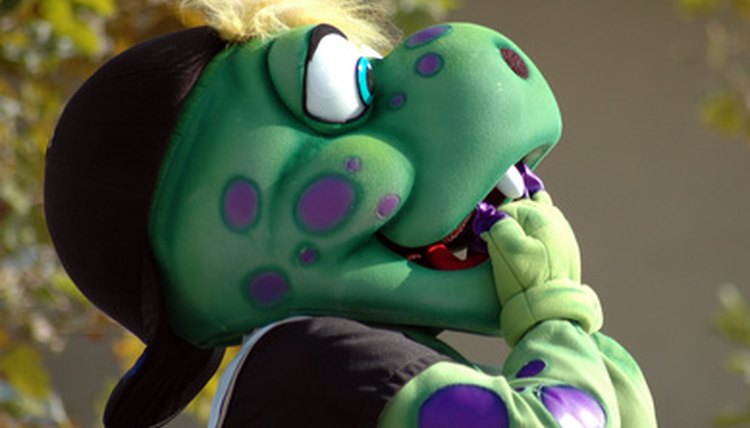
Auditioning for a mascot position requires preparation and training. Each audition is different, but many allow some time for you to present a skit. Your skit shows the judges that you can interact well with the audience and keep people entertained. Don't forget the guidelines to the audition process because you don't want your skit going over the time limit or being inappropriate. Also, the requirements will let you know if you should perform your skit in a mascot costume or not. You can rent a costume from a costume shop. If you do not need to perform in a costume, wear an outfit that displays your school spirit.
Magic Hat
Make an oversized magic hat from cardboard. Purchase or rent a cape and magic wand. On a large piece of poster board, write your archrival's name. On the back, write "Losers." Now, you will show your audience the other team's name. Make sure to give them a thumbs-down and really play it up. Roll it up and place it in the magic hat. Dance around the hat being as energetic as you can and getting the audience involved. Pull out the sign and show the audience the other side of the paper with "Losers" written on it. For music, consider using "Do You Believe in Magic" or "Dance Magic Dance." You can choose more than one song for the skit.
Ready to Rumble
On poster board, write "Go Team" in large letters and in your team's colors for the audience to read. You can make the cards say something else if you prefer, but keep the letters large enough to read. Use balloons and a broomstick to make dumbbells. You also will need a shower cap and either a basketball or football depending on the audition. Set up the props at different spots, making sure that you really use the space. Start out with the song "Let's Get Ready to Rumble" as you work out with the dumbbells. Then put on the shower cap to "Splish, Splash I Was Taking a Bath." Next, play around with the ball to "This is How We Do It." Finally, grab the poster board and get the audience into it. Adding stunts and exaggerated hand gestures will make the skit more entertaining to watch. Do not simply go through the motion.
Playing Cupid
If your audition is near Valentine's Day, set up a table and two chairs to look like an upscale restaurant where a guy would take a girl on a first date. You also will need to make a bow and arrow or you could use a Nerf gun. Add wings and you are Cupid. Aim your bow and arrow at the crowd and shoot an arrow at a guy and girl who are together and have them sit at the table. Try moving the chairs closer together and making them hold hands. Don't forget to include the audience.
References
Writer Bio
Meredith Burgio began writing professionally in 2010. She has written for "VOX" magazine, "RELEVANT Magazine" and "Jefferson City Magazine." Burgio has a Bachelor of Journalism from the University of Missouri-Columbia.