
Items you will need
Wax worms
3-to-5 gallon container
20-gauge wire mesh screen
Gerber mixed-grain baby cereal
Honey
Glycerin
Waxed paper
Duct tape
Warnings
Exercise extreme caution when you open the jar or you may find yourself with a housewide infestation.
Tips
For additional escape prevention, a piece of muslin or cheesecloth can be placed beneath the screen prior to taping it down.
Wax worm colonies thrive at room temperature or slightly warmer conditions.
To make a simple worm food, mix 7 cups of dry dog food with 1 cup of water. Wait 5 minutes for the food to soften slightly, then add 1 to 2 cups of honey to the mix. Let stand for 24 hours before using.
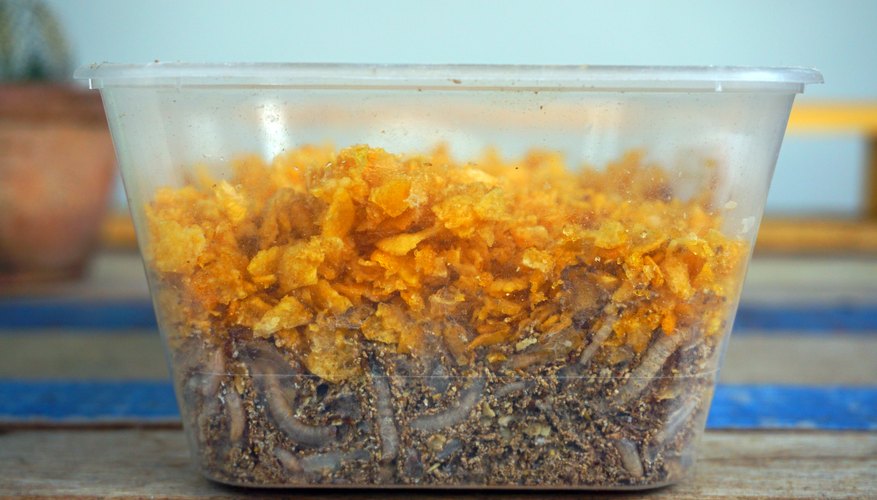
Wax worms are a popular source of protein, fat and calcium for amphibian and reptile pets. They are also a common choice of live bait for fishermen. The worms can be raised easily in your home and will provide a source of worms to meet your needs all year long. To raise wax worms, simply follow the steps in the guidelines below.
Find a small set of starter worms from the local pet store or bait shop. Begin with 24 to 36 worms. If you know anyone who keeps bees, check with them as well. Wax worm larvae wreak havoc on established hives and beekeepers are more than happy to get rid of them.
Set up a holding container. Wash a 3-to-5 gallon bucket, can or jar and allow it to air dry. Make sure you choose a container made from glass, metal or hard plastic as the wax worms are able to gnaw their way through softer materials such as wood or pliable plastic. Cover the opening of the container with mesh screening, 20-gauge or smaller.
Prepare the worm food. Combine one box of Gerber mixed-grain baby cereal with 1/3 cup honey and 1/3 cup glycerin. Stir the ingredients together until the cereal is moist. Add water if necessary, 1 tbsp. at a time. Sprinkle approximately 1/2 of this mixture on the bottom of the big container you've chosen. Store the extra in the refrigerator in a sealed container.
Add the wax worms and a few sheets of slightly wadded-up waxed paper. Cover the opening of the jar and secure the screen by connecting it to the jar with duct tape.
Observe the colony. Every 4 to 5 weeks, add more food. In addition to the cereal/honey mixture, wax worms eat leafy greens and slices of apples or oranges. If your colony is successful, the worms will begin to spin cocoons. Moths will break out of their cocoons in approximately 2 weeks.
Remove the sheets of waxed paper when the adult moths die and place them individually into newly prepared jars. The waxed paper will contain the eggs, which hatch into new worms.
Resources
Tips
- For additional escape prevention, a piece of muslin or cheesecloth can be placed beneath the screen prior to taping it down. Wax worm colonies thrive at room temperature or slightly warmer conditions. To make a simple worm food, mix 7 cups of dry dog food with 1 cup of water. Wait 5 minutes for the food to soften slightly, then add 1 to 2 cups of honey to the mix. Let stand for 24 hours before using.
Warnings
- Exercise extreme caution when you open the jar or you may find yourself with a housewide infestation.
Writer Bio
Lisa Parris is a writer and former features editor of "The Caldwell County News." Her work has also appeared in the "Journal of Comparative Parasitology," "The Monterey County Herald" and "The Richmond Daily News." In 2012, Parris was honored with awards from the Missouri Press Association for best feature story, best feature series and best humor series.