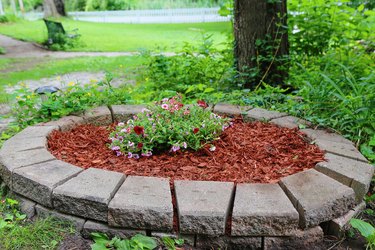
Every gardener can use an extra weapon to help in the battle to control weeds, which is why many people install weed barrier cloth in landscaped areas. Weed barrier cloth, also called landscape fabric, is one tool you can use for planting beds, patios and walkways. The meshlike material comes in rolls and is easy to cut to fit the area. Install the weed barrier cloth correctly to maximize its effectiveness.
Clean It Up
Video of the Day
Landscape fabric helps prevent new weed growth, but you don't want to roll it out over existing weeds and debris. You can help the fabric work better by clearing the area first. That includes removing any existing weeds, grass and debris that could damage the fabric.
Video of the Day
Remove any weeds in the area. Dig up the entire weed plant, including the roots, so it doesn't grow back. Remove the weed plants from the area. You can also use herbicide to kill weeds and grass in the area prior to placing the landscape fabric. If you're planting in the area, choose an herbicide that won't hurt those plants if you choose this method.
Clear away any sticks, rocks or other debris in the area. These items could poke a hole in the fabric and allow weeds to grow. The weed barrier fabric needs to lay flat against the ground to work correctly, so use a rake to loosen the soil and smooth it out. If the area has deep ruts, add soil to fill them in.
If you're planting in the area, consider which soil amendments you need to help the plants grow. Work those amendments into the soil like you would for any planting bed. Level out the soil after adding your amendments.
Install Weed Barrier Cloth
The weed barrier cloth needs to cover the soil completely to be effective. The edges of the fabric should extend slightly beyond the area you want covered. Once you have secured the fabric, you can cut off the excess. Overlap the weed barrier fabric where new pieces meet by at least 6 inches. The overlap prevents the weeds from growing up between the joints.
When laying fabric on curves, such as along a pathway, cut a few slits along the edges to help the fabric bend with the curve. Smooth the fabric as you go to get solid contact with the ground underneath.
Hold It in Place
Once you install weed barrier cloth, you'll probably cover it with mulch, gravel or pavers. The material that goes over your weed barrier fabric helps hold it in place, but it can shift over time. As the fabric shifts, it may leaves gaps that allow weeds to grow through the covering. Use landscape pins, also called landscape staples, to hold the fabric in place before you cover the area. If you're installing a landscape edging, the pins that hold the edging in place can also hold the landscape fabric in place.
Planting With Fabric
If you install weed barrier cloth in planting beds, you'll need to cut holes or slits for the plants. For an existing planting bed, cut the pieces of landscape fabric to fit around the plants. Overlap all of the pieces to keep the weeds from growing. If you're preparing a new bed, lay the landscape fabric first. When you plant, cut a hole or slit that's just large enough so you can plant to minimize opportunities for weeds to grow.