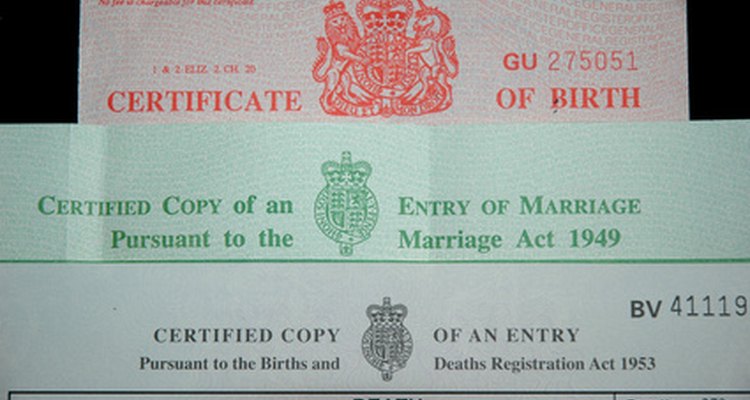
At birth, every U.S. citizen is given a birth certificate and is entered into the U.S. record system. You need your birth certificate to prove your age and identity when getting a driver's license, applying for a passport, claiming government benefits and more. There is no way to get a birth certificate truly cost-free. However, you can usually search vital records online for free and order an official copy of the birth certificate you're interested in for a nominal handling fee.
Who Can Apply
In most states, birth records for living people are confidential by law. Alabama, for example, keeps birth records less than 125 years old confidential to keep personal information safe and secure. Generally, only the named person on the birth certificate or an immediate family member can apply for a certified copy of a birth certificate. You'll need to show photo ID, usually a driver's license, when requesting a birth record from the department of vital records.
Check Vital Health Records
To find a birth record for a U.S. citizen, start by visiting the Centers for Disease Control and Prevention website for vital health records. Follow the links to find the state where the person you are interested in was born. Procedures and fees vary by state; however, in most cases you can visit or write to the office to request a birth certificate and ask them to mail one to you. You'll need to supply various information including:
- Full name of the person
- Date of birth
- County or city of birth
- Full names of mother and father
- Your relationship to the person whose certificate you are requesting
- Hospital where the person was born
Search and Apply Online
Some states partner with a third-party records management company to manage the issue of vital records. Florida, for example, has teamed up with VitalChek. You can order certified copies of Florida birth certificates online through the VitalChek website on an expedited basis; simply follow the instructions on screen. If no record is found, you will receive a certified "No Record Found" statement from Florida's Office of Vital Statistics. Other states offer a similar service.
For Citizens Born Abroad
Citizens who were born abroad should have received a Consular Report of Birth Abroad, or CRBA, from the U.S. embassy in the country of birth, instead of a birth certificate. Order a replacement by mail from the Department of State's Passport Vital Records Section. Submit a notarized request with information such as the name of the person whose birth certificate you are ordering, the full names of that person's parents and the date and place of birth; more details are on the Department of State website. There's a handling fee of $50.
Related Articles
How to Get a Copy of Our Marriage ...

How to Obtain a Duplicate Birth ...

How Do I Obtain a Birth Certificate in ...

How Do I Find Out the Tax ID Number for ...

How to Apply for a Birth Certificate

How to Find Out if Someone Got Married ...
How to Get a Replacement Birth ...
How do I Get my Baby's Birth ...
How to Find Out If Someone Applied for ...
How to Find a Person in Canada
How to Find Out When Someone Died
How to Apply for a Long-Form Birth ...

How to Get the Birth Certificates of ...
How to Correct Information on a ...

How to Find Your Dad That You Have ...

How to Get Another Copy of a Name ...
How to Find Someone's Birth City & ...
How to Change Your Name After Marriage ...
How to View Marriage Certificates Online
How to Find a Date of Marriage
References
Resources
Tips
- Requesting an official birth certificate will be honored only if the request comes from the person to whom the birth certificate belongs, or from one of his or her parents.
- Unofficial birth certificates, as mementos of a child's birth, can be created from a template online or using word-processing software. These keepsakes can be produced for free but cannot be used as legal certification.
Writer Bio
A former corporate real estate lawyer, Jayne Thompson writes about law, business and personal finance, drawing on 17 years’ experience in the legal sector. She holds a Bachelor of Laws from the University of Birmingham and a Masters in International Law from the University of East London. Her work has appeared on numerous legal blogs including Quittance, Upcounsel and Medical Negligence Experts. Find her at www.whiterosecopywriting.com.
Photo Credits
birth marriage and death image by Warren Millar from Fotolia.com