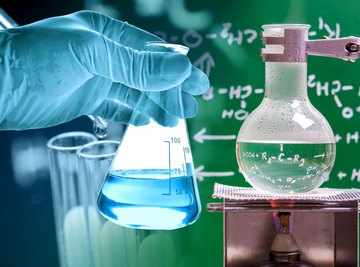
A chemical reaction occurs when the molecules of the reactants collide with one another in the reacting environment. The rate at which a reaction occurs depends on the rate of the collision of the molecules, and the collision rate depends on various factors, which can be altered to change the rate of a reaction. The reaction rate can be increased by the action of one or more of these factors.
Use a Catalyst
A catalyst is a substance that can alter the rate of a chemical reaction. Catalysts can be successfully used to increase the rate of a chemical reaction. Also, catalysts are subjective in nature, i.e., a catalyst works specifically on certain reactions only. A catalyst is not consumed in the reaction, and it does not change the products of the reaction. For example, decomposition of potassium chlorate starts at 392 degrees Fahrenheit in the presence of manganese dioxide as a catalyst. Otherwise, in the absence of the catalyst, this reaction is a slow process, which starts at 715 degrees Fahrenheit
Increase the Temperature
For most chemical reactions, temperature is directly proportional to the rate of the chemical reaction. Therefore, increasing the temperature increases the rate of the reaction to a certain extent, but precaution is needed while increasing the temperature of the reaction to avoid accidents. For example, the dissolution of sugar in water takes place faster when the water is hot as compared to the rate of dissolution in cold water. The increase in temperature increases the energy of the reactant molecules, making them move faster and more susceptible to collisions, thereby increasing the reaction rate.
Concentrate of the Reactants
The concentration of the reactants also plays an important role in determining the rate of a chemical reaction. According to the collision theory, for most of the reactions, increasing the concentration of the reactants is known to increase the rate of the reaction. When more reactant molecules are available, more collisions take place, increasing the overall rate of the reaction at the same conditions. In the case of gases, the concentration of the reactants can be increased by increasing the pressure of the reacting environment so that the same reactant molecules become more concentrated.
Increase the Surface Area of the Reactants
Increasing the surface area of the reactants increases the rate of the reaction. More surface area means more collisions of the reactant molecules and an increased rate of the reaction. This occurs when reactants are made to react in powdered form. For example, powdered sugar dissolves more quickly in water than a lump of sugar. Also, in the case of combustion, the reaction is very fast when the fuel is in the form of fine particles or in the form of a powder.
References
About the Author
Vaibhav Rakesh has been a freelance writer since 2004, covering chemical and alcohol technology, environmental management and renewable energy. He is a certified trader with the National Stock Exchange and has worked with oil and gas companies as a senior consultant. Rakesh holds a Master of Business Administration in energy trading.