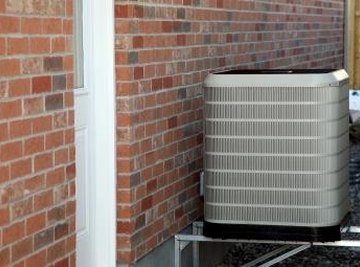
Heat pumps work both as furnaces and as air conditioners and are devices that use small amounts of energy to transfer heat. They are able to transfer heat into a cold room or draw excessive heat away from a room. Heat pumps are, however, prone to other dangers, such as congestion due to dust or mechanical damage to their exposed parts. Therefore it is necessary to cover them.
- Screwdriver
- Plywood
- Retardant blanket
- White paint
- Paintbrush
Choose the right material to enclose your heat pump. Plywood is best suited for the job as it allows the air used to heat up before it is taken in by the heat pump and it increases the heat produced by the pump. Dry wood, however, also serves the purpose, but is harder to transform into desired shapes and sizes. Ensure the unit is away from direct sunlight, melted snow or rain water runoff from roofs.
Turn off the heat pump unit to ensure safety and clean your outdoor unit by removing any twigs or weeds that might be on it. Adjust the plywood to fit your heat pump, leaving out a 2-inch clearance around it. This allows free circulation of air, and water can escape. Screw the plywood firmly around three of the pump's sides, leaving the side with the exhaust uncovered. Cover the top of the structure, using another piece of plywood, and screw the structure firmly together.
Glue the sound-proof material onto the plywood structure to suppress the noise made by the pump. Use retardant blankets or quilts as the sound-proof material and paint the enclosure white to prevent the heat pump unit from overheating.
Things You'll Need
References
Photo Credits
Jupiterimages/Photos.com/Getty Images