This Season
 

How to Care for Banana trees to get Banana Fruits

A Banana tree, to produce banana fruits, require three main things, lots of sunlight and warmth, plenty of water and high humidity, and to be fed well with the correct fertilizer, either organic or chemical. To have healthy, productive, fruit bearing banana plants follow these steps.

Related Searches:
    Difficulty:
    Moderately Easy

    Instructions

    Things You'll Need

    • Fertilizer
    • Mulch
    • Water
      • 1
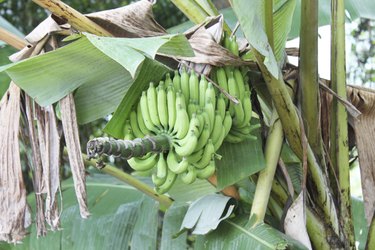
        A Banana Flower with green Banana fruits

        Pick a location for planting banana trees with the correct amount of sun and with some wind protection. Bananas are usually purchased either as ornamental plants or fruit plants. As fruit plants, bananas need a long growing season, plenty of sun, water, and soil nutrients. In temperate climates, zones 8 and farther north, it is important to plant in full sun. In very hot, long summer, climates, bananas will do better with some afternoon shade to keep the leaves from burning. Banana fruits will also sunburn if not covered with a cloth if in full sun. High winds will shred banana leaves which will not hurt them and they should not be cut off if this happens, but some people don't like the look so a wind sheltered area may be called for. Because they have shallow roots and will be top heavy when fruiting, banana tree plants are also in danger of being blown over in high wind areas.

      • 2
        A young Banana tree

        In temperate climate zones banana trees usually take over a year before they will flower and produce a crop. This means having two summers of active growth with a cold weather dormant period in between. During the first year when the banana plant is small, mulch it well to conserve water, acidify the soil, and to help any fertilizer enter the soil more slowly. Any vegetative waste can be used for a mulch, leaves, straw, wood chips, etc. Be sure to add any old banana leaves or pruned off stalks to the mulch. They are high in potassium which is just what the banana needs in abundance. If you use lawn clippings or garden wastes be aware of any chemical treatments that have been applied to the grass or vegetables such as weed killers and insecticides. These can harm the banana plant and build up in the banana fruits. A good thick mulch layer of from 6 to 12 inches will also keep down competitive weeds. Mulch an area extending some 6 to 8 foot out from the stem as banana roots while shallow will spread widely.

      • 3

        Keep the banana tree well watered. Because of their large leaf size, bananas lose large amounts of water especially in hotter areas. Water deeply any time the top inch of soil feels dry. Don't let the plant stand in soggy soil though. The soil must drain well or the banana may rot from the ground up. If the soil is full of clay and holds on to water, add some coarse sand, perlite, pea gravel, or some bags of cactus potting soil to the top 2 feet of it to improve the drainage. It is also possible to plant the banana tree up on a mound to increase the drainage. In hot, dry, near desert, areas, setting up a sprinkler system to provide humidity will help to keep banana plants happy and healthy.

      • 4

        In order to produce fruit, it is necessary to fertilize heavily on a regular schedule any time the banana tree is actively growing. When growth starts during its first growing season, spread a cup of granular fertilizer in a circle about a foot from the stem. Rake the fertilizer lightly into the soil and don't get any on the plant as it will burn the tender growth. The fertilizer should be high in potassium which is signified by the third number of the three numbers used to identify the fertilizer strength. You want a fertilizer such as 6-2-12 or 8-5-13, where the third number is the highest one. As the banana tree grows, add additional fertilizer every two weeks and increase the number of cups by one for each two feet of new growth. For a 1 foot start use 1 cup, when it reaches 3 ft. increase to 2 cups, 5 ft. use 3 cups and so forth, measuring from the ground to the top of the stalk where the leaves branch out. As the leaves spread out, place the fertilizer in a circle at their drip line in a broad thin layer. The drip line is the area under the leaves where rain would fall off of them. Magnesium is another important trace element that bananas need. A good source of it is plain old Epsom salts which is Magnesium sulphate. Sprinkle about a cup of it around the banana tree every month to keep it strong and happy. If you use a fertilizer that contains magnesium as a trace element look for one having 2 to 3 percent of it.

      • 5

        Use organic fertilizers to both feed your Musa banana and to improve the soil structure. It is nearly impossible to over fertilize a banana plant so feel free to add nearly any and all organic materials to the soil around it. Some good additions include, cotton seed meal, bone meal, composted or well rotted manures, kitchen wastes -except for meats and greases, ashes from burning wood or charcoal, and earthworm castings. Water soluble plant foods while good for feeding bananas as the large leaves will absorb the spray on types quickly and the fine roots will drink in any poured on the ground, will not improve the soil in any way and may contain salts. The one thing bananas cannot tolerate is salt (the type with chloride) so be careful to read the label on any products you use to check for salts.

      • 6

        When colder weather with temperatures that stay below 60 degrees during the day, is about a month away, stop fertilizing the banana. It will quit growing as the weather gets colder and depending on where you live, may need to be protected. During the summer there were probably several new shoots that came up around the main stem. Pick two of these new shoots and allow only them and the main stem to grow. Cut off any others at the ground or separate them to plant out elsewhere or give away. The idea is to funnel all the plant's energy into only one main stalk for next year. The other two banana shoots are for insurance over the winter so that a sizable one will survive.

      • 7

        During the banana's second year, as the weather warms and all danger of freezing is over, uncover any stems that had to be protected. If the banana tree didn't have to be covered simply watch for it to show signs of new growth. Once those new leaves start to show, start fertilizing hard and heavy to jump start the banana. The faster it grows the better the chances of having banana fruits by the fall. This is why two smaller shoots were saved last fall. If cold weather killed back the large main stem, it won't be necessary to start over with a totally new shoot but one about 4 to 6 ft. tall will be ready to go. The smaller shoots were easier to protect from the cold. Pick the largest stem and remove all the others. Fertilize it monthly, giving it some 4 pounds of fertilizer each time scattered under the drip line as before. Keep it heavily mulched and well watered. Don't use a fertilizer with too much nitrogen as this can cause the fruit to turn black. Once the banana flower starts to appear, allow two new shoots to grow out as next year's insurance and replacement. Once a stem has flowered and made fruit it will not fruit again so cut it down to add to the mulch next winter. The benefits of banana trees are many, shade, tropical beauty, ease of care, and lots of banana fruits that are delicious and nutritious. Under resources below there are links to other articles about growing bananas and choosing banana varieties. Check them out and please rate them and this article, thank you. All contents and photos copyrighted by Aupoet.

    Related Searches

    Read Next:

    Comments

    You May Also Like

    • How to Take Care of a Banana Tree Plant

      A fast growing plant, the banana tree reaches full size in only a matter of weeks after planting. This tropical plant produces...

    • How to Take Care of a Banana Tree

      The banana tree is not actually a tree but a large herbaceous plant native to Southeast Asia. There are many banana tree...

    • Winter Care of Banana Trees

      Although the banana tree can grow up to 18 feet tall, it's not actually a tree but a member of the herb...

    • How to Grow Banana Trees

      If you like the idea of growing your own bananas or if you just enjoy the tropical look of a banana tree,...

    • What Kind of Fertilizer Do I Use for a Banana Tree?

      For maximum fruit production and to encourage rapid growth, banana plants should be fertilized frequently. Apply a fertilizer with a 6-2-12 formula,...

    • Winter Care for a Banana Tree

      Banana trees are not really trees, but giant herbs related to lilies, palms and orchids. Considered the largest plants on earth without...

    • Care of Red Banana Plants

      Red banana plants produce small, red-skinned fruits that taste quite sweet. The foliage appears lush and tropical. The plant spreads and grows...

    • Fertilizer for Banana Trees

      A fast-growing monocotyledonous herbaceous perennial, banana trees grow from underground rhizomes. The center stem of the plant begins as an underground corm...

    • How to Grow Bananas

      It's quite possible to grow banana trees, even in cold climates. Banana trees aren't actually trees at all but are large perennial...

    • How to Take Care of a Banana Tree in a Pot

      Banana trees add a touch of the tropics to most any location. These exotic-looking plants boast large leaves and woody stems that...

    • Fertilizer for Banana Plants

      The banana is not a tree, but a herbaceous perennial which may be grown for fruit. Banana trees are heavy feeders and...

    • How to Fertilize Double Knockout Roses

      With over six months worth of bloom time, Double Knock Out Roses are rapidly becoming a favorite among flower gardeners. Easy to...

    • How to Use Banana Peels As Fertilizer

      Commercial fertilizers can contain varying amounts of phosphorus, potassium, magnesium and potash, but so do banana peels. Put your banana peels to...

    • How to Plant a Banana Tree

      Technically speaking, a banana tree is not a tree, since it has no woody boughs or trunk. The banana plant grows well...

    • How to Take Care of a Banana Plant

      The banana plant (Musa sp.) grows to 25 feet tall with large 2-foot-wide leaves that may reach up to 9 feet long....

    • Organic Fertilizers for Fruit Trees

      Organic fertilizers are made from manures, animal by-products, composts and seaweeds. They offer a natural alternative to chemical fertilizers. Composting helps to...

    • How to Remove Banana Stains

      Banana stains can be enough to drive a person, well, bananas. Especially once they set in, they can be notoriously stubborn. Whether...

    Follow eHow

    Related Ads