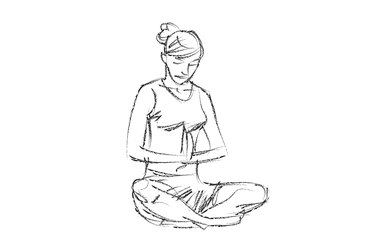
Line drawings present themselves in a number of ways including outlines of objects, movement or density of objects and even erasing. It is common for artists to use various line drawings as a warm-up, oftentimes giving them fresh ideas on how to begin working on a longer study, which may end up a final work of art.
A line drawing as a final work of art, typically does not capture all of the information of the object being drawn, instead it usually only captures one characteristic, either the interior or the exterior. Charcoal, pencil, ball point pen, Chinese ink and black markers can all be used to practice line drawing techniques.
Video of the Day
Video of the Day
Contour Line
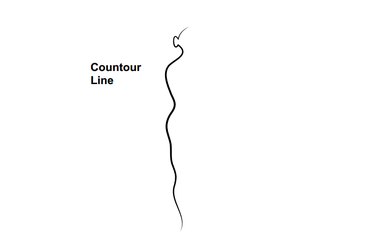
A single line creating an outline of a figure or an object can show the height, width and even details of what is being studied. The word "contour" in art refers to an outline of the subject being studied. Traditionally, it presents only the exterior edges of the object. A plain contour is one line that is connected with no shading, emphasizing the shell of the object. Contour lines can suggest weight by pressing down harder or using the wider edge of a drawing instrument to create a thicker, denser line. To suggest that something is light or delicate, the line can become thinner and lighter in color, using a pointed tip or pressing gently on the surface of the paper. A confident line can swiftly change dynamic of both bold and delicate within one gesture with a drawing instrument.
Blind Contour Line
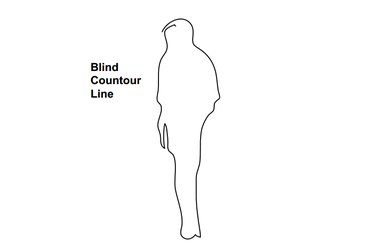
Line drawings created without looking at the paper help to increase hand-eye coordination. A blind contour is best studied as a quick drawing while looking at either a figure or a still life. The line at first will seem very messy, however the more its practiced, hand-eye coordination will develop allowing for similarities in the actual object and the drawn object to relate more closely.
Many artists enjoy blind contour line drawings to help with freeing up the hand doing away with constraints of trying to get their drawings 'perfect'. Oftentimes, shapes or lines that are created during a blind contour study are whimsical and more interesting than what can be achieved from looking directly at the object.
Continuous Line Drawing
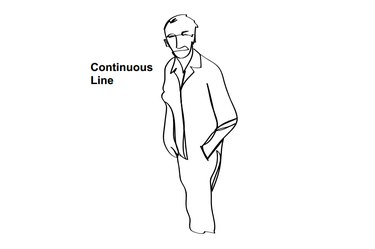
While observing an object, the drawing implement remains on the the page with uninterrupted contact creating enclosed shapes. Oftentimes, lines will have to cross over themselves repeatedly in order to finish drawing the subject being studied. Examples of this can be seen in drawings by Pablo Picasso and Egon Schiele. They were able to create beautiful line qualities by never lifting their drawing instrument off the page. Hands are particularly interesting when drawn in this style, as each knuckle and fingernail is detailed by lines that intersect and overlap moving on to the next detail.
Gesture Drawings
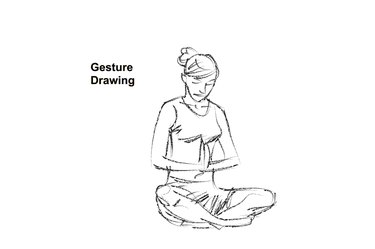
Gesture drawings are commonly used as warm-ups in figure drawing classes. They are spontaneous representations of an expressive stance of a subject. Gesture drawings are usually contained within the limits of 30 seconds to two minutes. This type of exercise helps to loosen up the wrist and align the hand with the eye. It is possible to capture movement and weight in gesture studies. Some artists prefer to use the tip of their drawing tool to show the quick outlines of a figure, while other artists use the wide edge of their instrument to shade in the weight of the subject being studied. It is common to see a series of 10 or 15 gesture drawings overlapping on one page.
Mass Gesture Lines
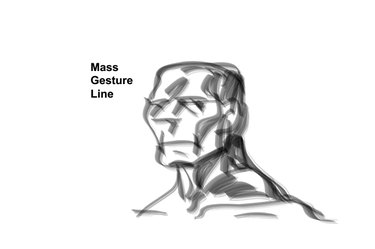
Mass gesture lines refer specifically to using a drawing instrument on its widest side. Charcoal is a great tool for accomplishing this line. By looking at the subject being studied, the drawing tool is used sideways to deliver a quick, wide mark. This type of mark specifically shows the density of the subject. In order to show weight, the tool can be used with more pressure for a darker mark. To show lighter mass, less pressure can be applied. Unlike gesture drawings, there are no outlines in mass gesture practices.
Reductive
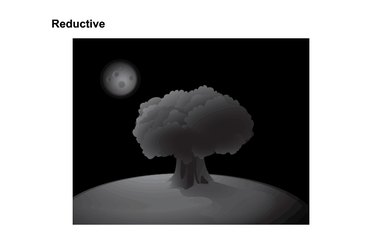
Starting with a sheet of paper covered in charcoal or graphite, the object being studied is drawn into the covered ground using an eraser. A gum eraser is preferable as you can easily manipulate it to any width or point. The resulting drawing is one of negative line space.
Parallel or Cross Hatching Lines
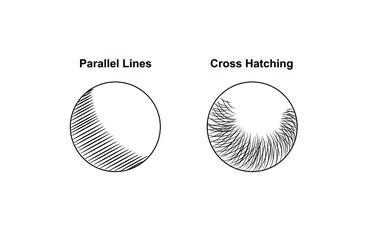
Marks created with repeating lines are used to create texture, patterns or shading. This is often seen in renderings created by master artists and illustrators. By creating lines that are close together or intersecting them at diagonal angles, delicate or harsh shading can be achieved. Typically these lines are not blended. The more lines that are clustered next to one another or crossing over each other, the darker the shading becomes. The shading can also be altered by the pressure of the tool used to make the marks. However, if ink is being used, pressure will not alter the intensity of color. Instead, choosing to make less marks or make them further apart from one another will give the effect of lighter shadows.