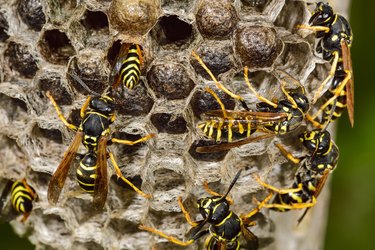
Being stung by a wasp is horrible. It burns and hurts a lot more and a lot longer than a bee sting. It's especially stressful to find a wasp hive near your home or garden. It can be pretty nerve-wracking to know that they might sting when gardening, taking out the trash or just cleaning up around the home. Luckily, there are a few tips and tricks for getting rid of wasps, trapping some wasps and preventing future hives from settling in – all while staying sting-free.
Video of the Day
Spraying the Wasps Away
There are a number of sprays on the market for getting rid of wasps that are found in supermarkets and home improvement stores. However, do not spray during the day. Make sure it is as dark as possible while spraying because wasps are very sensitive to light. Try to buy a spray bottle that allows for spraying a wasp nest from 10 feet – or even more, if possible. Do not have any source of light on, including a flashlight or a phone light.
Video of the Day
Laying a Trap
If there are a lot of wasps flying around even after a nest is sprayed and removed, try laying a sugar trap. Mix sugar and water into a bottle with an inverted opening. Once the wasps are inside after the syrup, they won't figure out how to leave the inverted bottle. They'll eventually die inside the bottle.
Preventing Future Wasps
Though wasps can't be prevented 100 percent, there are some ways to make sure that the chance of more coming back is lowered. Wasps aren't fond of mint so using mint-based essential oils can help keep them at bay. Try growing different variety of spearmint, mint and peppermint around your home.
An essential oil spray can be used around the home to prevent more wasps from coming back. Combine lemongrass, clove and geranium essential oils into a bottle of water and spray the mix around. If you live in an area where there are a lot of wasps in other nearby gardens, try spraying every other day and having mint plants near windows and doors, as well as near every corner of the home and garden.