

How to Modify the Water Level in a Whirlpool Duet Washer

According to the Whirlpool Corporation, it was one of the first companies to introduce front-loading washers into continental North America in 2001. Whirlpool designs some washer models in the Duet family to emit steam, helping the overall appliance cut its water consumption during a chosen cycle.
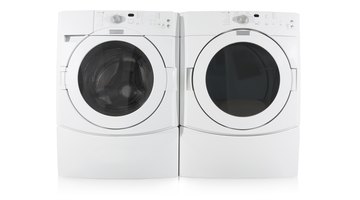
Duet owners have a washer that is the result of over a decade of improvements that automatically increase the machine's efficiency. However, if you feel the Duet washer is not using enough water, you can make a few adjustments that might produce better cleansing results. First, you might want to know exactly how Whirlpool designs the washer to work. -- (see References #2)
Automated Water Functions
The Whirlpool Corporation designed Duet washers to automatically measure the amount of water that is used per cycle, based on predefined specifications. Many of the machines have at least two sensors that can detect the size of a load of clothes and even the types of garments. During the cycle, the Duet washer can also detect the amount of soapy suds in the drum. Based on these measurements the machine adjusts the water level. This automation is a registered trademark called "6th Sense Intuitive Controls." As the user, you should know that fluctuations in your Duet washer's water levels are by design and not a sign of a malfunction.
-- (see References #3, Page 10, "6th SENSE® Intuitive Controls")
Non-Water-Level Modifications
Whirlpool states that when you select a cycle on the Duet washer, preset options, such as water temperature, spin speed and soil level, are all ready to go. This is for your convenience, but you do have the option of modifying these parameters of a cycle, if you think the change will affect cleaning results. For example, you can press the "Soil Level" button to select "Heavy" instead of "Normal," for an especially dirty load of clothes. The Soil Level option increases or decreases the agitation or tumble time inside the drum, and doesn't necessarily affect the amount of water used during the washing cycle. You can make these changes at the beginning or in the middle of the cycle. The color of the lighted indicators is a follows: "Green" is the current selection and "Amber" is the selectable options. No illumination means the modifier is unavailable.
Rinse-Specific Modifier
The last, but maybe most important modifier on Duet washers is the "Rinse" option. You have a choice of "Max," "Extra" or "Normal" rinsing after the washing phasing of the cycle. Extra adds another rinsing phase to the cycle. Max provides the best rinse level to ensure nearly total removal of residual detergent from your clothes. Pressing the "Rinse" button will illuminate and select your desired option.
Maintenance
Whirlpool's Duet washers don't completely fill with water, because it's unnecessary for every load of clothes. That's why the company built in controls that offer users a choice when cycle modifications are necessary. However, households should clean the entirety of the washer drum as a part of regular monthly maintenance. Whirlpool programs a cleaning cycle on many of its Duet washers called "Affresh." This is another trademarked name and it also concerns washer cleaning tablets in addition to the name of the cycle. The most notable aspect of the Affresh cleaning cycle is it uses a higher water level than the actual clothes washing cycles, maybe in an effort to reach every corner of the drum.
The Drip Cap
- According to the Whirlpool Corporation, it was one of the first companies to introduce front-loading washers into continental North America in 2001.
- see References #2) The Whirlpool Corporation designed Duet washers to automatically measure the amount of water that is used per cycle, based on predefined specifications.
- During the cycle, the Duet washer can also detect the amount of soapy suds in the drum.
- This automation is a registered trademark called "6th Sense Intuitive Controls." The Soil Level option increases or decreases the agitation or tumble time inside the drum, and doesn't necessarily affect the amount of water used during the washing cycle.
- Pressing the "Rinse" button will illuminate and select your desired option.
References
Resources
Writer Bio
Damarious Page is a financial transcriptionist specializing in corporate quarterly earnings and financial results. Page holds a medical transcription certificate and has participated in an extensive career analysis and outplacement group workshop through Right Management. The West Corporation trained and certified him to handle customer support for home appliance clients.
More Articles

