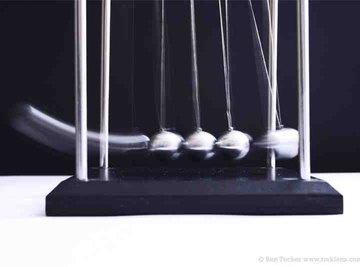

Kinetic energy is also known as the energy of motion. The opposite of kinetic energy is potential energy. The kinetic energy of an object is the energy that the object possesses because it is in motion. In order for something to have kinetic energy, you must "do work" on it--push or pull. This involves Newton's second law and motion equations. The calculation of kinetic energy is the way to express the fact of a moving object's ability to do work on anything it hits. The result of the calculation quantifies the amount of "work" the object can do resulting from its motion.
Figure out what object on which you want to calculate the kinetic energy.
Determine the mass of the object that is in motion. The mass of an object is the measure of how much matter is in an object.
Determine the velocity of the object that is in motion. The velocity of an object is the speed of that object.
Multiply the object's velocity by itself in order to obtain the square of the velocity (velocity times velocity).
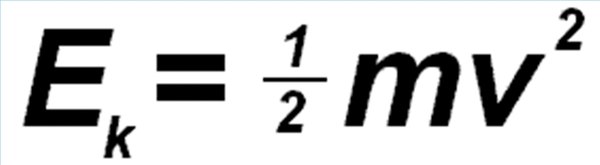
Multiply the value you calculated in Step 5 (mass) by the value you calculated in Step 4 (velocity). You now have the kinetic energy of the object.
About the Author
This article was written by the CareerTrend team, copy edited and fact checked through a multi-point auditing system, in efforts to ensure our readers only receive the best information. To submit your questions or ideas, or to simply learn more about CareerTrend, contact us [here](http://careertrend.com/about-us).
Photo Credits
i1.treklens.com/photos/ 3511/kinetic_energy.jpg