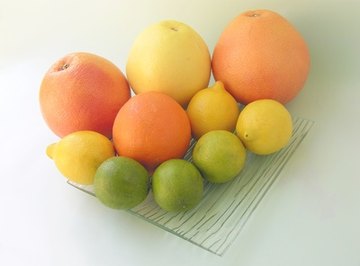
The pH scale is in the range from 0 to 14 and determines how basic or acidic a solution is. The neutral media has pH 7. Values below 7 correspond to acidic solutions. The majority of fruits contains various organic acids and hence the fruit pH falls into the acidic range between 2 and 6. Acidity of fruits can be determined relatively easy using pH paper. Avoiding high-acid fruit and food may especially help people with digestive or dental problems.
- pH paper
- Kitchen knife
- Plate
- Paper towel
Wash fruits with water and then dry them using paper towels.
Cut a piece of fruit in half using the knife. Put both halves on the plate.
Cut a 1-1/2-inch piece of the pH paper.
Take one fruit half and firmly press the piece of the pH paper against the cut side of the fruit.
Compare the color of the paper strip with the standard pH scale printed on the pH paper pack to determine the acidity of this fruit.
Repeat Steps 2 to 5 for the other fruits.
Things You'll Need
References
About the Author
Oxana Fox is a freelance writer specializing in medicine and treatment, computer software and hardware, digital photography and financial services. She graduated from Moscow Medical College in 1988 with formal training in pediatrics.
Photo Credits
citrus fruits image by Maria Brzostowska from Fotolia.com