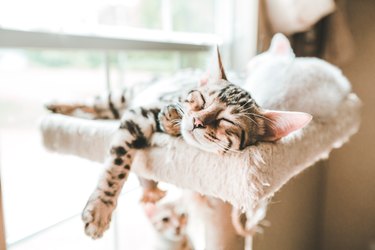
Whether you have an indoor cat or an outdoor cat, your main priority is to keep your feline friend happy and healthy. While outdoor cats get to enjoy the open air and have much more room to roam, this doesn't mean indoor cats are destined for misery. After all, indoor kitties get to enjoy warm naps on sunlight-covered carpets.
"Is my cat happy?" is a question often asked. How can you tell if your indoor cat is content with her lifestyle? These are the signs that your cat is happy with life on the inside: They purr, play, stare, and use scratching posts.
Video of the Day
Video of the Day
Indoor versus outdoor cats
Outdoor cats are permitted to come and go in a household, while indoor cats spend the majority of their time inside. Generally, indoor cats are larger than outdoor cats and shed nearly year round (outdoor cats shed about once a year). Indoor cats also live much longer, according to statistics. Yet, despite their differences, all cats require a loving, safe, and fun environment.
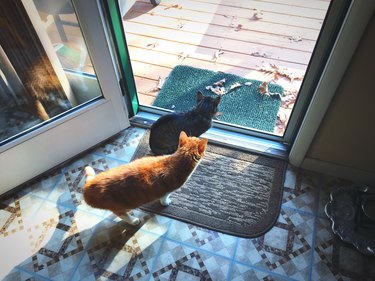
You might be wondering, "Is my cat happy?" Specifically, is your indoor cat is content spending each day within the confines of your home? Happy cats, regardless of where they spend most of their time, will meow, purr, play, and have healthy appetites. For indoor cats, specifically, there are certain signs that they are happy and thriving, even though the are inside all day.
Happy indoor cats play with toys
Indoor cats sleep on average 13-16 hours per day. Don't worry, your kitty isn't lazy. This much sleep is a critical part of cat development and vital for replenishing their bodies. When your indoor cat is awake, however, she should spend some time playing!
A happy indoor cat will take the time to play with interactive toys. These toys provide mental and physical stimulation. They prevent boredom and help promote physical activity. If your cat is pouncing rubber mice or pawing at flying feathers, you know she is actively using her body and brain, which are true signs of contentment.
Happy indoor cats scratch
Along with toys, scratching posts give your indoor cat critical stimulation that outdoor cats get by scratching trees and other rough surfaces. Cats have a natural instinct to scratch, and they will release this energy (even if it means they have to use your couch). Scratching posts protect your furniture from feline claws while giving your cat a chance to express her natural urges.
Your indoor cat is sure to be happy when she's allowed to act on her natural instincts, even in a confined space. If your kitty is "hunting" toys and scratching on posts, she is happily reveling in her natural behavior.
Indoor cats and companions
In homes with more than one cat, you should see a couple of happy cats. Pets require a period of adjustment for all family members and, after time, sibling kitties fall into routines and usually grow to love and depend on one another. An indoor cat with a companion has an opportunity to interact with another animal, which is something outdoor cats get to do often.
If your cat gets along with her siblings, this is a sign that she is comfortable and content in her environment. If your cat is relaxed with humans and animals, you may have hit the kitty jackpot and surely have a happy cat on your hands. However, introducing new cats to each other is a process that takes time, patience, and sometimes space.
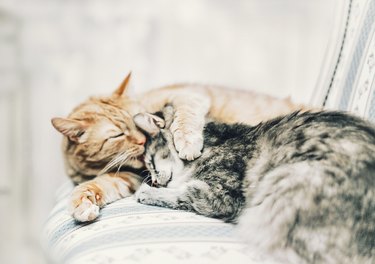
Happy indoor cats stare
Does your indoor cat watch TV or stare out the window? This can be a sign of happiness. Again, stimulation is a key sign of contentment. After those long naps, a happy cat will will perch in his or her favorite window and watch the world go by.
How do I know if my cat is happy?
Indoor and outdoor cats are sure to let you know they're happy through their body language. They will lift their heads up high and let you rub the top of their heads. Happy cats meow and purr, and they will give you cuddles for days.
Indoor cats, specifically, show their happiness with a proper balance of rest and play. They sleep like their lives depend on it (which is actually true). While awake, a happy indoor cat will jump, scratch, and pounce. This display of natural instincts is sure to point to a contented cat.
Always check with your veterinarian before changing your pet’s diet, medication, or physical activity routines. This information is not a substitute for a vet’s opinion.