

How to Store a Dishwasher

When you store a dishwasher for an extended period, pay close attention to the water supply lines that connect to the unit. If you allow water to stay stagnant in these lines, it may damage the dishwasher over time. Store a dishwasher indefinitely after taking the proper steps to prepare it.
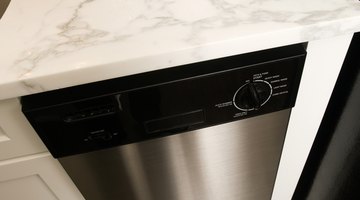
You can store the dishwasher unused without moving it or you can also uninstall the dishwasher and store it as long as you prepare it properly first.
Disconnect Water Line Only
-
Disconnect the electrical supply to the dishwasher. Switch the circuit breaker off or remove the necessary fuses to disconnect the power to the appliance.
-
Turn the valves on the water lines beneath the sink to the right to turn the hot and cold water supply off. Turn these valves until they stop and you cannot turn them any further. Turn off the main water supply in the basement if you do not have supply valves under the sink.
-
Turn the hot and cold water faucets on at the sink to drain water and pressure from the water lines.
-
Unscrew the two or four screws holding the panel from the bottom front of the dishwasher in place to remove it. Unscrew the nut that holds the water inlet valve and disconnect it. Blow gently inside the valve to remove any excess moisture.
-
Unscrew and remove the screws in the bottom tub area of the dishwasher beneath the spray arm. Lift off the sump cover and use the sponge or towels to absorb any standing water from the bottom of the dishwasher. Reassemble the dishwasher.
-
Wipe out all moisture from the inside and outside of the dishwasher before leaving it unused for an extended period. Leave the door ajar about 1 inch, if possible.
Uninstall Dishwasher
-
Unscrew the wire nuts from the green, white and black wires within the electrical box from behind the bottom front panel. Set them aside to save them.
-
Unscrew the hose clamp that connects the dishwasher to the sink or the garbage disposal and disconnect it. You will find this hose in the front panel area.
-
Locate any screws that connect the dishwasher to the counter. You may find metal clips along the side edges of the appliance when the dishwasher door is open. Unscrew the screws in these clips.
-
Grasp the dishwasher with both hands and pull it toward you carefully. As you pull the dishwasher out, guide any drain lines carefully to avoid damaging them. Continue maneuvering the dishwasher out of the space until you have it completely free.
-
Check for moisture anywhere inside or outside of the dishwasher, including filters and hoses. Wipe out any wet areas thoroughly before you store the dishwasher.
-
Place the dishwasher in a climate-controlled storage area, if possible, to avoid damage that may result from extreme temperatures. Leave the door ajar 3 to 4 inches and cover the appliance with a sheet.
Things You Will Need
- Screwdriver
- Sponge or absorbent towels
- Sheet
Tip
If you uninstall the dishwasher, perform all the steps in Section 1 first and then proceed to Section 2. When you begin using the dishwasher again after storing it, it may not operate properly due to pump seals not functioning properly. If you hear strange noises, mix 1 quart of hot water and 4 oz. of citric acid. Pour the mixture into the bottom of the dishwasher over the spray arm and allow it to sit undisturbed for 30 minutes. Start the dishwasher and run a complete cycle to remove the citric acid from the appliance. The reason for removing water from the valves and lines is to prevent mold and mildew -- which will breed bacteria and cause odor. Standing water in the lines may also freeze and cause ruptured lines if you store the dishwasher in a cold location. Consider spraying the outside surfaces of the dishwasher with an all-purpose insect or pest repellent before storing it to prevent damage from pests.
References
Writer Bio
Kathryn Hatter is a veteran home-school educator, as well as an accomplished gardener, quilter, crocheter, cook, decorator and digital graphics creator. As a regular contributor to Natural News, many of Hatter's Internet publications focus on natural health and parenting. Hatter has also had publication on home improvement websites such as Redbeacon.
Photo Credits
- Jupiterimages/Photos.com/Getty Images
- Jupiterimages/Photos.com/Getty Images
More Articles

