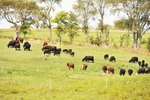
Pasture forage is the ideal meal for most cattle, as it contains all the nutrients they need to thrive. Unfortunately, a lush field of grass isn't always available. When drought conditions or other factors limit pasture supply, ranchers can supplement their cattle's diet with a variety of other edibles.
Hay is for Cattle
Hay is usually the farmer's next best choice for cow feed after pasture. There are three types of hay used to feed cattle: grass, legume and cereal grain straw. Timothy grass and bluegrass are among the most common hays in the United States, although there are a handful of others used in certain regions, according to Hobby Farms. Popular legume hays include alfalfa and clover, while material from oat plants are preferred among grain straws. Economics are a big concern for farmers, so they chose hay based on current price as well as nutritional value and digestibility.
Bread for Butter
Cows with limited pasture continue to gain weight and produce milk by eating grain in addition to pasture. Farmers use mixtures of corn, oats and soybean meal later in the season as natural forage declines, according to Cattle Today. Grains are not friendly to the bovine digestive system and are not an ideal source of food for cattle, but they may be the most economical option if hay is scarce. Grain-heavy diets are often supplemented with green by-products from factories, as well as protein supplements.
Protein for Milk-Makers
While many people rely on cows as a source of protein in their diet, cattle rely on their vegetarian meals to meet the same nutritional requirement. A healthy pasture provides all the protein that cows require. Scant pasture as well as hay or grain diets should be augmented with additional protein. Protein supplements allow farmers to feed cows a diet consisting of up to 70 percent more low-quality hay without a significant decline in health, according to Mother Earth News.
Greener Pastures
While augmenting a cow's diet with hay, grain and supplements produces adequate results, many farmers also try to increase the productivity of their available pasture. Increasing the supply of fresh forage is the best way to encourage meat and milk production cows. Identifying the types of grass in the pasture and planting seeds from more productive species is only the first step. Farmers also apply fertilizers to keep the soil rich in basic nutrients as well as trace minerals. They also manage their cattle's grazing by sectioning off parts of the pasture and moving cows once they've eaten about half of the available grass, according to Progressive Forage Grower Magazine.
References
- Mother Earth News: Feeding Beef Cattle: Tips for a Healthy, Pasture-Based Diet
- University of Nebraska-Lincoln: Replacing Summer Pasture with Feeds for Cows Grazing Pasture and When Pasture is Limited
- Hobby Farms: All Hay Is Not Equal: Choose Your Livestock’s Carefully
- Cattle Today: Feeding Grain to Cattle on Pasture Can Be Profitable
- Progressive Forage Grower Magazine: Beef producers: Follow These Steps to Improve Pasture Productivity
Photo Credits
-
Jupiterimages/Photos.com/Getty Images
Writer Bio
Quentin Coleman has written for various publications, including All Pet News and Safe to Work Australia. He spent more tan 10 years nursing kittens, treating sick animals and domesticating semi-feral cats for a local animal shelter. He graduated from the University of Delaware with a bachelor's degree in journalism.