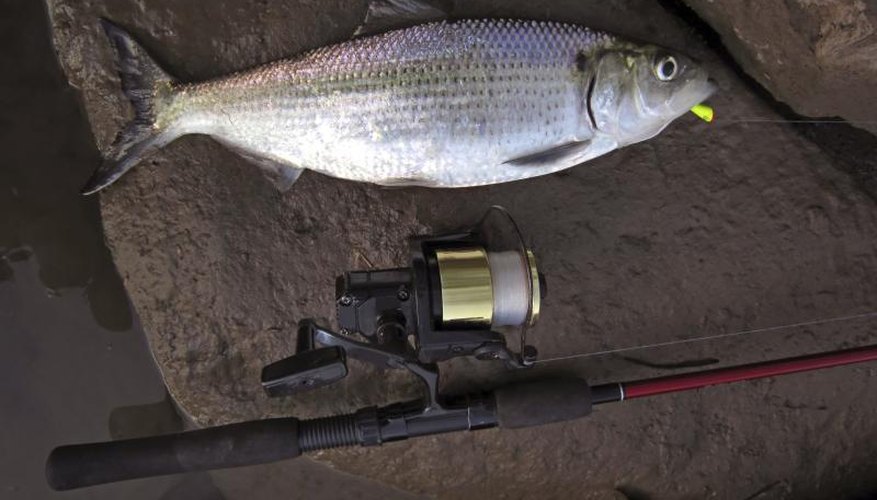

Shad invade the coastal rivers of the United States in droves every spring, undertaking an epic spawning migration that brings millions of these fish within casting distance of the few devoted anglers who pursue them. While shad may lack the glamour and cachet of well-known game fish like bass and trout, they put up a robust fight on light tackle, and many shad weigh in at 5 pounds or more, and you can use a variety of live baits and lures to entice them onto the hook.
Baits and Lures
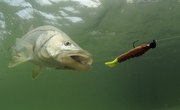
Live baits including worms, small minnows and grubs can be used to catch shad, but artificial lures are usually more effective and considerably more economical. Shad are not programmed to feed while they are spawning, so many anglers use artificial lures to trigger a reaction strike. The offering is often as simple as a bare hook with one or two shiny beads threaded onto the line. The most common shad bait is a small jig known as a shad dart. Shad darts have a fairly light lead head, usually with a tail made of feathers, marabou or tinsel. Most of the small jigs commonly used for crappie and bluegill can also be used to catch shad. Small spoons and spinners are also effective, and fly fishermen can go after shad with weighted flies.
Timing and Location
Spring is prime time for shad fishing, and these fish tend to be scattered and hard to find throughout the rest of the year. Most rivers that lead into the Atlantic or Pacific oceans host shad during this season, but major tributaries like the Columbia River in Washington and the Potomac and Delaware rivers on the East Coast offer the greatest numbers of fish. Two species of shad are commonly sought by anglers: American shad and Hickory shad. American shad inhabit waters on both coasts, while hickory shad are exclusive to the Eastern Seaboard. American shad are larger, occasionally reaching 10 pounds, but similar tactics work for both species.
Tackle and Tactics
A light-action spinning or fly rod spooled with 6-pound line is fairly standard for shad fishing. This setup allows you to cast a substantial distance with light lures. Fishing from the bank is possible in many areas, but a boat allows greater mobility, which can be a big help because shad typically congregate in specific areas. Look for shad around current breaks and eddies formed by rocks and other structures in the water, or in tailrace areas below dams. The best places to find shad are areas where fast current forces fish to bunch together in the slacker water between the current and the shore. Cast your lure at a 45-degree angle upstream and use the rod to guide it as the current pulls it downstream.
Know Before You Go
In many areas, shad are classified as non-game fish, with few or no restrictions on size and the number of fish you may catch. Specific regulations, fishing seasons and license requirements vary by state, however, so be sure to check your local regulations before you hit the water. For example, the state of Washington has no limit on shad, but Oregon does. Because the Columbia River flows along the border between the two states, shore anglers must observe the rules of whichever state in which they are standing. Shad are often pursued purely for sport, but they also make excellent table fare for those who enjoy their strong flavor. Shad can be prepared baked, broiled, smoked, fried or pickled.
References
Writer Bio
When Richard Corrigan isn't writing about the outdoors, he's probably outside experiencing them firsthand. Since starting out as a writer in 2009, he has written for USA Today, the National Parks Foundation and LIVESTRONG.com, among many others, and enjoys combining his love of writing with his passion for hiking, biking, camping and fishing.