What Is the Formula for Calculating Blood Pressure?
Blood pressure is the pressure of circulating blood against the blood vessel walls. This measurement, which is usually taken using a stethoscope, pressure gauge and inflatable cuff wrapped around an arm, provides a quick indicator of a person's health. Blood pressure cuffs must be properly applied and inflated for blood pressure readings to be accurate.
If you are experiencing serious medical symptoms, seek emergency treatment immediately.
Blood pressure is measured in millimeters of mercury--written as mmHg--because, historically, blood pressure calculations were made using a column of mercury displaced by pressure generated by the heartbeat and measured in millimeters. Today, digital blood pressure machines are capable of accurately calculating blood pressure automatically.
Systolic Blood Pressure
Systolic blood pressure measures how hard the heart's left ventricle contracts to circulate blood through the body. Normal adult blood pressure is 120/80, where the top (first) number is the systolic pressure.
Diastolic Blood Pressure
How Does Body Mass Affect the Cardiovascular System?
Learn More
Diastolic blood pressure measures the pressure in the blood vessels when the heart's chambers are relaxed and filling with blood. In a normal adult blood pressure of 120/80, diastole is the bottom (second) number 1.
Arterial Blood Pressure
Calculate arterial blood pressure (BP) by multiplying cardiac output (CO) by vascular resistance (VR): (Ref 1)
BP= CO x VR
Cardiac output is the rate of blood flow produced by the heart. Vascular resistance is the resistance of blood vessels to blood flow, which is affected by blood volume and blood vessel size.
Mean Arterial Blood Pressure
What If Blood Pressure Numbers Are Too Close?
Learn More
Mean arterial blood pressure (MAP) is caluculated using the equation: MAP = [(2 x diastolic)+systolic] / 3
The MAP measures the average blood pressure over the entire cardiac cycle of systole and diastole 1. Because the heart spends twice as much time in diastole, while chambers fill with blood, diastole counts twice as much as systole, when chambers contract 1.
Normal mean arterial pressure values for adults are between 70 and 110. If the MAP falls below 60, the heart, brain, and kidneys will not receive enough blood and oxygen to function.
Considerations
The heart, brain, kidneys, hormones and nervous system work together to regulate blood pressure. If the blood pressure is too low or high, heart or kidney failure can result. Normal resting blood pressure for adults is systolic (top number) less than 120 mmHg and diastolic (bottom number) less than 80 mmHg. Consistently low or high blood pressures can be corrected with medication or changes in diet and exercise.
- The heart, brain, kidneys, hormones and nervous system work together to regulate blood pressure.
- If the blood pressure is too low or high, heart or kidney failure can result.
Related Articles

How Does Body Mass Affect the Cardiovascular System?
Learn More

What If Blood Pressure Numbers Are Too Close?
Learn More

Causes of Error in Measuring Blood Pressure
Learn More
What Is the Meaning of the Bottom Number on a Blood Pressure Reading?
Learn More

How to Read the SYS DIA Pulse
Learn More
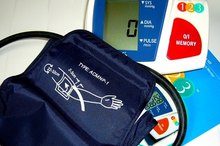
Equipment for Checking Blood Pressure
Learn More

How Do Automatic Blood Pressure Monitors Work?
Learn More

Body Frame & Ideal Body Weight
Learn More

How To Take Your Blood Pressure with Sleeves
Learn More

How to Count the Boxes on the EKG Paper to Determine Rate
Learn More
References
Writer Bio
Jill Marie Maier is a registered nurse, landscaper and writer. Her articles have appeared in “Alverno Today” and the literary magazine “Inside Out.” Ongoing passions for health, nature and the arts and sciences spurred her to earn English and biology degrees from Alverno College. Her best ideas surface while kayaking.