
Powdery mildew is one of the most destructive diseases of roses (Rosa spp.). The powdery mildew fungus (Sphaerotheca pannosa var. rosae) forms powdery, gray-white mats on the leaves and flower surfaces, often making rose bushes look like they've been dusted with powder. The unsightly growth blocks out sunlight, which causes misshapen, stunted growth and prematurely falling leaves. You can manage powdery mildew disease by combining nontoxic spray treatments with proper care.
The Oil Option
Video of the Day
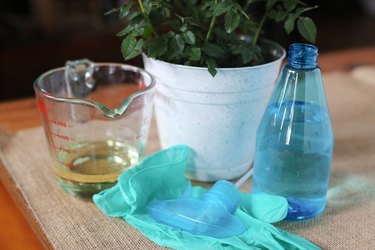
Neem oil can treat mild to moderate cases of powdery mildew. Follow the directions on the product's label because instructions vary. A typical neem oil label will tell you to mix 2 tablespoons of oil in 1 gallon of water. Using a handheld garden sprayer, spray the solution all over the rose bush until the surfaces glisten with moisture. Apply the oil solution every seven days until the powdery mildew symptoms disappear, and then continue spraying every 14 days to prevent the disease from coming back. Other oils that may work include jojoba and horticultural oil. Avoid spraying oils when temperatures are above 90 degrees Fahrenheit or you risk harming your plants. Neem oil is toxic to honeybees, so spray in the early morning or early evening when the pollinators aren't visiting your roses. Neem oil can damage your eyes and irritate skin, so wear protective clothing and goggles and follow the label's safety advice.
Video of the Day
The Baking Soda Solution
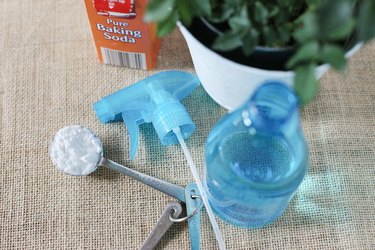
Make a nontoxic powdery mildew remedy by mixing 3 teaspoons of baking soda and 2 tablespoons of lightweight horticultural oil into 1 gallon of water. Use a hand sprayer to completely cover all surfaces of the rose bush. The oil acts as a wetting agent, while the baking soda eliminates the powdery mildew fungi. As a bonus, the baking soda also raises the pH on the leaves, which means future fungi won't find the leaves a hospitable environment. Spray the affected rose bush once a week. Reapply the spray after rainfall or overhead watering because the water washes the baking soda solution off the plant.
The Milk Treatment
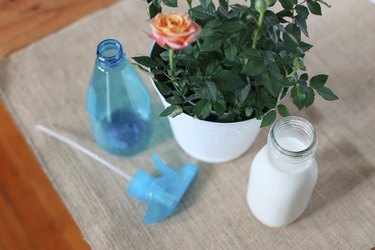
Cow's milk also works as a natural fungicide that gets rid of powdery mildew. This treatment likely works because either the amino acids or the salts in the milk work as a germicide, notes the National Gardening Association. Combine 1 part raw or skim milk with 9 parts water in a garden sprayer. Completely cover all foliage and flowers with the milk solution. Spray the affected rose bush every seven days and reapply the solution if it rains.
Spraying Rose Bushes
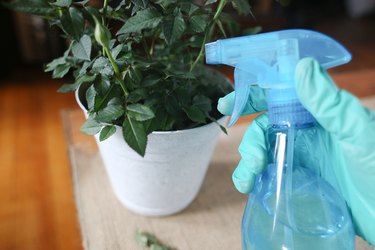
Start spraying your bushes as soon as you first notice powdery mildew symptoms. Once the disease becomes severe, it's harder to cure. Before treating the entire plant, test any spray on a small section of leaves and check the foliage for two to three days to ensure the treatment won't burn the rose's leaves. Spray all parts of the plant, including the tops and undersides of leaves, from the top of the bush to the bottom. You must have complete coverage for the treatments to work. Natural fungicide treatments might be nontoxic to humans and pets, but they can still cause skin and eye irritation. Wearing waterproof gloves, long sleeves, pants, protective eyewear, a face mask and shoes with socks helps reduce the risk of exposure. Keep people and animals out of the treatment area until the spray thoroughly dries.
Keep the Powdery Mildew Away
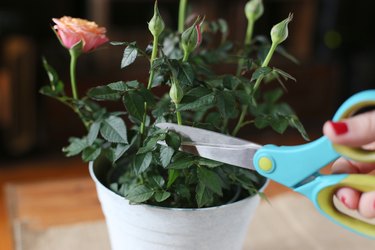
To help the rose recover, provide it with good care. Powdery mildew fungi thrive in high humidity during stretches of warm days followed by cool nights. Reduce the relative humidity levels around your roses by increasing air circulation. The American Rose Society recommends leaving at least 2 feet of space between mature bushes and other plants, fences or buildings. Pruning out crowded interiors promotes better airflow throughout the entire plant. Using overhead watering methods can reduce the spread of powdery mildew because it rinses the spores from your rose bushes, but make sure you water your plant by midmorning so the leaves dry in the sun before the temperature drops at night.
- National Gardening Association: Got Mildew? Get Milk!
- University of California Statewide Integrated Pest Management Program: Powdery Mildew on Ornamentals
- American Rose Society: Fungicides Made Simple
- Fine Gardening: Genus -- Rose
- Colorado State University Extension: Powdery Mildew
- American Rose Society: Powdery Mildew: An Ounce of Prevention
- Organic Gardening: Powdery Mildew
- Galveston County Master Gardeners: What Is Powdery Mildew on Roses? Can It Be Treated?
- Missouri Botanical Garden: Powdery Mildew -- Outdoors
- Arizona Cooperative Extension: Diagnosing Problems of Roses in the Landscape