eHow launches Android app: Get the best of eHow on the go.

How To

How to Make Herb Infused Oils

Member
By Upon-Request
User-Submitted Article
(6 Ratings)
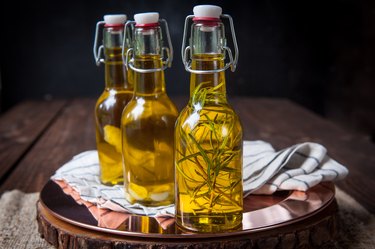
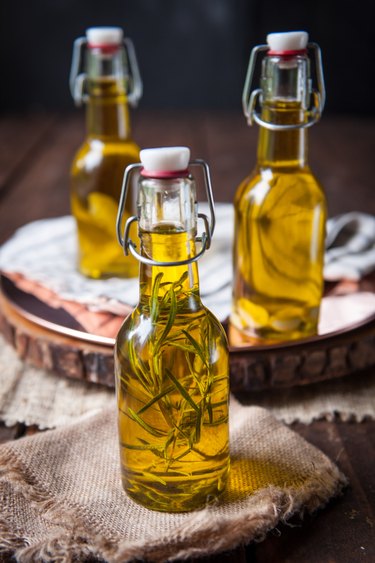
Rosemary and lavender infused oil.

Infused herbal oils can be used both internally and externally, and are relatively easy to make in your own home. In general, they are subtler than full strength essential oils, and can be used directly in topical applications.

Infused herbal oils can be used in making your own healing salves, balms, massage oils and even herbal pestos.

Here are the basic directions for making an infused herbal oil.

Difficulty: Easy
Instructions

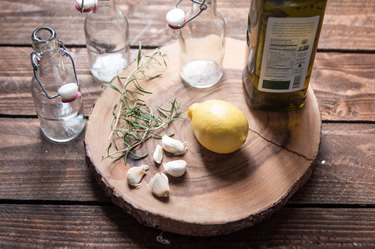
Things You'll Need:

  • fresh rosemary, lavender or other herbs
  • Olive oil
  • Clean jar with a tightly sealed lid
  • jar label
  1. Step 1

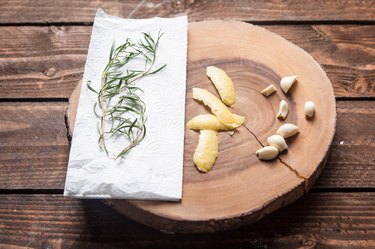
    Gather the herbs you wish to infuse. If harvesting them straight from your garden, be sure they are clean and dry to the touch (not covered in the morning dew, which can make them turn moldy). You can also used dried herbs, however, many herbalists feel using dried material will render an inferior product.

  2. Step 2

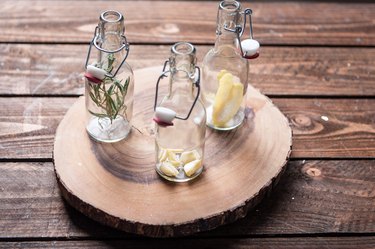
    Fill a clean jar with the plant material you've collected. In the picture above, individual rosemary and lavender leaves were used. Some prefer to chop their plant materials (leaves, flowers or roots).

    Label the jar with both the contents and the date.

  3. Step 3

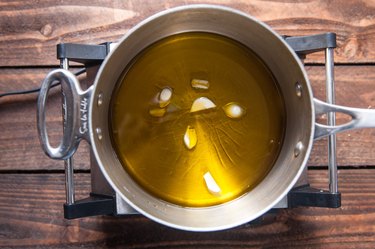
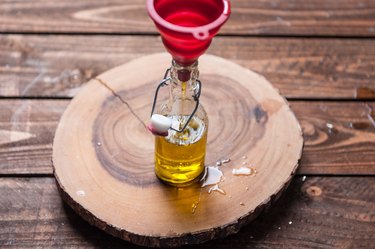
    Add olive oil or another carrier oil (depending on the intended use - sweet almond,jojoba, grapeseed oil or any other plant-derived oil can be used. Be sure to fill the jar completely with oil, covering the top of the herbs or flowers, then seal tightly.

    Infused herbal oils made with olive oil are commonly used in both cooking or food preparation, as well as topical applications for the skin, hair and nails.

  4. Step 4

    Set your jar on a shelf, window sill or counter that is NOT in direct sunlight. Once a day, gently turn the jar upside down for a few seconds, then return it to a right side up position. Repeat this process for a minimum of two weeks. (Some feel up to six weeks is appropriate for infusion - you'll need to experiment to find the time frame that feels right for you.)

  5. Step 5

    Strain your oil using a cheesecloth or by adding a paper coffee filter to the mesh type strainer. Be sure to transfer only to clean and moisture free containers.

    You can now use your infused herbal oil in a variety of ways - a massage oil for cuticles or itchy scalp, bath oil, or even added to pasta or salad. The list of applications is quite extensive!

Tips & Warnings
  • Infused herbal oils can make beautiful gifts for friends and family, and if you're using fresh herbs from your garden, it's very budget-friendly.
  • Wine bottles, mayonnaise jars or other recycled glass containers are great for infusing oils.
  • See the Resource section for salve and balm recipes using infused herbal oils.
  • Moisture in your infusing containers can cause mold. If you do find mold, throw out the batch and begin again.
  • Do not use plastic containers to infuse or store your oils.
  • Do not use petroleum based oils (baby oil, mineral oil) to make infused oils.

Comments  

| View All 6 Comments

betterbody said

Flag This Comment

on 11/10/2009 Good details for making herb infused oils. Love this as a gift idea.

cosmopink said

Flag This Comment

on 11/9/2009 Great detailed instructions. Well done!

rspears01 said

Flag This Comment

on 11/4/2009 I like natural oils. This is a very helpful article on making infused oils! Thanks!!!

Flag This Comment

on 11/3/2009 My lady is an herbalist, so I'm pretty familiar with the subject, if only peripherally! A fine article: five stars.

Rockney said

Flag This Comment

on 11/3/2009 Great article! 5*!

Post a Comment

Post a Comment
  • Have you done this? Click here to let us know.
I Did This

Related Ads

Tags
Get Free Health Newsletters

Copyright © 1999-2009 eHow, Inc. Use of this web site constitutes acceptance of the eHow Terms of Use and Privacy Policy.   en-US Portions of this page are modifications based on work created and shared by Google and used according to terms described in the Creative Commons 3.0 Attribution License.

Live Strong Partner
Livestrong_eHow Health