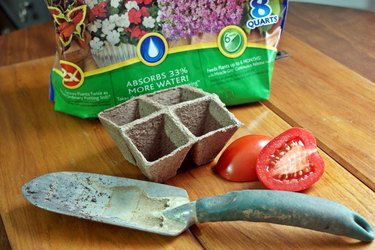
Everyone loves the taste of ripe tomatoes from a home garden. And you can get a head start on your summer crop by starting seeds in the house. Planting seeds from fresh tomatoes is no harder than planting store-bought seeds. Remove the seeds from a ripe tomato and soak them for 14 hours in tepid water. Dry them on a paper towel and plan to plant them within seven days.
Step 1
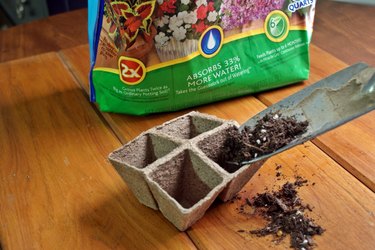
Fill individual seed pots three-quarters of the way to the top with a top-quality potting mixture. Note that potting mix is not the same as potting soil. It is lighter than soil and usually contains peat moss, compost, vermiculite, perlite, and sand. It holds moisture but doesn't get soggy. Be sure that the pots have drainage holes. Water the mix before planting.
Video of the Day
Step 2
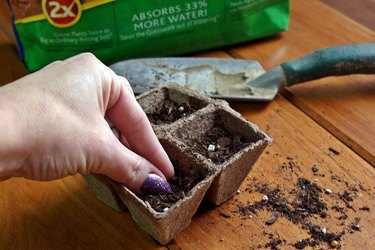
Plant two or three seeds in each small pot. Not every seed sprouts and it is easy enough to thin out the pots later. Press each seed about 1/4 inch into the damp soil.
Step 3
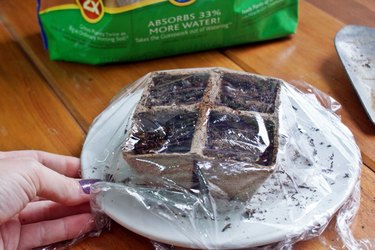
Cover the seed pots with plastic wrap or a plastic dome to keep in the moisture. Let them sit in a warm spot out of direct sun for about a week to allow germination to begin.
Step 4
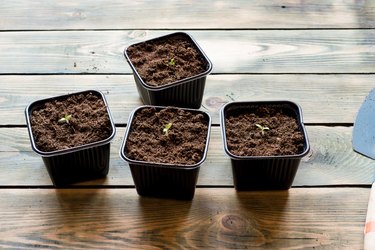
Check the pots daily for sprouts. When you see tiny plants appear, remove the plastic wrap or dome carefully and spray with water.
Step 5
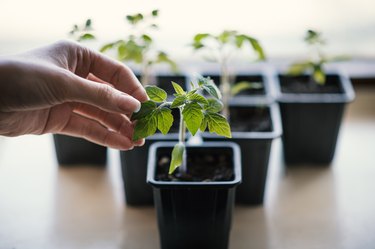
Place the pots on a window sill. The first day they should get about three hours of direct sun. Increase the amount of sunlight by 10 minutes each day until the plants get six hours of sunlight daily. Gradually exposing tomato plants to the sun prevents sun damage.
Step 6
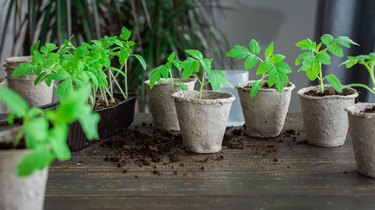
Check the soil every day to make sure it stays damp. If the soil feels dry, give each seedling water. If you neglect to water the seeds, the plants will die. Too much water is bad for the plants so be sure the pots are draining well.
Step 7
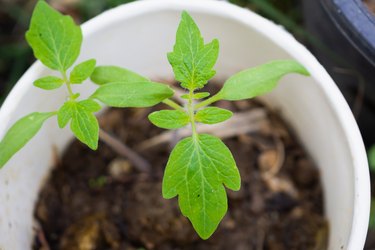
If two or more of the seeds sprout in one pot, remove the weaker shoots when they are about two inches tall. Allow one strong tomato seedling to remain in each pot.
Step 8
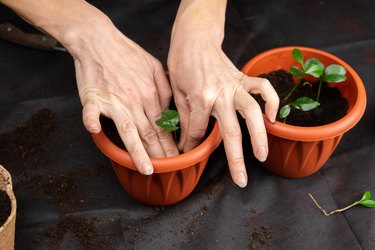
When a seedling grows to three inches tall and has four or more leaves, transfer it to a larger pot. Select a pot with sufficient drainage holes.
Step 9
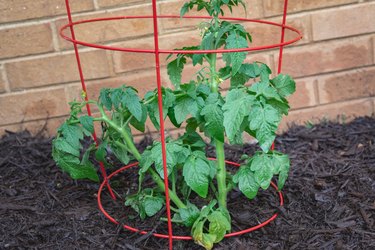
Transfer the plant outside when the weather is mild. Place it in the ground in full sun and put a tomato cage over it. This will support the fruit as the plant grows larger. Alternatively, you can grow tomato plants in large containers. It's a good idea to plant marigolds or herbs like basil or borage nearby to keep pests away from the tomato plants.
Video of the Day