

How to Insulate Outside Water Pipes

Insulating outside water pipes can save you the hassle and expense of repairing frozen or burst pipes. In open or unheated spaces, water standing in the pipes can freeze, breaking the pipe and causing water damage or flooding when the pipes thaw.
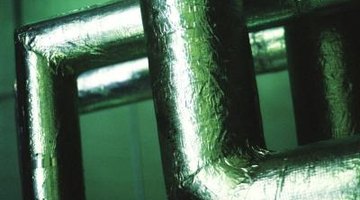
Wrapping the pipes in foam insulation can help lower their exposure to the elements, reducing the chance of freezing. Pipe insulation comes in a variety of sizes, and you should be able to install it easily.
Things You Will Need
- Tape measure
- Pipe insulation
- Sharp knife
- Acrylic or duct tape
Tip
For added strength, you can wrap the pipe insulation in wire ties or nylon string.
Warning
In extremely cold climates, it may be necessary for you to install heat tape under the insulation to prevent freezing.
-
Place full sections of insulation around the pipe wherever possible. Butt the ends of the insulation sections together on the pipe.
-
Pull the plastic strip out of the slit in the pipe insulation to expose the adhesive. Press the sides of the slit together to seal the pipe insulation shut.
-
Measure and cut sections of pipe insulation to fit where full sections will not. Place the smaller sections on the pipe and seal shut.
-
Cut sections of pipe insulation at a 45-degree angle and place them over elbows in the water pipe, matching up the angles to cover the elbow. Seal the pipe insulation shut.
-
Cover all seams and joints with a wrap of acrylic or duct tape.
The Drip Cap
- Insulating outside water pipes can save you the hassle and expense of repairing frozen or burst pipes.
- Butt the ends of the insulation sections together on the pipe.
- Cut sections of pipe insulation at a 45-degree angle and place them over elbows in the water pipe, matching up the angles to cover the elbow.
Writer Bio
David Young has written for the website for the Save Darfur Coalition and is currently writing articles for various other websites. Young holds a Bachelor of Arts in philosophy from Western Carolina University.
Photo Credits
- Liquidlibrary/liquidlibrary/Getty Images
- Liquidlibrary/liquidlibrary/Getty Images
More Articles

