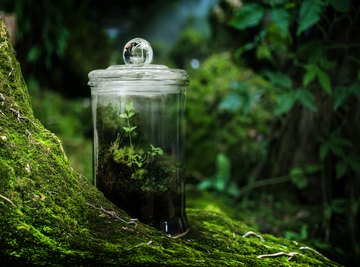
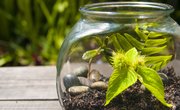
In an ecosystem, all of the components in an area balance and help maintain life. Terrariums – glass or clear enclosures where you raise plants or animals - allow you to watch the process up close in a controlled setting! You can create your own ecosystem in a bottle and watch how all of the biotic (living) and abiotic (non-living) elements work together. In a simple ecosystem in a bottle project, you can observe how soil, plants and water interact in your terrarium.
How to Create a Terrarium in a Bottle
For your ecosystem in a bottle project, you'll want to use simple elements that allow you to observe your biome with little interference or interaction. You'll need a clear container to use for your terrarium that you can seal with a lid to contain the moisture. As for your plants, moss provides the best option for low-maintenance care for an ecosystem in a bottle. It requires little soil and does well in shaded environments.
How it works: In a sealed container, you can watch the entire process of evaporation and condensation occur within your biome in a bottle. The warmth from the sunlight causes the excess water in the terrarium to evaporate and rise to the top of the bottle. Once the water vapor reaches the top of the glass, it cools and condenses back into liquid droplets. These droplets drip back down onto the moss, creating 'rain' to keep the ecosystem moist.
Things You'll Need
- A glass or plastic jar or bottle with a closeable lid
- An assortment of small rocks or pebbles
- Soil
- A variety of mosses
- Any decorative elements you'd like to add
Before you begin adding your moss, it's important that you provide somewhere for the water to drain. You should assemble a layer of small rocks, stones or pebbles across the bottom of your jar. The excess water in the jar will drain down through the rocks. For the most surface area, carefully lay your jar on its side rather than standing it upright.
Even though most moss doesn't need soil to grow, you will still want to add some soil across the top of your rock layer. This will create an even surface area in your ecosystem in a bottle. If possible, use soil as close as possible to the location you collect your moss. This soil should have the ideal pH and nutrients to benefit the species of moss that was growing there.
You can collect and arrange a number of different moss species for your biome in a bottle. Some examples of moss varieties that you might find include the bright green, soft and springy pincushion moss, the fern-like plume moss or the long and fluffy shaggy moss. Using several different types of moss helps add variety to your ecosystem in a bottle.
Before arranging your moss, you should ensure it has plenty of moisture. This will be the source of water for your biome in a bottle. Gently dip each chunk of moss into a small dish of water, and then allow the excess water to drain off. Finally, place your moss in a single layer over your base of rocks and soil.
You should provide a few additional surfaces for your moss to expand and grow onto, such as one or two good-sized rocks or stones. In addition to these elements, you can also add other natural decorations and surfaces for your moss to grow on, such as small bits of logs or sticks. For more flair, you can even include a few figures or miniatures of your favorite animals or characters.
References
Tips
- Place a snail or a worm into your ecosystem to see how it affects plant survival.
- You can use a jar with a lid instead of a soda bottle.
- You can start with seedlings instead of seeds.
- Keep a daily log of what occurs in the ecosystem.
About the Author
Marina Somma is a freelance writer and animal trainer. She holds a B.A. in Psychology and a B.S. in Marine and Environmental Biology & Policy from Monmouth University. Marina has worked with a number of publications involving animal science, behavior and training, including animals.net, SmallDogsAcademy and more.