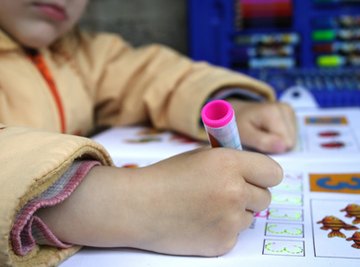

Guiding children through the maze of mathematical concepts can be a demanding task. Teachers, however, can use several methods to ensure the process is rewarding.
Relevance

Math activities can be incorporated into other curriculum areas in many ways. Examples include an art project based on patterns made with regular shapes and using a history topic as a chance to investigate how time lines work.
Collaboration
In a study published in the Oct. 12, 2010, issue of "International Journal for Mathematics Teaching and Learning," Christine Suurtamm and Nancy Vezina found that children develop stronger mathematical skills when allowed to develop their own strategies. Planning opportunities for discussion supports learning and helps teachers correct misconceptions.
Variety
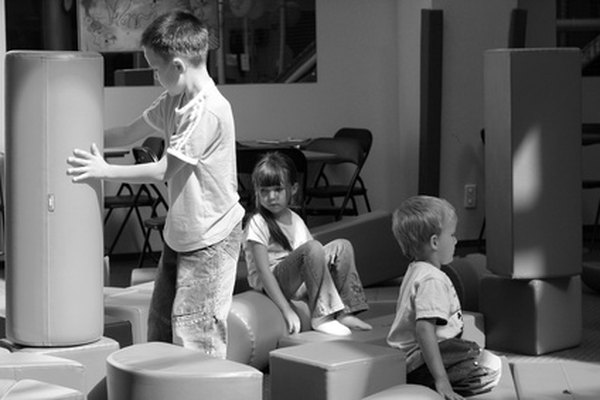
Providing a range of learning experiences helps to consolidate abstract concepts. Young children can use colored beads to investigate patterns. Older children can be given challenges such as finding and recording the information necessary to repaint the classroom within a set budget. Such projects promote critical thinking and problem-solving skills from an early age.
Creativity
Songs, stories and games engage and encourage children's participation. Such devices can be used in many ways to teach math; some ways are linked in the Resources section.
References
About the Author
Abby King began writing in 2009 and has contributed to "Conspire!" magazine and mamaknowsbest.net. She has a Bachelor of Arts degree in English language and literature from Birmingham City University, a Bachelor of Theology in ministry studies from the University of Wales and a Post Graduate Certificate of Education from Cambridge University.
Photo Credits
learning basics image by Sergey Mostovoy from Fotolia.com