
Relative frequency distribution is a basic statistical technique. To calculate relative cumulative frequency, you need to create a chart. This chart lists specific data ranges. Then you tally how many times your data set falls within the data range. Adding up the tallies provides you with the relative cumulative frequency. Statisticians need this technique to determine how many times something occurred in a given data group. This then helps with other statistics, such as probability.
Draw a table with three columns.
Label the first column as "Data Range," the second column as "Hash Marks" and the third column as "Relative Frequency Distribution."
Write your data ranges in the data range column. Make sure these do not overlap.
Sort through your data set and make a hash mark in the "Hash Mark" column each time the data falls within a proper data range.
Add together the hash marks in the data range and place the value in the "Relative Frequency Distribution." Then divide the amount in the "Relative Frequency Distribution" by your sample size to determine the percentage that falls within that group.
References
About the Author
Carter McBride started writing in 2007 with CMBA's IP section. He has written for Bureau of National Affairs, Inc and various websites. He received a CALI Award for The Actual Impact of MasterCard's Initial Public Offering in 2008. McBride is an attorney with a Juris Doctor from Case Western Reserve University and a Master of Science in accounting from the University of Connecticut.
Photo Credits
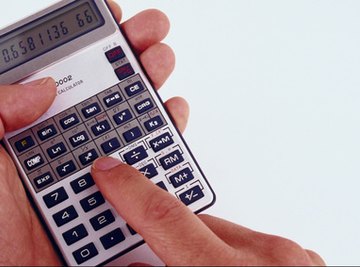
Calculator image by Alhazm Salemi from Fotolia.com