The pale golden color and generous sprinkling of open knots give knotty pine its distinctive and well-loved look. Back in the day, natural woods were whitewashed with a lime solution to keep furniture and home-building planks and boards safe from insects. Today's whitewashing materials are less caustic, giving you old-fashioned character with up-to-the-minute convenience.
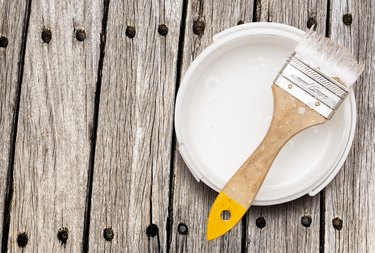
Preparing the Wood
Whitewashing works especially well on open-grained woods such as knotty pine because it actually soaks into the wood rather than sitting on the surface the way paint or lacquer does. Knotty pine that has been painted or sealed with a top coat will need to be stripped to reopen the grain. Strip off paint or stain by brushing on a chemical stripper and letting it sit according to the manufacturer's directions. Once the old paint or stain has bubbled up, scrape it off with a putty knife, being careful not to gouge the softened wood. Prepare unfinished or lightly stained wood by sanding it with 100-grit sandpaper. Brush away all sanding dust before continuing. Stain your sanded wood with a brown or gray stain to give it a more aged look, but don't use a self-sealing stain. Let the stain dry completely, and then lightly sand and wipe down the wood again before whitewashing.
Video of the Day
Video of the Day
Mixing the Whitewash
Commercial whitewashes are easy to use and offer reliable results, but you can also mix your own whitewash using flat latex paint. This allows you to play with the color by choosing either pure white paint, a warmer cream or even adding a bit of blue, green, pink or whatever color you like to get the exact look you want. Simply mix two parts paint with one part water and you're ready to go.
Whitewashing the Wood
Whitewashing is closer in technique to staining than to painting. Use a clean paintbrush to apply the whitewash to your wood, working in long, even strokes with the grain of the knotty pine. You might have to dab the whitewash into the open knots to get full coverage, which is why a paintbrush is better for this type of wood than a roller would be. Let the whitewash sink in for a few seconds and then wipe the excess away with a clean, dry shop cloth. Paper towels will also work, but a soft, clean shop cloth is easier to control, won't tear and won't shed fibers. Keep applying the whitewash, letting it soak in and wiping off the excess until your wood is fully coated. Apply a second coat to achieve the depth of color you desire.
Finishing the Wood
Whether or not you want to seal your whitewashed knotty pine depends on how the wood will be used. Walls and wainscoting can be allowed to age naturally, while floors, dressers, tables, beds and chairs should be sealed with a clear protective coat. These come in many forms, but a brush-on coat of acrylic or polyurethane sealer will protect your whitewashed knotty pine from fading and staining. Use one to two coats of sealer on furniture that will be gently used. Let the sealer dry completely, sanding with 100-grit sandpaper and wiping off the dust between coats. Furniture that will be enjoyed outdoors, in high-traffic areas or by children will benefit from a third coat.