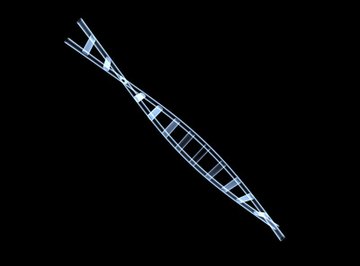

DNA, officially known as deoxyribonucleic acid, is a basic building block of life, and contains the genetic material, passed down from parents and other ancestors, that defines the way we look, think, and behave. Making a model of DNA’s double-helix structure-it looks like a twisted ladder-helps put a face to the name, and can be a great way to learn the basics of biology and genetics, and what makes living things tick.
Candy
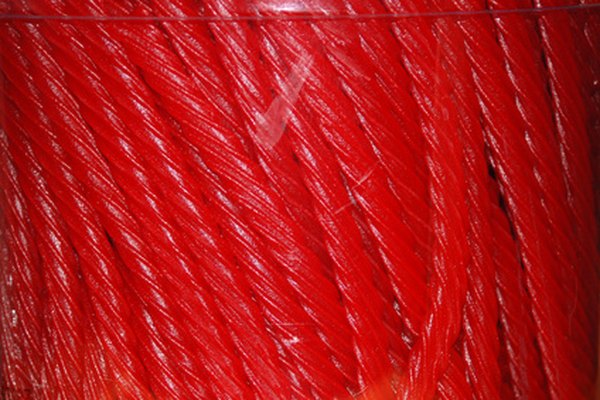
Making a DNA double-helix model from candy is a fun way to engage in science and learning, especially for the sweet-toothed biologist. To form the sides of the DNA ladder, use two different-colored, stringy candies; licorice will do the trick. Have the black licorice be the pentose sugar molecules and the red licorice the phosphate molecules. Cut the licorice up and thread them with needle, alternating red and black. Between the strands, string four different types of soft candy, creating the adenine/thymine and guanine/cytosine pairings.
Fishing Line and Pasta
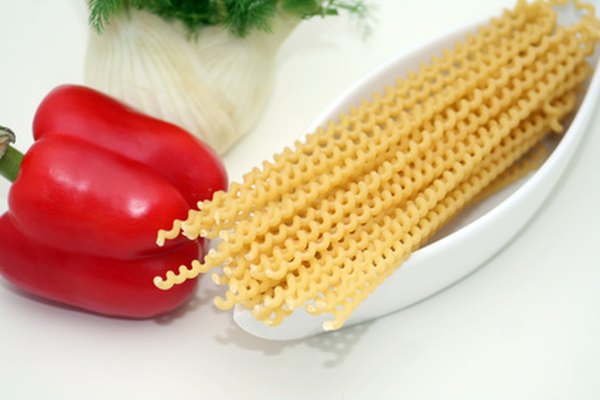
The Discovery Channel suggests a less saccharine model of DNA. Four different colors of pipe cleaners will serve as your rungs in this double-helix model, while two types of pasta-the Discovery Channel suggests ziti and pinwheel, making perfect sides to the DNA ladder. All that’s left to do is string everything together with fishing line.
Watson & Crick
Scientists Watson and Crick won the 1962 Nobel Prize for Physiology or Medicine, having discovered the double-helix structure of DNA. The pair composed their prize-winning structure with a central metal pole and radiating, interconnected structures built from locked pieces of metal. Any interconnecting building block for children can be used to simulate the Watson and Crick model of DNA.
Styrofoam and Toothpicks
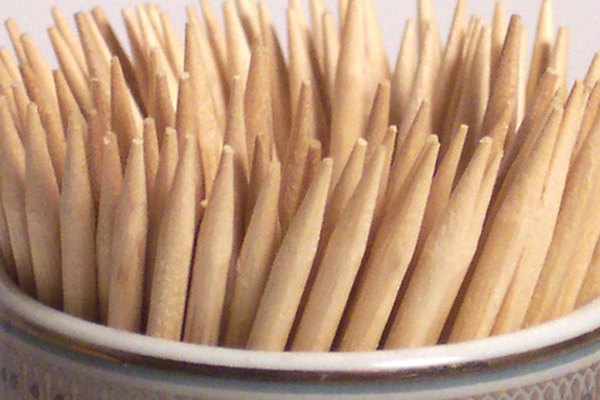
Online science resource Kids Love Kits suggests the simplest solution to making a DNA model at home: Styrofoam balls, toothpicks, and some markers. Choose six colors: one for pentose sugar, one for phosphate, one for adenine, one for thymine, one for guanine, and one for cytosine. From there out, it’s all relatively simple, provided you remember which color represents which DNA component. String the Styrofoam balls together with toothpicks in the appropriate order to create a DNA model.
References
About the Author
Will Gish slipped into itinerancy and writing in 2005. His work can be found on various websites. He is the primary entertainment writer for "College Gentleman" magazine and contributes content to various other music and film websites. Gish has a Bachelor of Arts in art history from University of Massachusetts, Amherst.
Photo Credits
DNA image by chrisharvey from Fotolia.com