

Homemade Dish Soap Bee Trap

If you're sick and tired of heading out for some leisure time on the deck just to be swarmed by stinging bees and wasps, it's time to fight for your territory. Make your own bee traps to lure the insects away from areas that you frequent and where your children play. Although the concept may sound primitive, it works.
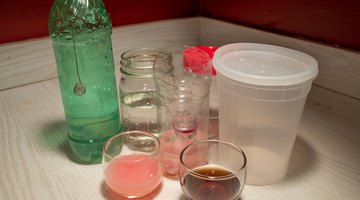
Dish detergent will kill most detained insects. Survivors won't be able to fly with a coating of soap on their wings, and will drown. How you dispose of your captured stingers is entirely up to you.
Simple Devices
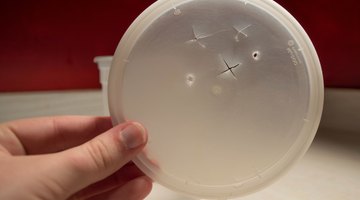
There are some simple traps that you can easily make by repurposing stuff you would otherwise throw away. Pat yourself on the back for keeping one more piece of plastic trash out of a landfill. Almost any empty plastic container will work fine. Soda bottles, milk or juice jugs, and even jelly jars make dandy bee and wasp traps. Feel free to experiment.
There are two different techniques to try when making insect entrance holes in homemade traps that require them. You can use an ice pick or screwdriver and just poke 1/8-inch to ¼-inch holes into the plastic. Or you can use a hobby knife to form ½-inch X's. If you do this, push the triangles formed by the cuts inward to form a small opening for bees and wasps to enter. The triangles inside the trap will make it very difficult for insects to exit the holes.
Repurposed Plastic Bee Traps
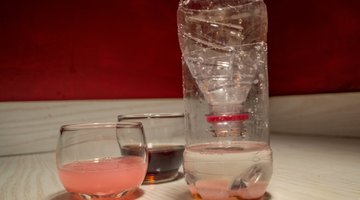
Remove the label from an empty plastic two-liter bottle. Cut the top three or four inches of the bottle off with strong scissors or a hobby knife to create a funnel. Combine ¼ cup of water with 2 tbsp. of dish soap in the bottom of the bottle. Remove and discard the lid, invert the funnel, and fit it firmly into the bottom section of the bottle. Pour a cup of sweet liquid like syrup, soda, juice, or sugar water into the funnel. Make sure that you slop it around to coat the funnel's inner surface and offer the bugs an aromatic attractant. Place your wasp and bee trap wherever the insects are currently hanging out.
For a trap that you can hang from eaves or tree limbs, there's a simple variation. Remove the label from the bottle and combine ¼ cup of water with 2 tbsp. of dish detergent and 1 cup of soda, syrup, sugar water, or juice in the bottle. Cap it and shake vigorously, coating the entire inner surface of the trap with the sweet, sticky fluid. Poke or cut a few entrance holes in it near the top. Tie a piece of twine around the neck of the trap and hang it in a problem location.
Try using the gluttonous tendencies of foraging bees and wasps to your advantage. The next time you finish a plastic container of jelly, jam, or preserves, make an effective trap out of it. Don't bother rinsing it because the material still stuck to the inside will serve as your bait. Poke or cut a few entrance holes in it near the top. Cap it and set or hang your trap wherever the insects have been terrorizing you.
Hornet Special
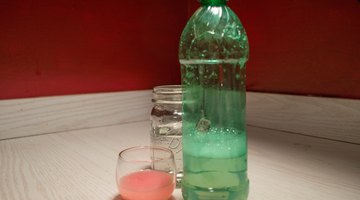
Hornets are different from bees and wasps in a lot of ways, but especially when it comes to food preferences. These aggressive nasties love meat and fish. This trap is perfect for areas where you won't have to be subjected to the odor of decomposing flesh, which you'll be using for bait. Although any meat or fish is accepted, it seems that for whatever reason salmon is an irresistible favorite. Use frozen bait, which is easier to cut and tie into place in the trap.
Make a few holes near the top of an empty two-liter plastic bottle. Pour two to three inches of water into the bottle and add about a tablespoon of dish soap. The detergent serves to break the surface tension of the water. That will cause the lightweight hornets to drown when they fall into it, rather than just floating around on top of it.
Drill a small hole in the bottle cap, and thread one end of a piece of string through the bottom of it. Cut a three-inch strip of frozen bait narrow enough to fit through the top of the bottle, and tie the free end of the string around it. Stuff the bait strip and six to eight inches of string into the bottle. Screw the cap into place and pull enough string through the hole to suspend the bait about an inch above the waterline in the bottle. Make a big knot in the string so that it won't slip through the hole.
Place or hang your homemade hornet trap in a location as far removed from your personal space as possible. Hornets are greedy beasts, and this trap capitalizes upon and exploits that characteristic. They tend to break off pieces of the bait that are too large for them to carry through the holes in the trap. Stubbornly resistant to giving up their hard-earned prizes, the avaricious little monsters will drop to watery deaths. The few that manage to escape with a small morsel of bait will return to their nest to share the loot and news about the feeding station with their friends. Hornets will return to your trap in swarms, and you're sure to catch 20 to 40 on a good day. Re-bait as needed.
Homeopathic Arthritis Bee Trap
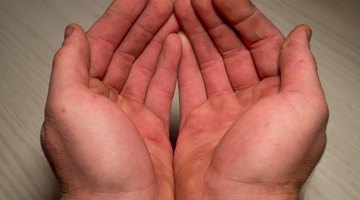
You won't need a container or dish detergent for this tactic. You can simply choose to capture problem bees with your bare hands and allow them to sting you. Bee venom has been used for the treatment of a wide variety of diseases for thousands of years. Arthritis, fibromyalgia, multiple sclerosis, and tendonitis are all treated homeopathically with bee stings. It's believed that the more you allow yourself to be stung, the more you will promote desensitization to the pain of the stings. In fact, many sufferers of such illnesses actually raise their own bees just for this purpose. There are also beekeepers who retail the insects commercially for homeopathic consumers.
Writer Bio
A full-time writer since 2007, Axl J. Amistaadt is a DMS 2013 Outstanding Contributor Award recipient. He publishes online articles with major focus on pets, wildlife, gardening and fitness. He also covers parenting, juvenile science experiments, cooking and alternative/home remedies. Amistaadt has written book reviews for Work At Home Truth.
Photo Credits
- Pisney Sarah/Demand Media
- Pisney Sarah/Demand Media
- Pisney Sarah/Demand Media
- Pisney Sarah/Demand Media
- Pisney Sarah/Demand Media
- Pisney Sarah/Demand Media
More Articles

