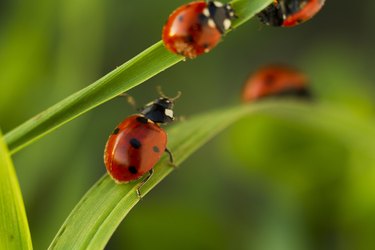
How to Raise Lady Bugs

Ladybugs are beloved by children around the world---and also by gardeners of all ages. With their brightly colored and cheerfully dotted bodies, these beetles are quite possibly the most famous of all beneficial insects. Both adults and their larvae feed on many soft-bodied insects with the pesky and destructive aphids being their favorite food source. Raising your own ladybugs is rather simple and can be rewarding as a hobby and as a natural aphid extermination team.

Things You'll Need

  • Pair of soft forceps
  • Aquarium or jar with air holes punched in lid
  • Live or dead aphids
  • Cotton
  • Grapes, cut up
  • Raisins
  • Water
Show More

Instructions

    • 1

      Collect ladybug beetles, both as larvae and adults, from their natural habitats during the spring and summer months. Look for plants already infested with aphids, including those in forests, fields, prairie, gardens and even in homes or storage facilities. You can also purchase adult beetles and the larvae from suppliers or from your local nursery.

    • 2

      House your ladybugs in a recycled jar or in an aquarium with ventilation and a lid that fits snugly. You can also store the ladybugs in your refrigerator for several weeks, as long as you take them out to stretch their tiny legs and provide new fresh water every few days.

    • 3

      Feed your ladybugs heartily and often. A tiny ladybug larvae can eat at least 25 aphids a day; adults can eat more than 50. It's no wonder that these little beetles are favorites in the garden. Ladybug larvae and adults eat aphids, as well as mealybugs and mites. Please note that when beetles are purchased or gathered in the fall, they often will not eat much or any at all. This is because they are preparing for winter.

    • 4

      Substitute moist cotton and cut grapes or raisins that have been soaked in water until puffed and soft, if you find you don't have enough of their favored aphids for them to satisfy their appetites. Also, note that some species will eat frozen aphids or artificial foods.

    • 5

      Handle your ladybugs gently with a pair of forceps or with your fingers. Conversely, larvae should not be handled unless absolutely necessary and should be only touched with a small, soft brush.

Related Searches:

References

Comments

You May Also Like

  • How to Keep Ladybugs in a Classroom

    Ladybugs are fascinating for children to watch. Something about their colorful spotted bodies can enchant students of all ages. Raising ladybugs can...

  • How to Raise Ladybugs

    Ladybugs or ladybirds are popular insects to have because of their help in eating plant-destroying insects, such as aphids. Ladybugs are a...

  • How to Farm Ladybugs

    Ladybugs are useful because they consume annoying garden pests, such as aphids. Farming ladybugs has potential as a small business or simply...

  • How to Ask for a Raise

    Before you ask for a raise, consider whether you merit a raise and whether your company is in a position to give...

  • Optimal Environments for Ladybugs

    Lady beetles, more commonly known as lady bugs, are carnivorous insects that primarily feed on soft-bodied insects like aphids. Lady bugs can...

  • How to Collect Ladybugs

    Ladybugs are small insects that are actually part of the beetle family. There are four different types of ladybugs including the round...

  • How to Raise Ducks at Home

    Ducks are the second most popular poultry species to raise in urban and rural backyards, behind raising chickens but in front of...

  • How to Make a Ladybug Habitat

    Ladybugs can make interesting pets, and are also useful to keep for gardeners as a natural pest control agent. Making a habitat...

  • How to Do Leg Raises

    Leg Raises are a great exercise for lower abdominals and you don't need weights to do them. The abdominals are one of...

  • Ladybugs' Life Cycles

    No insect has brought as much joy, color and folklore to the world as the ladybug. The presence of a ladybug is...

  • Lady Bugs Habitat

    The small beetles most people refer to as "ladybugs" or "ladybird beetles" are members of the Coccinellidae family of insects. There are...

  • How to Breed & Raise Butterflies

    Breed and raise butterflies by providing the specific food plant for the caterpillars, maintaining cleanliness and providing the right moisture and temperature...

  • How to Raise Bloodworms

    Bloodworms are the bright red larvae of the Chironomus midge, a non-biting bug that resembles a mosquito. Bloodworms are a high protein...

  • Care of Ladybugs

    Ladybugs, also called ladybirds, are among the most beloved garden insects. Besides their cute and colorful appearance, the bugs keep gardens healthy...

  • What Do Ladybugs Eat?

    Ladybugs are voracious predators that feed on a lot of pest insects, including aphids, which are a main part of the ladybug's...

  • How Do Ladybugs Help the Environment?

    Ladybugs, also known as lady beetles or ladybirds, are oval in shape and have many unique colorful spot variations. Ladybugs are among...

  • How to Exterminate Ladybugs

    As a natural enemy to many insects, a single ladybug can eat as many as 5,000 aphids in its life, according to...

  • How to Raise Dermestid Beetles

    Dermestid beetles, also known as carrion or hide beetles, are small insects that feed on decomposing flesh. Dark-colored and usually hairy, they...

  • How to Create a Ladybug Costume

    Follow these steps to make a costume that will make your little girl look and feel as cute as a bug!

Related Ads

Featured