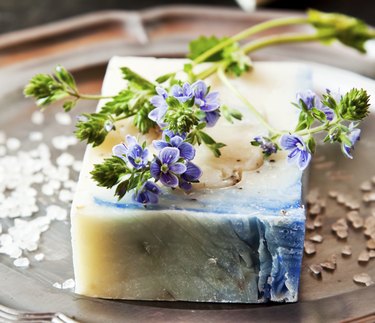
How to Make Soap Using Seaweed Instead of Lye

How to Make Soap Using Seaweed Instead of Lye thumbnail
Make Soap Using Seaweed Instead of Lye

For thousands of years, people have been making soap using lye, a substance made by pouring water through the leftover ashes of a wood fire. Historically, seaweed was seen as the best ingredient for lye, because hardwood ash creates durable bars of soap. Now there are gentler ways to create homemade soaps without lye, which is so corrosive that it can eat right through metal and plastic. One of the easiest methods is called "melt and pour." Seaweed is still used in soap making for its detoxifying properties, as well as being rich in minerals, vitamins and trace elements, and you can easily add it to your homemade soap. Does this Spark an idea?

Things You'll Need

  • Glycerin soap base (blocks)
  • Microwave-safe bowl
  • Plastic wrap
  • Wooden spoon
  • Essential oils
  • Food coloring (optional)
  • 2 sheets green Nori seaweed
  • Soap molds
Show More

Instructions

    • 1

      Cut the glycerin soap blocks into squares (usually about 1 inch) and put them into the microwave-safe bowl, covering it with plastic wrap to keep the moisture in.

    • 2

      Microwave the soap on high for approximately 1 minute. Remove the plastic wrap and stir with the wooden spoon to remove any remaining lumps.

    • 3

      Add your essential oils drop by drop. This should amount to 4 drops essential oil per 1/2 cup of melted soap base or per 1 lb. of solid soap base. If you like, add coloring drop by drop until you reach the desired color.

    • 4

      Add dried Nori seaweed to your homemade soap. Crumble the sheets with your hands, chop with a knife, or throw into a blender or food processor. The liquid base should be cooling by now, which will help to suspend the seaweed in the cooled bar of soap.

    • 5

      Pour the mixture into soap molds. Wait for 30 minutes and then pop the hardened soap out of the molds. If you have trouble removing them, put them in the refrigerator or freezer for 10 minutes, remove and try again. This type of homemade soap can be used right away, as the soap base has already been cured.

Tips & Warnings

  • If you have dry skin, add 2 tbsp. sweet almond oil along with your essential oils. To make color effects, try adding drops of different colors and swirling with a toothpick, or layering colors for a striped bar. To add solid objects such as charms or beads, fill molds halfway, add objects and then fill the rest of the way. Some essential oils to try are peppermint, rosemary and tea tree.

  • Soap will be very hot when you take it out of the microwave. Use oven mitts and set on a hot pad or a clean counter top. Use caution when working with food dyes and coloring, as they can easily stain clothes and skin.

Related Searches:

References

Resources

  • Photo Credit stock.xchng, dwstucke, pasukaru76, Matthew Bland, preetamrai, madaise

Comments

  • czeal Oct 18, 2010
    Actually the article above is great and accurate! There is more than one way to skin a Kat or to make soap. Using seaweed in the place of lye ensures a product that is more natural and gentler on the skin and its nano properties. Alchemically speaking there is no need to cure this soap as the glycerine soap component has been cured prior to formulating the Seaweed Soap spoken of in the above article. It is the lye that requires cureing. So this particuilar type of Mix and Pour Soap is an apple compared to the oranges you are talking about--primarily the lye soaps. Not all soaps are ade with the addition of lye, just like not all soaps are made with rendered lard. This entire page seems to be dedicated to making non-lye soaps. Its a new world--check it out and carry on as the awesome soap makers that you are! With a widenng perspective on the ins and outs of soapmaking I bet you will...
  • carolekn199 May 15, 2010
    I hope you are not upset with me. I have made M&P fir 10 yrs now and you should start out by microwaving for 40 sec. first then increments of 20 sec. If you burn this your soap will be burnt. I have had it happen to me. You should wait for 2 hrs before you pop them out depending on the size of your mold. Yes, the soap is ready to be used but it was not cured... this is not cold process soaping which needs to cure for 2 to 4 weeks. And both were made with lye and distilled water. Carole
  • carolekn199 May 15, 2010
    The M&P soaps are made with oils, butters, lye and distilled water. All soap is made with Lye. It is done by saponification - a chemical process that occurs naturally. Your article is incorrect and you can check this out by seeing the ingredients on vendors that sell M&P on-line. Ingredients = sodium hydroxide. I do intend on making the seaweed soap though! :) That is how I found this article! HTH, Carole

You May Also Like

  • How to Make Seaweed and Kelp Body Soap

    Seaweed and kelp body soap is something that you can make at home with minimal risk. While homemade soap does take some...

  • How to Use Lye in an Outhouse

    Traditionally, lye has been used as a regular part of an outhouse maintenance routine, and is just as effective to use in...

  • How to Make Seaweed Soap

    Made with natural ingredients, seaweed soap has moisturizing and exfoliating properties. The easiest way to make your own is by using the...

  • Where Is Glycerin Derived From?

    What Is Glycerine Used For? Glycerine has a variety of uses, but it is most well known for its use in soap....

  • Random Facts About Seaweed

    Seaweed is the common name for multicellular marine algae. It provides food for many marine animals and is also collected by humans...

  • How to Make Soap Without Lye

    Even soaps that are sold in stores, and that are said to be gentle or safe for sensitive skin, are still made...

  • How to Make Lye Soap Using Ashes

    Soap making is a hobby that is both useful and engaging. Making your own soap is a challenge for an inexperienced soap...

  • Can You Make Soap With Bacon Grease & Lye?

    Basic soap is made of fat, lye and water. Fry up that bacon, and save the grease for bacon soap. The grease...

  • Home Seaweed Body Wrap Recipe

    A seaweed wrap can remove toxins, soften and tighten skin, and relax your whole body. It is a simple but messy procedure...

  • Definition of Castile Soap

    If you are looking for an all-natural and biodegradable soap, castile soap may be for you. This type of soap is widely...

  • How to Make a Seaweed Facial

    Spreading seaweed on your face to get a youthful glow probably sounds like an expensive spa treatment reserved for the rich and...

  • How to Rebatch African Black Soap

    The process of rebatching soap simply means to melt and reform the soap. Almost all soaps can be rebatched, including African black...

  • How to Make Soap From Natural Ingredients

    Making your own natural homemade soap can be a fun and rewarding experience. Because you know what all of the ingredients are,...

  • How to Make a Seaweed Bath

    If you live or are planning a stay anywhere near a beach, gather kelp or seaweed for a wonderful soft water bath....

  • Is Lye Soap Environmentally Friendly?

    Everything we do seems to have an impact on the environment. People today are taking second looks at common products, such as...

  • About Seaweed Supplements

    Seaweed and seaweed supplements are gaining popularity due to the high amount of nutrients that various types of seaweed contain. Makers of...

  • What Is Dial Soap Made Of?

    Dial® soap was introduced in 1948 as a soap that will clean and fight body odor. Now available in bar, liquid and...

  • How to Make Homemade Caffeine Soap

    Caffeine is known to be invigorating when consumed in coffee or tea, but it can also be invigorating when used on the...

Related Ads

Featured