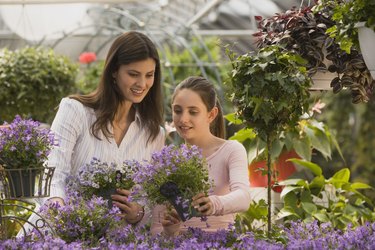
Ancient Indians, Egyptians, Romans, Greeks and Chinese have used essential oils for almost 6,000 years for therapeutic, spiritual, cosmetic and medicinal purposes. You can make essential oils yourself from herbs, plants, trees and fruits in your garden using the same methods as people from these cultures. Store the essential oils in brown or blue cobalt airtight bottles in a cool, dark place inside a special box made for them or in a dark cupboard or pantry to preserve them for up to a year.
The Harvest
Video of the Day
The essential oil you make may require the use of flowers, the aerial parts and leaves of a plant, seeds, roots, fruits, saps and resin, bark or bulbs, based on the particular plant, herb or fruit used. Harvest above-ground parts such as the flowers, stems and leaves after the morning dew. Harvest saps and resin in the autumn, fruit and seeds just before or near ripening, and roots and bulbs after the aerial parts of the plant have wilted. If you plan to use leaves, stems, flowers and seed heads, then harvest them during their mid-flowering period.
Video of the Day
Drying Methods
Tie leaves and stems in small bunches of about eight to 12 stems, and hang them upside-down to dry. Clean flowers of dirt, grime and bugs, and spread on newspaper or a paper-lined tray to dry. Arrange fruit on trays or use a food dryer with stacked trays to dry, turning fleshy fruit often. Collect sap in a cup tied to the tree after drilling a small hole. Only remove small sections of bark from a tree, never completely removing bark around its trunk to prevent killing it; break the bark into 1- to 2-inch squares and spread them on a newspaper or tray to dry. Wash roots to remove dirt before chopping them into 1/2-inch-size pieces to dry in a warm, sunny room. Dry whole leaves, stems and flowers with seed heads or pods in small bunches hung upside-down with a paper bag tied over the aerial parts of the plant.
Cold Infusion Methods
Fill a 16-ounce canning jar full with the cutup material chosen for the essential oil. Fill the jar with 16 ounces of organic and food-grade oil such as coconut, safflower, olive or jojoba oil. Tighten the lid on the jar, write the date on the lid and place it on a shelf in a sunny room for about two months -- but not in direct sunlight. After two months, strain the ingredients through cheesecloth into another bowl; squeeze the cheesecloth thoroughly to remove all the oils and fragrance from the ingredients. Store the oil in an airtight, dark bottle in a cool and dark place after labeling the bottle with the ingredients and the date.
Hot Infusion Method
Bring the water in a double boiler to a boil, and then turn down the heat for a gentle simmer. Combine the ingredients in the same ratios as that used for the cold infusion method in the top of a double boiler. Let the ingredients simmer on the stove for up to three hours. Strain the result through a cheesecloth after the ingredients have cooled to prevent burns, and store in dark-colored, labeled bottles with tight lids in a dark and cool spot.
Alcohol Tinctures
The tincture method takes less time than the cold infusion method, but it works in the same way. In place of the oil, use a ratio of 25 percent rum or vodka to 75 percent water in a canning jar with a tight lid. Store the ingredients on a sunny shelf for up to two weeks, straining the ingredients through cheesecloth before storing in the same manner.
Essential Oil Uses
Add five to 10 drops of an essential oil in lotions, or make your own sugar scrubs by combining raw sugar, drops of essential oil and coconut oil in solid form and add them to a small jar. You can also add essential oils to a burner for aromatherapy or just because you like the way they make your house smell. You can add them to homemade soaps -- liquid or bar -- make them into perfumes, lotions or creams.