tpicka/iStock/Getty Images
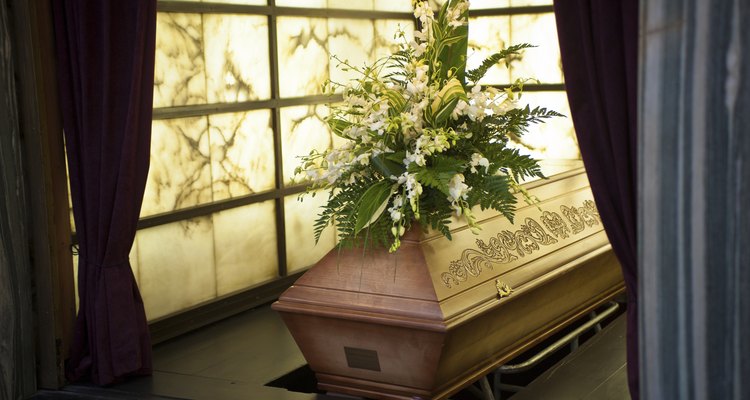
Death arrangements must sometimes cross state lines because of our on-the-move culture. Costs can vary, depending on whether the body is cremated or not and if there will be a funeral service at the destination mortuary. Laws also differ from state to state regarding the transportation of the deceased, which can make planning this final passage a little tricky.
Call the funeral home of your choosing in the destination city and state. Ask them to contact your local funeral home to make the necessary arrangements to remove the departed from the place of death. Confirm that both funeral homes have all of the information they need, including the name and address of the deceased, Social Security number, date and time of death, and the current location of the deceased. Remember to include your contact information, your relationship to the departed and the contact information for the attending physician.
Ask the funeral home how the body must be prepared for transport if you wish to move the deceased across state lines yourself, without the aid of the funeral home. (Any private large enough to carry the shipping container will do.) Inquire if embalming is required and what documentation is necessary. Communicate who the transportation agent is with the funeral director so the funeral home can provide the pertinent permits and paperwork.
If you are using a funeral home to transport the body, speak with the director to find out how much forwarding the remains costs. Confirm that the price includes pick-up, basic service, embalming and shipping costs.
Choose the type of shipping container, also called an Airtray, that you want to use to transport the deceased across state lines. Select the kind that carries the body only, or one that covers a casket. Note that used shipping containers can be reused to save money if the funeral home has an extra in storage. Speak with the receiving mortuary to confirm the cost of receiving the remains, filing the permits and death certificate, and moving the body to the cemetery. Ask for a price for a casket if you do not ship one with the deceased.
Discuss the obituary with the funeral director along with any remaining details, such as costs for opening and closing the grave site, and a grave liner.
Related Articles
How to Obtain a Death Certificate in ...

How to Report Verbal Abuse Against a ...

How to Get the Birth Certificates of ...
How to Find Out When Someone Died

How to Establish Texas Residency
How to Hire a Minister for a Funeral

How to Travel With Crematory Remains

Help With Funeral Payments for ...

What Happens to Dead People at a ...

Etiquette on Who Pays for a Funeral

How to Obtain a North Carolina Liquor ...
How to Obtain a Death Certificate in ...

How Do I Find Out the Tax ID Number for ...
What Is the Proper Thing to Do With ...

Donations in Lieu of Flowers for a ...
How to Replace a Lost Canadian Birth ...

How to Find a Daycare's EIN
How to Find Bank Accounts of Deceased ...

How to Legally Break a Wedding Contract
How to Obtain a Quaker Marriage License
References
Writer Bio
Kimberly Dyke is a Spanish interpreter with a B.A. in language and international trade from Clemson University. She began writing professionally in 2010, specializing in education, parenting and culture. Currently residing in South Carolina, Dyke has received certificates in photography and medical interpretation.
Photo Credits
tpicka/iStock/Getty Images