How to Do Chemical Analysis

How to Do Chemical Analysis thumbnail
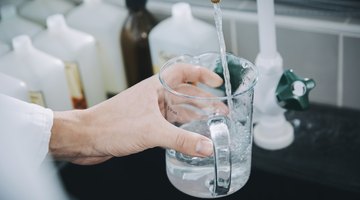
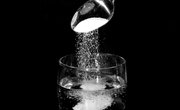
An example of a chemical to be analyzed.

A cornerstone of chemistry is the use of reactions to transform materials into other materials. But often, reactants must be identified before they can be used in a large-scale reaction. And once a product has been made, it must be tested for purity and yield. The techniques used for these tests are in the realm of chemical analysis. Using a host of common chemical analysis strategies, a scientist can get a chemical profile of a substance. This profile can prove invaluable in controlling chemical reactions and obtaining desired products, and is of great use to any chemist.

Things You'll Need

  • Unknown chemical (or chemical with unknown properties)
  • Merck manual or other chemical identification resource
  • Bunsen burner
  • Steel loop
  • Several 100- and 250-milliliter beakers
  • 10- and 100-mL graduated cylinders
  • Thermometer
  • 50-mL buret
  • Universal indicator
  • Hydrochloric acid (any precisely known concentration)
  • Sodium hydroxide (any precisely known concentration)
  • Magnetic stir bar
  • Hot plate and electrical outlet
  • Various common alkaline earth metal and transition metal solutions, as needed
  • Mass balance
Show More

Instructions

  1. Determining the Cation: Flame Test

    • 1

      Connect the Bunsen burner to a gas source and open the gas flow.

    • 2

      Light the Bunsen burner by lighting a match and quickly positioning it near the opening of the burner.

    • 3

      Divide the chemical to be analyzed (henceforth referred to as the "analyte") into five or more beakers. Leave enough of the chemical in each container to be reasonably analyzed.

    • 4

      Dissolve a portion of the analyte in distilled water (if it is not already in solution) until no solid remains visible.

    • 5
      Results of a Flame Test

      Dip a steel loop in a solution of hydrochloric acid (HCl). Then dip the loop in the solution containing the analyte. Wave the loop through the Bunsen burner flame, and note the new color of the flame. See the References section for a list of flame test colors and their corresponding cations.

    Determining the Anion: Precipitation Tests

    • 6

      Once the cation is deduced by the flame test, determine the anion of the compound using precipitation techniques, which are largely based on trial and error.

      Begin by obtaining as many solutions as possible from the following list: calcium, magnesium, strontium, barium, copper (II), silver, and cobalt (II) nitrate.

    • 7

      Systematically and separately mix each nitrate solution with the analyte solution, noting everything that happens when you do.

    • 8

      Consult a Merck index, a Handbook of Chemistry and Physics or an online resource to match the precipitates that you recorded with known compounds. This should allow you to determine the anion of the chemical in question via cross-referencing.

    • 9

      Write a general chemical formula for the compound using the cation and anion data collected, using variables x, y, etc. as subscripts. Even if the chemical's identity was already known, sometimes a chemical reaction forms several compounds. The following section will allow you to fill in the variable subscripts.

    • 10

      Turn off the Bunsen burner and dispose of the precipitates in a chemical waste container (not a trash can).

    Determining the Subscripts of the Analyte: Gravimetric Analysis and Titration Preparation

    • 11

      Measure the mass of a sample of solid analyte using a mass balance. Record the value indicated by the balance as precisely as possible.

    • 12

      In a fume hood (for safety), heat the solid sample on a hot plate in a crucible. Observe any color changes or effused gases.

    • 13

      After about 15 minutes of heating, remeasure the solid sample's mass on the balance. Note whether it has changed. If so, record the new mass of the sample. If there is a change, it is likely caused by waters of hydration attached to the sample, which are important to identify in chemical analysis.

    • 14

      Now prepare a separate analyte solution. Transfer a known volume (but unknown concentration) of this solution to a 250-mL beaker. Add a few drops of universal indicator to the beaker, and observe the color.

    • 15

      Determine a suitable titration for the analysis based on the anion found in Section 2. For example, if the anion is acidic in solution, titrate with sodium hydroxide (NaOH), and if it is basic in solution, titrate with HCl. Use the link provided in Additional Resources to choose a suitable indicator for the titration.

    • 16

      Run the titration by dripping the acid or base in the buret down into the beaker below. Record the volume of titrant you have added when the indicator in the beaker changes color.

    • 17

      Once the titration is complete, use the volumes recorded to determine the relative mole ratios of each element in your compound. Use this information to determine the empirical formula of the analyte. See the Additional Resources section for more help in doing this.

Tips & Warnings

  • If the unknown material is in solution, you can extract its solid form by slowly boiling it and running it through any common filtration setup using filter paper. Try making a table to organize the findings of the precipitation tests. Include colors and textures.

  • Use common sense when handling chemicals. Perform Section 2 in a fume hood because mixing chemicals can sometimes produce volatile, toxic gases. Always wear safety gear and gloves in the laboratory. Be sure to extinguish the Bunsen burner before continuing past Section 1 to keep flammable gases from touching the flame.

Related Searches:

References

Resources

  • Photo Credit Flickr user, Hey Paul, Zawezome

Comments

You May Also Like

  • How to Perform a Hair Analysis

    A professional hair analysis is performed by stylists before every salon treatment during the consultation phase of a salon visit. Sometimes, the...

  • How to Obtain a Chemical Analysis of a Substance

    If you have a strange substance in your water supply and are worried about contamination, or you think that rock in your...

  • First Step in Soil Analysis

    Analysis from a reputable lab provides the best advice on the type and quantity of soil amendments needed to improve crop yield....

  • Qualitative Chemical Analysis

    There are plenty of times when a person doesn't know what a substance is, especially if the substance looks, smells or behaves...

  • How to Determine Acids & Bases

    The acidity of a solution is based on the concentration of hydrogen ions and are detectable using a pH scale. If the...

  • Acid Base Titration Theory

    In chemistry, acid-base titration is used to determine the concentration of a solution. The process of titrating utilizes a solution of unknown...

  • How to Carry out a Chemical Leaching Experiment for Plastics

    The leaching of potentially harmful chemicals such as bisphenol A, also known as BPA, from plastic containers has become a public health...

  • Chemical Analysis of Ambient Air

    Ambient, or outdoor, air directly affects the health of all living things that breathe it. In the United States, the Environmental Protection...

  • Instrumental Methods of Chemical Analysis

    There are many different types of chemical analysis, both quantitative and qualitative. Qualitative methods are used to identify unknown substances, and quantitative...

  • How to Do Chemical Test for Gold

    Gold is a rare metal commonly used in jewelry, currency and electronics. Its shiny yellow color made it popular throughout history for...

  • Reliability of Volumetric Analysis

    Wet-test laboratory methods include gravimetric (by weight) and volumetric (solution-based) determinations. Of the two methods, gravimetric analysis is the more ...

  • How to Calculate Bias Clinical Chemistry

    Utilizing the Six Sigma method of calculating bias in clinical chemistry provides highly accurate reference data to determine the degree of deviance...

  • How to Do a Two-Step TB Test

    Tuberculin skin testing (TST) is the standard method for screening for tuberculosis (TB) infection. Because the immune system looses its ability to...

  • Techniques Used by Forensic Scientists

    Forensic scientists utilize techniques in photography, DNA analysis, entomology and toxicology when handling evidence. You will find forensic scientists working ...

  • Ion Chromatograph for the Analysis of Water

    The goal of ion chromatography (IC) is to separate a water sample into individual peaks on a band. Each peak represents an...

  • Chemical Analysis of Soil

    Different types of soils provide livable conditions for different types of plants. Analyzing soil chemically helps gardeners know which nutrients exist in...

  • How to Read a Soil Analysis

    Reading and understanding a soil analysis report can be a challenge because the information is detailed and complex, but it can help...

  • How to Prepare a Sample for Chemical Analysis

    The success or failure of a chemical analysis hinges largely on the proper sample preparation. Lab technicians spend up to 80 percent...

Related Ads

Featured