
The Difference Between Basketball & Cross Trainer Shoes
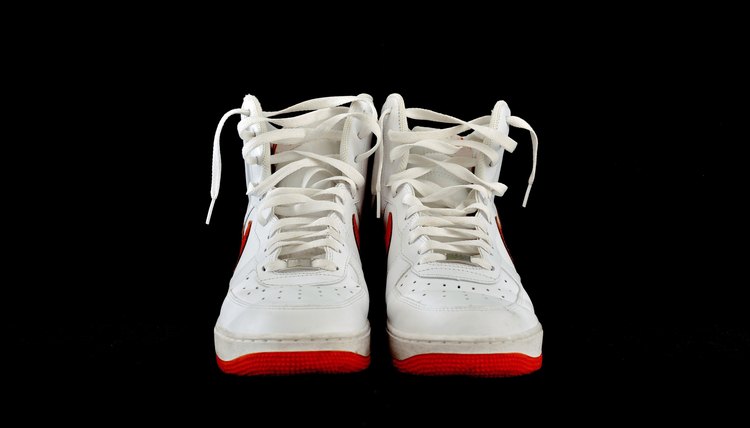
Walk into a shoe store, and you are faced with rows and rows of athletic shoes with different designs, constructions and features. Trying to choose the right type of athletic shoe can be challenging, especially since these shoes can be costly. For example, basketball and cross trainer shoes have numerous similarities but are designed for different applications. These shoes differ in terms of the overall versatility of the shoe, the support and stability, the cushioning and the materials on the sole.
Shoe Designs
The design and construction of cross trainers and basketball shoes result in the level of versatility of each shoe. Cross trainers are designed with a low-top construction to be versatile and functional. Because there is no restriction at the ankle joint, these shoes allow you to use a large range of motion, making quick changes of direction possible. This specific design allows cross trainers to be used for a wide range of activities, including workouts, running and sports. Basketball shoes, however, are specifically designed for that sport and come in low-top, mid-top or high-top designs. The ability to choose a low-, mid- or high-top basketball shoe allows players to choose their preference for fit and ankle support.
Ankle Support
Support and stability are major factors in basketball shoes. Basketball shoes are made with stiff, dense materials to prevent the foot and ankle from rolling during constant lateral movements and changes of direction. They also have a thin layer of lateral cushioning so your foot stays low to the court. Cross trainers also have lateral support and stability but are not designed to withstand the same amount of pressure as basketball shoes.
Cushioning Materials
Cross trainers and basketball shoes are made with various cushioning materials, including ethylene vinyl acetate -- EVA -- or polyurethane -- PU. EVA is a lightweight cushioning material known for stability and durability, while PU is slightly more dense and durable. While both cross trainers and basketball shoes contain the same basic cushioning materials, each shoe has different cushioning patterns and designs to meet the demands of the activities. For example, basketball shoes have a thick layer of cushioning throughout the sole with reinforced cushioning in the heel and ball of the foot to withstand the constant running, jumping and general pounding on the feet during a basketball game. Cross trainers, however, have a thin layer of cushioning without any reinforced areas.
Sole Types
Traction on the basketball court is essential for quickness and agility. As a result, basketball shoes are designed with a rubber bottom for indoor courts. This rubber material has a specific tread pattern that provides solid traction without marking the court. Most cross trainers are made with a durable rubber outsole such as carbon rubber or blown rubber. This type of rubber makes the outsole soft, light and flexible so it is suitable for various courts, including a tennis or basketball court.
References
Writer Bio
Based in Nebraska, Jeremy Hoefs began writing fitness, nutrition, outdoor and hunting articles in 2006. His articles have been published in "Star City Sports," "Hunting Fitness Magazine" and RutWear field journals, as well as on the Western Whitetail website. Hoefs graduated with a Bachelor of Science in exercise science from Nebraska Wesleyan University.