How to Reverse a Vacuum Cleaner to Inflate

How to Reverse a Vacuum Cleaner to Inflate thumbnail
Earl53

If you have a large, inflatable bed or pool float but don't have an air compressor or leaf blower, you know you have a problem. Neither a foot pump nor your lungs are the answer. Fortunately, you can rig certain vacuum cleaner models to do the job. Does this Spark an idea?

Things You'll Need

  • Duct tape
  • Wet/Dry vacuum or upright vacuum
  • Plastic water bottle
  • Utility knife
Show More

Instructions

  1. How to Reverse an Upright Vacuum Cleaner to Inflate

    • 1

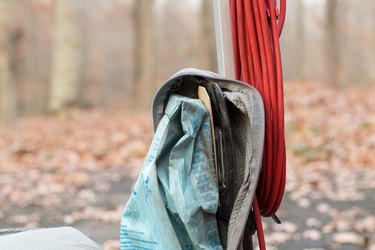
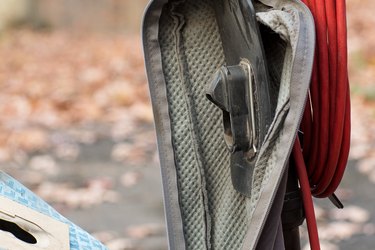
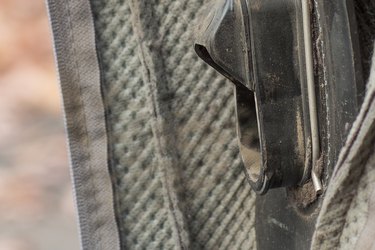
      If you have an upright, locate where the bag attaches to the vacuum inside the vacuum bag compartment. Some upright vacuums have a plastic fitting where the bag attaches. Other models have a switch that will reverse the airflow.

    • 2

      Remove the vacuum bag and detach the flexible hose from the vacuum if the model has a hose.

    • 3

      Take the vacuum into a garage or out to the driveway or patio. Plug in the vacuum, point it away from you and turn it on to blow dust, hair and dirt out of the vacuum. Let the vacuum run for a minute or two to clean it completely.

    • 4

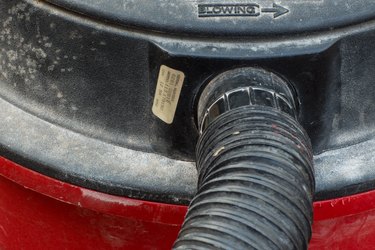
      Cut pieces of duct tape to secure the hose to the opening where you detached the vacuum cleaner bag from the vacuum cleaner. Seal it as tightly as possible to avoid any air leakage. If your vacuum is a wet dry vac, you should be able to attach the hose directly to the vacuum's exhaust fitting with duct tape, sealing it tightly.

    • 5

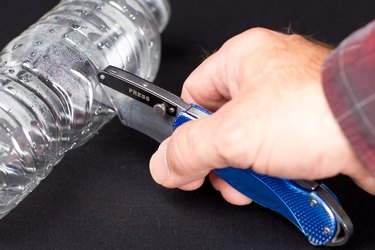
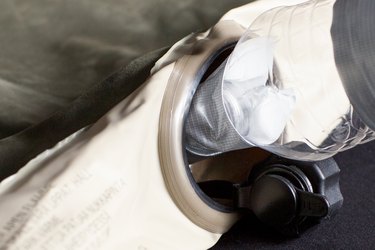
      Use the utility knife to cut the bottom off the plastic water bottle. Remove the plastic cap. Securely attach the bottom end of the water bottle to the end of the vacuum hose with duct tape. Seal as tightly as possible. The plastic bottle neck becomes an adapter that fits into many raft nozzles.

    • 6

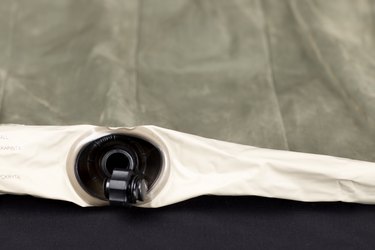
      Cut additional pieces of duct tape, as needed, to use in securing the bottle top to the item you want to inflate. This seal should be as airtight as possible but also easy to remove.

Tips & Warnings

  • Air blows with considerable force into the vacuum interior. Protect your face when reversing the vacuum, and keep your hands, hair and clothing away from the suction areas of the vacuum.

  • Do not disassemble the vacuum cleaner other than removing the case that holds the vacuum cleaner bag. Doing anything to the electrical parts of the vacuum is dangerous and may void the manufacturer's warranty.

Related Searches:

Resources

Comments

You May Also Like

  • How to Use Reverse Osmosis in Sugaring

    Reverse osmosis (RO), also termed hyperfiltration, is an effective alternative to save energy usage by 60-70 percent, reduce time and improve the...

  • How to Inflate a Swimming Pool With a Vacuum Cleaner

    An inflatable swimming pool provides cool comfort on hot summer days without the requirement of ongoing maintenance issues that a permanent pool...

  • How to Fix Your Vacuum Cleaner

    If your vacuum runs but still leaves dirt behind, the culprit could be the drive belt or an obstruction. If the agitator...

  • How To Reverse ED

    Erectile dysfunction, or ED, also goes by the name "impotence." This is a condition where a male cannot achieve or maintain an...

  • How to Unclog a Central Vacuum System

    Clogs are a common problem with central vacuum systems. The good news is that you can remove most clogs without calling a...

  • How to Compare the Best Vacuums

    Without vacuum cleaners, the carpeted areas in our homes become filthy and provide the perfect environment for dust mites and other pathogens...

  • How to Inflate With a Kirby Vacuum

    The Kirby Co. has been selling vacuums since the 1920s. Marketed as a high-powered and efficient cleaning appliance, the Kirby vacuum also...

  • How to Remove a Vacuum Breaker

    A vacuum breaker is a small but important part of a standard garden hose. It attaches the faucet or hose bibb to...

  • Motor Types Used in Vacuum Cleaners

    Motor Types Used in Vacuum Cleaners. Three primary types of vacuum cleaner motors exist. These motors, AC, brushed DC and brushless DC,...

Related Ads

Featured