
11 Yoga Poses to Eliminate Stress From Your Day
If you’ve ever been stressed out, you know that stress can accumulate and manifest itself physically. But most often it originates in the mind. In Western society, the to-do lists can feel never ending, leaving very little time for self-care. It’s imperative to set aside some time every day to focus on your own health and well-being. This will help you reduce stress, prevent sickness and disease and help slow down the aging process. Try these 11 yoga poses -- each one simple enough that anyone can do them -- and, with time, you will see your flexibility improve, your stress levels reduce and notice a refreshing feeling of well-being and inner peace.
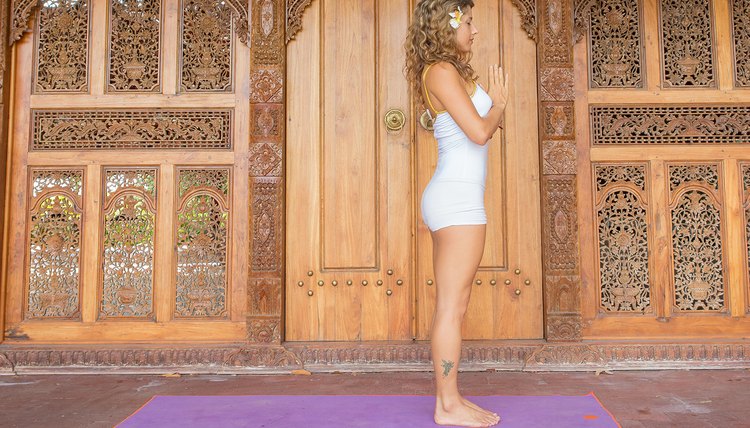
1. Mountain Pose (Tadasana)
Even though this pose looks like one of the simplest, it can be one of the most difficult to really perfect. HOW TO DO IT: Stand up straight with your feet planted firmly and evenly on the floor. Make sure that your knees stack over your ankles but aren’t locked straight. Engage your glutes and maintain a neutral pelvis. Brace your core muscles and bring your shoulders back and down. Keep your hands at your side with palms facing out or bring them to your heart center. Close your eyes and remain here for five to 10 breaths.
Tony Felgueiras/TonyFPhotography.com
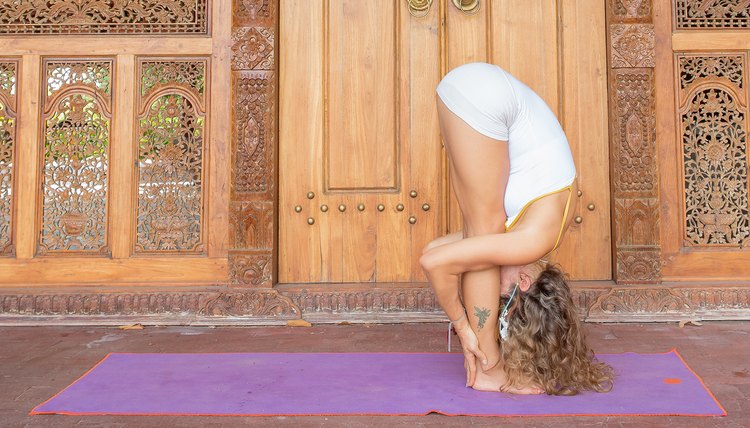
2. Forward Fold (Uttanasana)
This pose is a partial inversion, reversing the blood flow and releasing the lower back, hamstrings and spine. HOW TO DO IT: Start standing, then fold forward and reach for your toes, ankles or, if you have severe tightness, your thighs or knees. The key is to relax into it. Lengthen from the lower back and allow the crown of your head to hang down toward the floor with your neck totally relaxed. Breathe deeply as you draw your torso closer to your legs. Stay for five to 10 breaths to start, and notice how your flexibility improves with each breath.
Tony Felgueiras/TonyFPhotography.com
3. Extended Pigeon (Eka Pada Rajakapotasana)
This seated hip stretch is wonderful for people who sit at a desk all day or spend hours in a car: It opens the front hip and back hip extensors and strengthens the core and lower back. If your back is not strong enough to stay extended for more than a breath or two, don’t worry. You’ll become stronger and more flexible with practice. HOW TO DO IT: Start seated with one knee bent in front of you and the other leg extended behind you. If necessary, use a block under the bent-leg hip to elevate the hips. This will alleviate some of the pressure and make balancing easier until your flexibility improves. Lengthen from the lower back and use the strength of your core to lengthen your spine toward the ceiling. Try holding for five to 10 breaths on each side and increase the duration as you gain strength, endurance and flexibility. Be sure to repeat on both legs.

Tony Felgueiras/TonyFPhotography.com
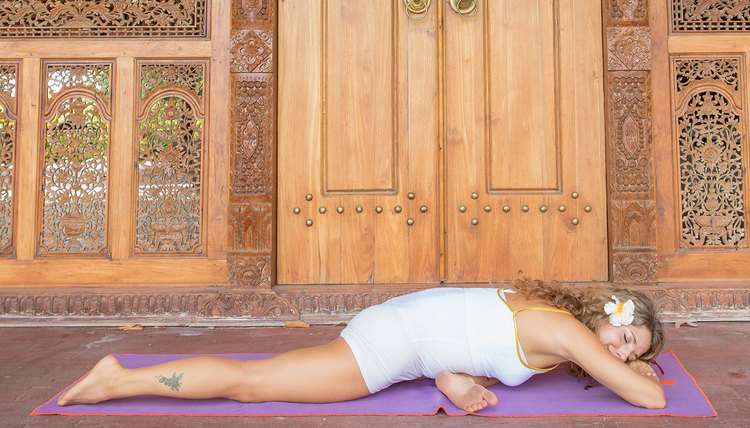
4. Folded Pigeon (Eka Pada Rajakapotasana)
This is a deeper variation of pigeon pose, but it requires less strength and is more relaxing. This is a deep hip stretch, so stay with it and breath deeply. Feel free to use a mantra like “Inhale Let, Exhale Go,” reminding yourself to let go, surrender and relax into the pose. This will help release the stress stored in the hips and increase your flexibility. HOW TO DO IT: Start in the same position as extended pigeon. Lengthen from the lower back and place your palms or forearms on the floor in front of you. If you feel flexible enough, see if you can come all the way down on the forearms or even make a pillow with your hands and rest your forehead on your arms. Be sure to repeat on both legs.
Tony Felgueiras/TonyFPhotography.com
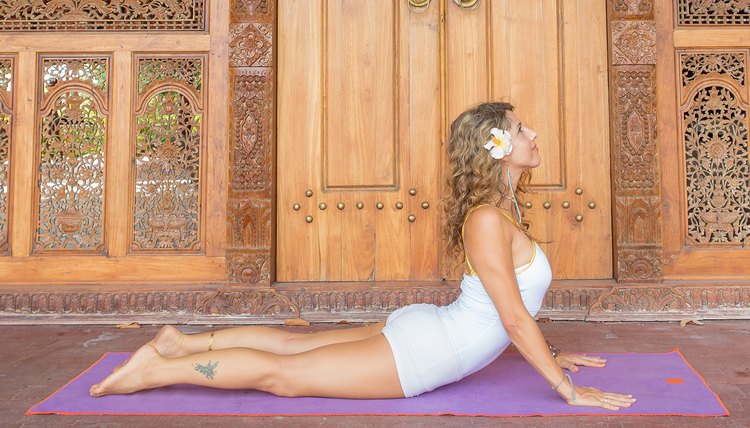
5. Cobra (Bhujangasana)
This fundamental yoga pose is a wonderful spinal stretch that opens the front of the body and strengthens the muscles along the spine. HOW TO DO IT: Start on your belly. Place both palms under your shoulders, fingers spread wide, pelvis rooted into the mat. Pressing evenly into both palms, lift the chest up and draw the shoulder blades together behind your back. Allow your shoulders to drop down away from your ears to create space between your ears and shoulders. Lift your heart and look forward or slightly up. Take a few breaths and lower slowly back down.
Tony Felgueiras/TonyFPhotography.com
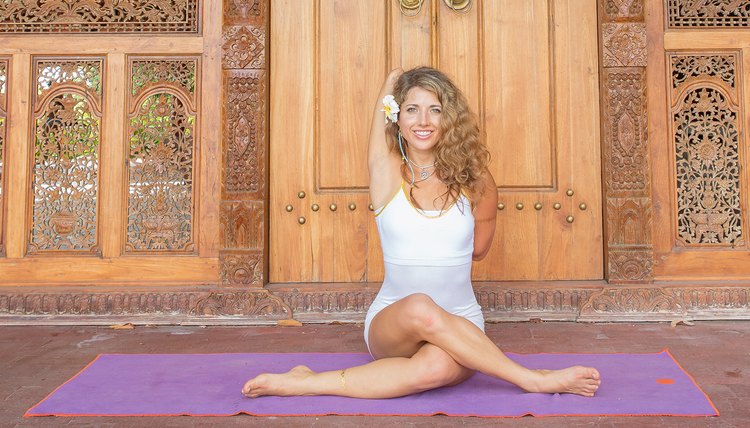
6. Cow Face (Gomukhasana)
This hip opener is not as easy as it looks. For those with tight hips, you may wish to elevate yourself with a cushion or block under your hips to alleviate some pressure from the hips and knees. HOW TO DO IT: Starting seated, cross the knees and either bring the feet close to the hips or away from you to increase the stretch. With your knees stacked directly on top of each other if possible, aim to sit with your spine straight and the crown of the head lifted. To increase the intensity, fold forward or opt for some arm variations. Hold for five to 10 breaths on each side (then switch so that the other knee is on top).
Tony Felgueiras/TonyFPhotography.com
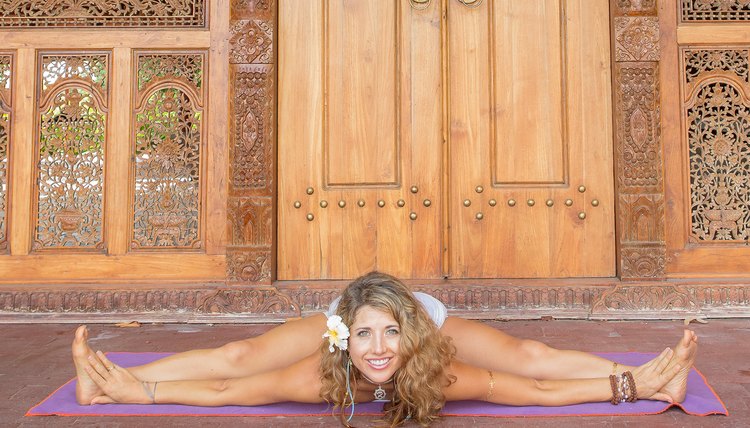
7. Wide-Legged Forward Fold (Prasarita Padottanasana)
Inner thighs are the complementary muscle groups to the hips, so always include both in your yoga routine. This simple wide-legged forward bend can be quite challenging if you have tight hips, hamstrings or inner thighs. With a tight or sore lower back, it can feel even more painful. Try to sit with your spine straight and tailbone tilted back. HOW TO DO IT: Spread your legs as wide as you can as you gently fold forward. Place your palms flat on the floor in between the legs and slowly walk them forward until you can rest your forearms on the floor (or get as close as you can). Eventually you will be able to get your chest all the way down to the floor and extend the arms to either foot. Start where you are and remember to breath and surrender. Hold for at least five to 10 breaths and increase your time as you feel able to. The longer you can hold a pose, the more you will benefit from it and see progress.
Tony Felgueiras/TonyFPhotography.com
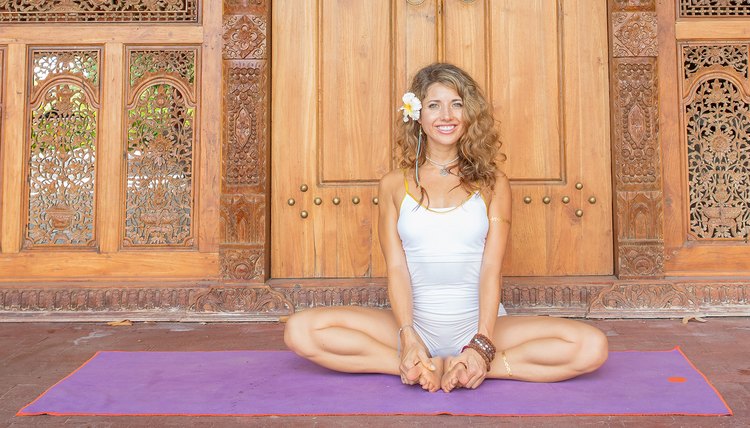
8. Butterfly (Badhakonasana)
This is a great counterpose to the wide-legged forward fold. HOW TO DO IT: Bend the knees and bring the soles of your feet together in front of you. Elongate your spine and tilt your tailbone slightly back to get more length. If you feel you can go deeper, fold forward, pressing your knees down toward the floor with your elbows, and lower your chest down toward your feet. Hold for five to 10 breaths and slowly release by bringing your knees together.
Tony Felgueiras/TonyFPhotography.com
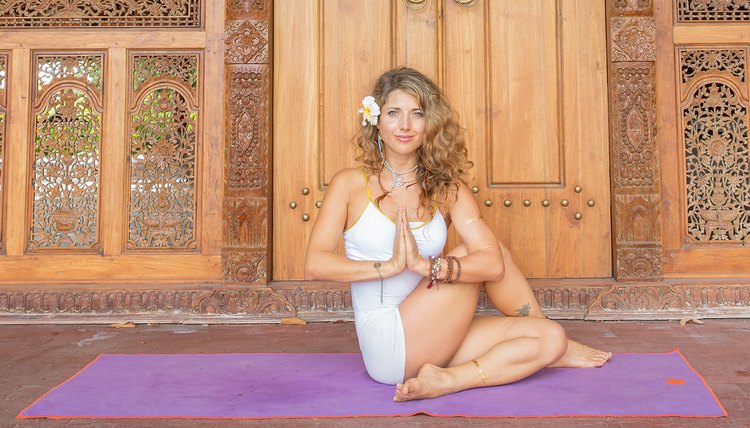
9. Seated Spinal Twist (Ardha Matsyendrasana)
To complete a fully relaxing, stress-relieving yoga session, include a spinal twist. This stretches the muscles in the lower back, hips, glutes and spine. HOW TO DO IT: Start seated with your left knee bent out to the side and resting on the floor, foot on the outside of the right hip. The right knee is bent up toward your chest, foot planted securely near the left hip. Inhale and lengthen the spine as you reach the left arm up toward the sky. Exhale to twist, and draw your palms together into a prayer at your heart. Hold for three to five breaths and slowly release. Repeat on the other side.
Tony Felgueiras/TonyFPhotography.com
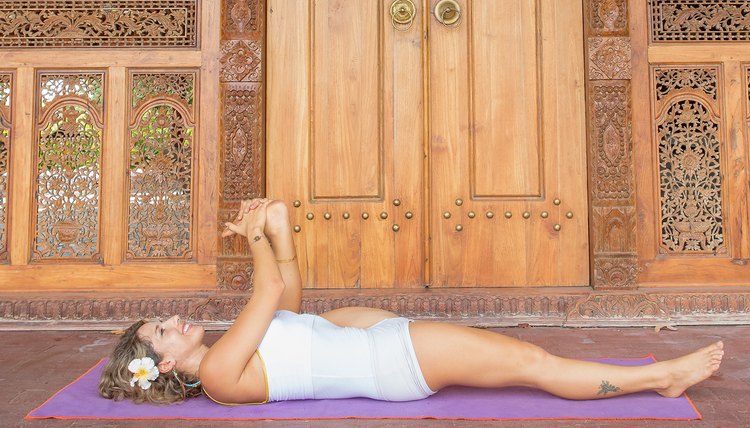
10. Half Happy Baby (Ananda Balasana)
As you complete this series, it’s nice and relaxing to end in the supine position (lying on your back). This leads toward your final relaxation pose, also known as Savasana, and releases the hips one last time in a different variation. HOW TO DO IT: Starting on your back, bend your right knee and bring it toward the floor on the right side of your body. Grab your foot and use your arms to pull it down toward the floor while keeping the foot flat and facing the sky. If your hip is too tight to reach the foot, use a strap or towel around the foot to be able to reach it. Hold for five to 10 breaths and repeat on the other side.
Tony Felgueiras/TonyFPhotography.com
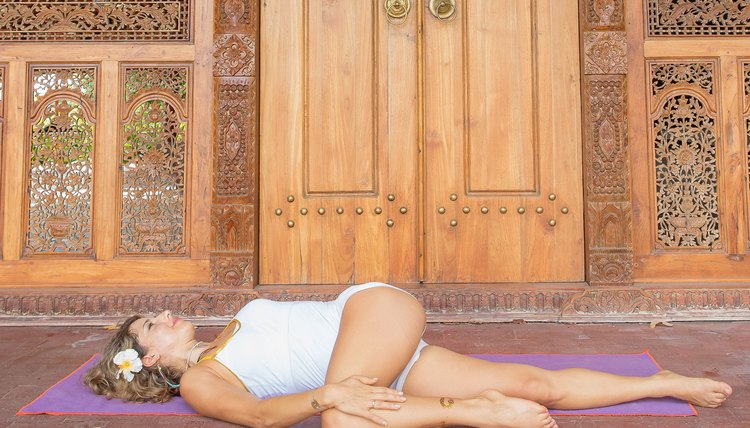
11. Supine Spinal Twist (Supta Matsyendrasana)
The intention of this pose is to release any last tension from your body and relax. HOW TO DO IT: Lying on your back, breathe deeply and press the knee toward the opposite side of your body as you press your opposite shoulder down toward the mat or floor on the other side. The twist should take place on the exhale as you release any last feelings of tension or stress. Feel your body open. Feel the sensations of relaxation wash over you as you repeat this on both sides and end with a nice meditative silence. Notice the inner peace and contentment you feel. Let go of all thoughts and surrender to the beauty of this moment.
Tony Felgueiras/TonyFPhotography.com
What Do YOU Think?
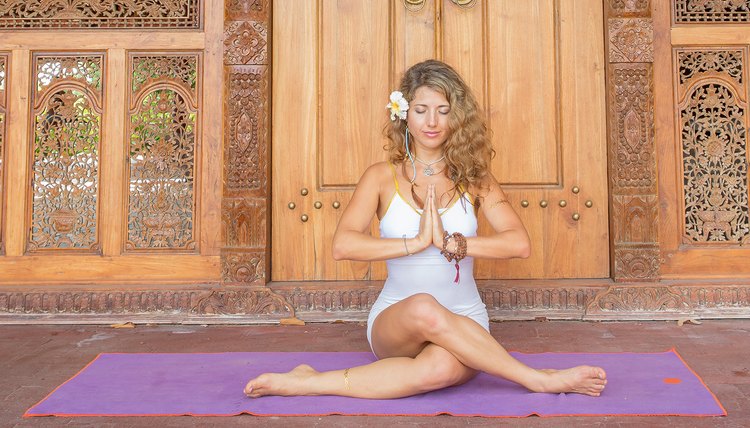
Typically, yoga series end in Savasana, which is just laying on your back with arms and legs spread apart from the body in total relaxation. Feel free to repeat this series any time you feel stressed, before bed or any time during the day that you have time to relax. What are some other poses you use to relax and get rid of stress? Is there anything else you do when you’re stressed out?
Tony Felgueiras/TonyFPhotography.com
Writer Bio
Dashama is the founder of Pranashama Yoga Institute, certifying yoga teachers internationally, and the pioneer credited with starting the paddleboard yoga trend. She is also the producer of more than 25 yoga instructional DVDs, author of "Journey to Joyful" and several other health and yoga related books. One of the first yoga teachers on Youtube, Dashama's 30 Day Yoga Challenge went viral in 2009 reaching millions of people world wide and started the online social media yoga challenge trend.