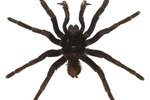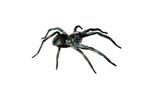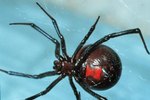

Wolf spiders are members of the Lycosidae family of spiders. In the Greek language, lycos means “wolf.” These hairy crawlers were named after wolves because early scientists mistakenly believed that they hunted in groups. There are more than 3,000 species of wolf spiders that live on every continent on Earth except Antarctica.
Size and Appearance
Wolf spiders range in size from ¼ to 2 inches long. Their bodies and legs are covered in bristly hairs. They are divided into two segments: the cephalothorax and abdomen. On the front of the cephalothorax are the eyes, mouth, fangs and pedipalps, used to grab prey. All eight legs are attached to it. The abdomen produces silk and contains the reproductive and digestive systems.
The Eyes Have It
All wolf spiders have three rows of eyes. There are four small, forward-facing eyes on the bottom, two large, forward-facing eyes in the middle, and two medium-sized eyes on top that face to the sides. Wolf spiders can't move their eyes, but they can see in four directions at one time. And they are easy to find at night -- if you shine a flashlight on a wolf spider, its eyes glow back at you.
Camouflage Colors
Wolf spiders are colored in drab black, brown, orange and gray in order to blend into their environment. These camouflage colors enable the spiders to surprise their prey while hunting and to hide from predators who want to eat them, like hunting wasps and mantis flies.
Home Sweet Home
Wolf spiders are very adaptable to different habitats. Basically, wherever there are insects to eat, there will be wolf spiders to eat them. Wolf spiders are comfortable in open grasslands and fields, suburban backyards, dense wooded areas, shrublands, wet coastal forests, and in the thick vegetation that grows along streams, lakes and marshes.
Ground Hunters
Many spiders live in webs and use them to snare prey, but not wolf spiders. Wolf spiders live under rocks, logs and leaves, and dig tunnels into the ground. They are aggressive ground hunters. Wolf spiders have two methods of hunting: they either actively stalk their prey, pursuing them at high speeds, or they lie in wait in their tunnels, wait for prey to pass by and ambush it.
Maternal Instincts
The female wolf spider builds a silk sac containing approximately 100 eggs. She attaches it to her abdomen and carries it everywhere she goes. When the spiderlings (baby spiders) are ready to hatch, their mother rips open the top of the egg sac. The spiderlings crawl up her legs and onto her back. Once again mom carries them everywhere until they are ready to climb down and venture out on their own.
References
Resources
Photo Credits
-
Comstock/Comstock/Getty Images
Writer Bio
Yvette Sajem has been a professional writer since 1995. Her work includes greeting cards and two children's books. A lifelong animal advocate, she is active in animal rescue and transport, and is particularly partial to senior and special needs animals.