
How to Make Your Own BO Staff
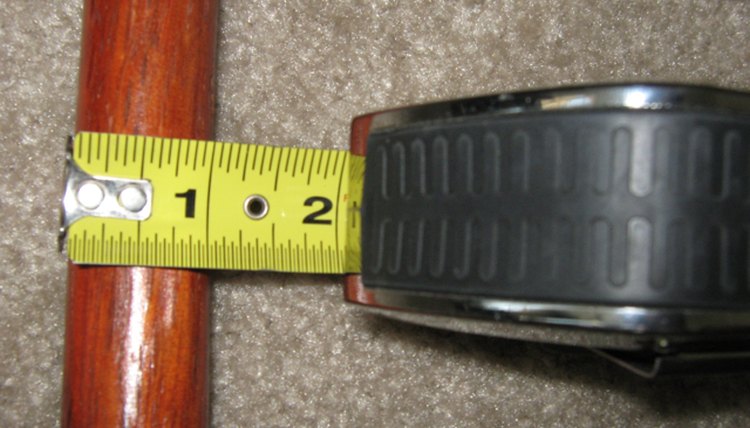
It is possible to make your own bo staff as long as you have basic woodworking skills. Essentially a bo staff is a long stick. However, to be an effective martial arts weapon it should fit precise dimensions. A bo staff should be a specific width in the middle to ensure a firm grip while tapering at the ends to increase speed while spinning.
Choose your wood. This is a very important decision since the type of wood chosen determines how heavy, durable, and fast the bo staff will be. Commonly used woods for are ash, cherry, black walnut, and maple. They are both lightweight and sturdy.
Measure the length. The standard length is 72 inches from tip to tip. Some people like to customize their staff for their height. You can make the staff your height or slightly taller if you are using it for combat. Make it slightly shorter than you if you want to focus on speed.
Cut the bo staff to your desired length. You can avoid this step by buying your wood at your desired length.
Mark the center point and measure the desired width. The standard center width is one inch in diameter or 3.14 inches in circumference. You can make this larger or smaller depending on the size of your hands.
Mark the desired width of the tips. The standard width of staff tips are 3/4 inch in diameter or a circumference of 2.35 inches. They can be tapered if you want more speed.
Cut the corners from your piece of wood. Pay close attention to the taper from the center to the tips. Make this a rough cut. Keep the bo staff as round as possible.
Sand down the bo staff until it is round and smooth. This requires constant checking of dimensions. Remember, you can always sand away more but you can't put back wood that you removed.
Check the balance. Rest it on two fingers placed at the center point. If the bo staff tips in either direction then it is not balanced. Sand to compensate. Perfect balance is necessary to spin a bo staff.
Apply laminate to the bo staff. This makes the wood smooth and stronger.
Tips
If you are looking for a very light wood use cedar or If you want a tougher would use hickory.
Tips
- If you are looking for a very light wood use cedar or If you want a tougher would use hickory.
Writer Bio
Kent Ninomiya is a veteran journalist with over 23 years experience as a television news anchor, reporter and managing editor. He traveled to more than 100 countries on all seven continents, including Antarctica. Ninomiya holds a Bachelor of Arts in social sciences with emphasis in history, political science and mass communications from the University of California at Berkeley.