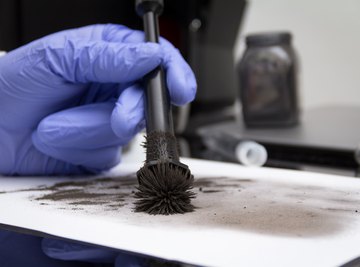

Thanks to television, many high school students have a fictionalized view of the highly specialized field of forensic science. However, school forensic science projects can help them understand the complex sciences involved in the field and even spark career interest. Fingerprints, forensic anthropology, ballistics or physical evidence provide a variety of project ideas when approached from the perspective of a high school student.
Fingerprint Science Fair Projects
Explore the similarities between the fingerprints of siblings and compares these patterns to those found in a stranger’s fingerprints. Include a study on whether or not identical twins have the same or different fingerprints. Expand the project to explore whether fingerprints are hereditary--and whether or not families show pattern similarities. Set up a display that shows how to fingerprint a crime scene and display the various pieces of equipment used in the process.
Forensic Anthropology
Skeletal remains help to identify whether a subject is human, how he died and whether or not the remains indicate the commission of a crime. Create a science project that focuses on the use of skeletal remains as a way to identify a victim and understand what happened to him. Projects could include the building of a human face from a skeleton for the purposes of identification. Show how the various forensic anthropological techniques assist in assessing age, sex, size of the victim, possible relatives and ancestry, as well as analyzing disease, traumas and postmortem intervals.
Forensic Ballistics
Forensic ballistics studies bullets found at the scene of a crime to determine if they were used to commit a homicide or other crime. Identify different ways a forensic ballistics expert might show how to identify a bullet and the gun from which it was shot. Beyond the studying of bullets, a forensic ballistics expert is often called into a crime investigation to determine the type of weapon used to perpetuate the crime. Show the different ways such an expert might identify such weaponry.
Forensic Evidence
The evidence found at a crime scene will tell the same story, once the crime scene investigator has put together all the pieces. When investigating a crime scene, investigators find, label and secure all evidence in a particular process and document a chain of custody to ensure the protection of the evidence for use in court.
Demonstrate the different means of collecting and analyzing forensic evidence such as glass shards, fabric, hair or foreign material found at the scene of a crime. Create a detailed display that shows how the chain of custody works and why it is important to a criminal case.
References
About the Author
As a journalist and editor for several years, Laurie Brenner has covered many topics in her writings, but science is one of her first loves. Her stint as Manager of the California State Mining and Mineral Museum in California's gold country served to deepen her interest in science which she now fulfills by writing for online science websites. Brenner is also a published sci-fi author. She graduated from San Diego's Coleman College in 1972.