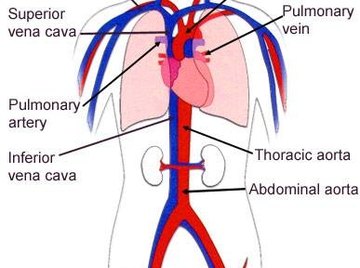

Most adults understand that blood pressure is an important measure of wellness. We know that high blood pressure (hypertension) is a bad thing, even if we don't know exactly what it means. So imagine how much more challenging the concept must be to children, who may not yet understand how the circulatory system works to begin with. If you know youngsters who are curious, these tips can help you give them some answers about blood pressure.
- Diagrams
- Balloon
- Fuel pump bulb system
Start with basic concepts. Children will not be able to grasp blood pressure if they don't have a handle on the heart and its job, the circulatory system and its job, and how the heart works to pump blood throughout the circulatory system. From there, go on to explain blood pressure: It is the amount of pressure blood exerts on blood vessels.
Use a balloon to show how blood pressure works. Fill the balloon so that it is moderately firm and let the kids feel it. Now blow in extra air to show additional pressure and invite them to feel again.
Show children where they can feel their own pulse; the wrist is perhaps the easiest to find. It's on the thumb side of the wrist, usually a finger-width or two from the wrist joint. Explain that the little flutter they feel in their wrist is the blood that pushes through their veins and arteries each time their heart goes through a pumping cycle. When they feel their pulse, they're actually "feeling" blood pressure.
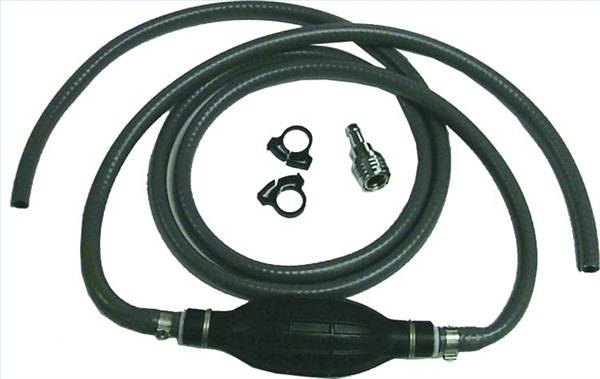
Use a model to demonstrate the concept. You can make a simple model with a marine primer bulb and fuel hose. Place one end of the hose in a container of water (explain that it's the equivalent of the human body and its blood supply) and squeeze the bulb (the heart, in this case) until you draw water up into the line. Continue to squeeze the "heart" until water flows out the opposite end of the tube. Let the kids have a turn squeezing, too. To make it more realistic, put a few drops of red food coloring in the water.
Create an active learning environment. Ask questions as you proceed. Children have huge imaginations, and they frequently respond well when you pose "what if" and "what happens" questions. Go slowly enough to give them time to understand and figure out questions of their own.
Keep it fun and not scary. The human body is fascinating, and they're going to be at home in one for a long time, so help them be comfortable with it.
Things You'll Need
About the Author
Colleen Morrison has been writing professionally for two decades. She holds an M.A. from the University of Wyoming and a Ph.D. in history from Arizona State University. She ghostwrites articles, blogs and Web content for her clients. Articles under her name appear at M&M, eHow, Golflink and other sites.
Photo Credits
Texas Heart Institute