It isn't fussy, and its sprays of showy flowers add fragrance and color for a good part of the year. The towering Mimosa hostilis (syn. Mimosa tenuiflora) is a hardy, drought-resistant, and disease-resistant tree that is relatively easy to grow from seed, but it grows as a perennial only in the very warm climates of USDA plant hardiness zones 9 through 11.
There are a few ways to give Mimosa hostilis seeds a head start on sprouting or to get a cutting from a Mimosa hostilis tree to take root. This Mimosa species of shrub or tree can be high maintenance, so be prepared to baby this flowering beauty. It has showy leaves and puts on a dazzling display of fragrant flowers over much of the year.
Video of the Day
Video of the Day
Is Mimosa hostilis Poisonous?
There's limited information available concerning the toxicity of Mimosa hostilis, although some older animal studies indicate that eating the seeds or foliage of this plant during pregnancy may cause embryonic death or fetal abnormalities. In light of these studies, it may be safest not to plant Mimosa hostilis in your yard. If you decide to plant it, though, site it in an area that children and pets can't access and regularly clean up and dispose of fallen leaves, seedpods, twigs, and bark.
Common Name of Mimosa hostilis
The Mimosa genus is a part of the Fabaceae (pea) plant family with more than 16,000 members in its classification. The Mimosa hostilis plant has quite a few common names depending on where it has set down its shallow root system. It is also called:
- Jurema Preta.
- Calumbi in Brazil.
- Tepezcohuite in Mexico.
- Carbonal.
- Carbrera.
- Juerma.
- Black Jurema.
- Binho de Jurema.
- Pudica or the sensitive plant.
The lovely name "mimosa" is derived from the delicate leaves that line up on the fernlike branches. The leaves each contain between 15 to 33 pairs of leaflets that are just 1/4 inch long on average.
How Tall Can Mimosa hostilis Grow?
This is a medium-height tree species, reaching up to nearly 30 feet with a fairly wide canopy that can stretch more than 15 feet across. It will double in size within its first few years, putting much of its energy into growing during its first five years of life.
Flowers of the Mimosa hostilis
The Mimosa hostilis tree grows fragrant, white flowers in long, loose, spiky cylinders. The blossoms appear over a long period in the Northern Hemisphere from November to June. The bloom period is slightly shorter in the Southern Hemisphere, beginning in September and ending around late January.
Fruit of the Mimosa hostilis
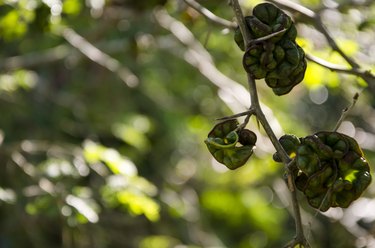
The fruit that emerges from the conical blossoms is an inch to 2 inches long. It is brittle and spiky. Each seedpod that forms contains about a half-dozen seeds. The fruit ripens in the Southern Hemisphere between February and April.
Seeds of the Mimosa hostilis
The seeds that lie in the spherical fruit of the wild plant are light-brown, flat ovals that are barely an 1/8 inch in length. The seeds can be carried by the wind up to nearly 30 feet from the mother tree. The pods are warmed by the sun and gently open up to reveal the little treasures inside.
Bark of the Mimosa hostilis
The dark-brown to grayish bark of Mimosa hostilis has many uses. The reddish interior of the dense root bark is revealed when it is split lengthwise. It can give the tinctures and teas made from its bark a maroon hue.
- Boiled into a tea, it is imbibed for inflammation issues, better blood circulation, and as a calming brew.
- The tea that is brewed from the leaves of the Mimosa hostilis is thought to curb cravings for nicotine.
- Ground into a paste, mimosa bark has been known to reduce scarring from burns when applied directly to the skin.
- It stimulates collagen production and cuts down on inflammation from bug bites, cuts and burns when ground down and applied to the skin.
- The tea made from the stems and leaves is often used as a natural way to reduce tooth pain.
- A syrup made from the bark can treat sore throats, coughs, and bronchial ailments.
- It is rich in tannins, alkaloids, lipids, saponins, phytosterols, glucosides, xylose, and rhamnose, among other beneficial properties.
- The dried bark can be used as a hallucinogenic in high concentrations.
Benefits to Other Plants
The tree continuously drops its little leaflets to the ground. This creates a thick carpet that turns into mulch and eventually into nutrient-rich humus. The Mimosa hostilis plant adjusts the nitrogen levels in the soil and conditions it to make it a fertile area for other plant species to thrive.
Background on Mimosa hostilis
This fast-growing tree is native to South America and is perennial only in very warm climates. Mimosa hostilis will get in most of its impressive growth within the first five years from the time it pokes its first bright-green stem out from the soil.
How to Grow Mimosa hostilis
Plant Profile: Mimosa hostilis
- Common Name: A variety of common names, including tepezcohuite and sensitive plant.
- Botanical Name: Mimosa hostilis (syn. Mimosa tenuiflora).
- When to Plant: In spring after all risk of frost has passed.
- USDA Zones: 9-11.
- Sun Exposure: Part shade to full, filtered sun.
- Soil Type: Well-drained soil.
- Signs of a Problem: Yellowing, falling leaves and oozing bark.
- Signs of a Healthy Plant: Green leaves and healthy-looking bark.
Preparing Mimosa hostilis Seeds
Generally, the hard seeds need hot water to give them a good head start when forcing them to sprout at home. This is the most common way to force a Mimosa hostilis seed to successfully start its sprout cycle:
- Place a handful of seeds into a large pot with a lid.
- Pour boiling water over the seeds until they are completely covered by at least an inch of very hot water.
- Cover the top of the lid with cling wrap.
- Place the lid on the pot.
- Place the pot in a closet, pantry, or another dark area for 24 hours.
- Fill a 12-inch pot with vermiculite that has been soaked in water and allowed to drain properly. If you place the vermiculite in the pot and drench it at the same time that you are soaking the seeds, then it should be ready with the right level of moisture by the following day.
- Gently push each swollen seed about an inch into the vermiculite. Space them about 2 inches apart.
- Place the pot in a sunny spot and keep the soil moist but not drenched.
Shortcut for Preparing Mimosa hostilis Seeds
A seed will sprout within a few weeks under the right conditions.
Soak the seeds in boiled water for 30 minutes to an hour. The warm water will penetrate the hard outer shell of the oval seed. Once the seeds begin to swell in size, wrap them in a paper towel and put them in a plastic bag with a seal. Store the packet of seeds in a shady indoor area, such as a closet, pantry, or drawer.
Monitor the seeds over the next few days and make sure that the paper towel stays damp but is not dripping with moisture. The closed bag will create an ideal humid environment for the little seeds to begin their journey. If the seeds haven't sprouted in a week, then you will need to try again with a new set of seeds.
Planting Sprouts of the Mimosa hostilis
Once the seeds break open to reveal the green sprouts, they are ready to be transplanted to small pots. Gather 2-inch pots and fill them with vermiculite about halfway up the pot. Each seed needs to be buried at least an inch in the vermiculite.
Keep the soil moist but not saturated. Place the pots in a spot where they will receive a good amount of sunshine. Within two to six weeks, you should have rows of seedlings ready for repotting.
Seedling Repotting for Growth
The seedlings should be a few inches tall before this next step. While they aren't ready to be fully exposed in a garden just yet, the seedlings have definitely outgrown the tiny pots in which they started.
If you live in the correct hardiness zones of 9 through 11, you may try to grow them outdoors once the threat of frost has passed. You should be aware that the seedlings are still very tender.
To continue their healthy growth cycle, the seedlings need at least a 12-inch pot. You can place two to three seedlings in a deep, wide pot that is at least 36 inches wide and 24 inches deep. The roots should be covered by a few inches of soil, but be careful not to bury the tender stems.
How to Grow Mimosa hostilis Seedlings in Pots
Make sure the pots you choose have good drainage holes because this is where the Mimosa hostilis has its weakness. It does not like to have its roots lounging in water. The pot should be big enough for the roots to find water but not sit in pools of water at the bottom of the plant container.
Growing the seedlings in good pots rather than outdoors tends to make them much stronger before they are on their own in the garden and at the mercy of the elements.
While the seedling is growing in the pot, look for winding roots or stress from overwatering. Try not to keep it in the pot for more than a year. It can easily handle three to six months in the right type of pot with excellent drainage and a sunny spot.
How to Move Mimosa hostilis Seedlings Outdoors
Once the seedlings have doubled in height and have a strong trunk, about a year after planting, they are ready to face the world outside.
Wait until spring to give the tree a good chance to grow. Look for a place to plant it where it will have the best chance to grow to its full potential. Within the first few years, the Mimosa hostilis can double in height from its first planting in the ground.
The tree doesn't require much fuss, and fertilizer isn't recommended during the first year. Some gardeners swear by liquid fish fertilizer applied to the soil in a 1-10 ratio with water. Use 1 1/2 ounces of the fertilizer per 100 square feet.
Issues With Planting Mimosa hostilis Outdoors
Mimosa hostilis has a shallow and aggressive root system. It will wind its way under brick paths and concrete sidewalks, lifting the solid structure from its soil moorings. The branches tend to droop and sag, creating a natural barrier when planted next to walking paths.
Mimosa hostilis Common Pests
Webworms and mites will make quick work of an otherwise healthy tree. Look for these pests early on before they attack the tender stem and get under the bark of the tree.
Cottony cushion scale insects also enjoy the mimosa's branches and leaves. They look like soft, billowy piles of fluff on the leaves and stems of the mimosa. These can be particularly difficult to remove.
Mimosa hostilis Common Diseases
A common problem that mimosas have is fusarium wilt. It can quickly kill the flowering tree when it is young and just starting to gain a foothold in its growth.
The first sign of fusarium wilt is yellowing leaves. They will then wilt at a rapid pace and fall off the tree. The trunk may get a gummy liquid or white frothy foam that oozes from cracks or branches. Once the fungus has taken hold, it will show up in large spots of orange or pink on the bark as the tree withers away.