In theory, suction cups offer a great way to adhere objects to other objects when glue, fasteners and magnets aren't an option. In reality, many suction cups fail when it comes to keeping one thing attached to another. A little pre-suction cleaning and a few drops of water help ensure suction-cup success.
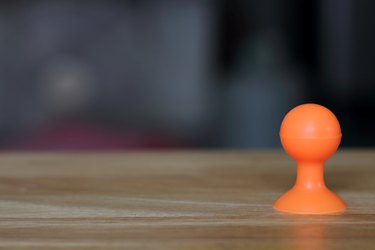
Choose a Suitable Surface
Even the best suction cups won't adhere to some surfaces because it's impossible to get a good bond that's free from air pockets. Choose a surface that's clean, flat and completely smooth, such as a window or mirror, the front of a dishwasher or the side of a metal file cabinet. Slight curves and textured finishes, such as those commonly found on car dashboards, make it difficult to achieve lasting suction power. Porous surfaces such as metal or plastic gratings also don't work well.
Video of the Day
Video of the Day
Clean Both Surfaces
In many cases, suction-cup failure occurs when either the suction cup or the surface it's grabbing isn't as clean as it could be. Wipe the inside of the suction cup with a clean lint-free cloth, then do the same with the targeted surface. A light dusting may be all they need.
Wipe the surface down with white vinegar or rubbing alcohol, then do the same with the inside of the suction cup. This removes any greasy film that may prevent good suction. Only apply the vinegar or alcohol to a surface that won't be damaged by it, such as a window pane or a shower stall. If working with a painted surface such as a wall, test the alcohol or vinegar in an inconspicuous area first.
The Water Method
Sometimes, a little water adds a lot of suction power. Rinse the entire suction cup under warm, almost hot, tap water. This helps soften the cup, which makes it more pliable. Shake off excess water, then press the cup onto the desired surface. Water droplets on the inside of the cup help prevent air pockets that could cause suction-cup failure.
Oil-Based Assistance
A small amount of cooking oil or even petroleum jelly around the lip of the suction cup also helps the cup adhere to a surface. Apply the chosen substance to the perimeter of the cup on the side of the lip that sticks to another surface. Use as little as possible, otherwise the cup may lose its suction power.
Tips for Success
Press down on the suction cup from time to time to remove air pockets. Temperature and humidity changes can affect the cup's pliability, which could also cause air pockets to develop or for the cup to fall off the surface. For best results, apply the suction cup in temperatures above 40 degrees Fahrenheit, otherwise, it may be too stiff to adhere properly.