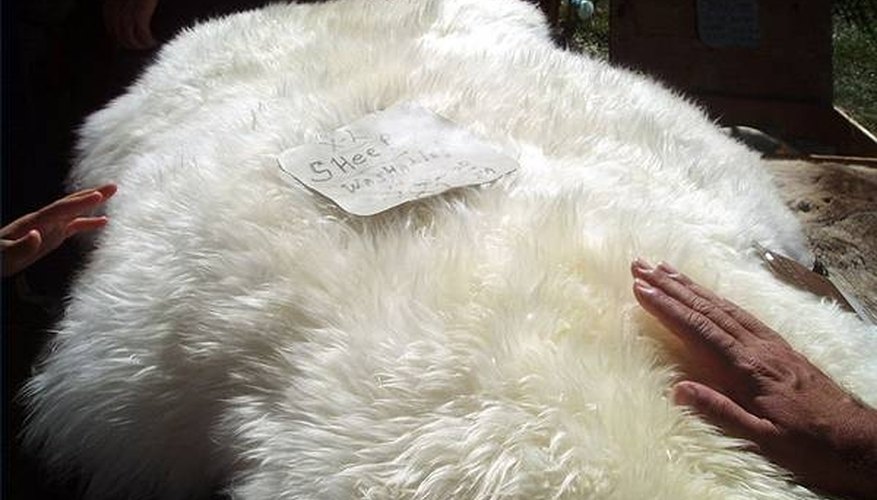


Tanning sheepskin is a relatively easy process. With the right materials and a little patience, tanning can become a rewarding hobby or a lucrative vocation. This article will provide all the information you need to take a fresh sheepskin to a tanned finished product that can be used as a rug or garment. Tanned and manufactured sheepskin can then be personally enjoyed or sold for a considerable profit. However the greatest reward is often the sense of accomplishment that comes from transforming a by-product into a work of art. In fact, many find that this one time project often turns into a lifelong occupation.
Hunting knife
Salt
Oxalic acid
Water
Rubber gloves
Cloth gloves
2 large containers for soaking pelts
Sodium carbonate
Low-phosphate detergent or Woolite
Saddle soap
Leather conditioner or Neat's-Foot Oil
When stretching the sheepskin, be sure to pull on the skin and not the fleece. While the skin is wet the fleece can be easily pulled out. If the weather will not permit drying the sheepskin out of doors, it can be dried in a drier on the lowest setting. However, it must be constantly supervised. A hair dryer can also be used.
Oxalic acid is non-toxic, but will turn your hands to leather. When working with the oxalic acid solution, put on a pair of rubber gloves covered by a pair of cloth gloves. Avoid contact with the mouth and eyes, and keep children and animals away from the solution. Take care when disposing of the oxalic solution and avoid contaminating wells or growing areas.
Obtain the sheepskins. The best place to get fresh sheepskin is your area slaughterhouse. Simply call ahead and ask them to set the desired number of sheepskins aside for you. Be sure that they are not stacked, but spread out flesh-side up. Be sure to pick the sheepskins up as soon as possible (definitely before they have had a chance to dry out).
Trim the sheepskin. Since your sheepskin is fresh from the butcher's you will need to trim away the tissue that remains attached to the skin before the hide is allowed to dry. Sheepskin is relatively easy to tear with rough blade work. Therefore, the best method is to start a section of muscle or fat with your hunting knife and then rip it away with your hands (this will require a bit of muscle power). The thin muscular layer closest to the skin will be the most difficult to remove, but any especially stubborn bits can be left until step four to remove. After about an hour's work, you should be left with fine sheepskin that already resembles leather.
Cure the sheepskin. If the sheepskin is fresh, be sure that all of the body heat has left the hide before beginning this step. Then cover the sheepskin completely with a half-inch layer of salt. Make sure that there are no folds of skin that may escape exposure. Leave the sheepskin to cure for four to six days.
Tan the sheepskin. Fill a canning crock, wooden barrel or other container able to withstand oxalic acid (oxalic acid is a compound used to clean copper so avoid metal or plastic containers) with a solution of 1 pint of salt and 2 ounces of oxalic acid per gallon. Immerse the sheepskin into the container and leave it to soak for 72 hours. During this time, you can periodically pull out the sheepskin and remove any remaining tissue from the skin.
Fill a second container with several gallons of lukewarm water and two cups of sodium carbonate washing soda. Remove the sheepskin from the oxalic acid bath and rinse it thoroughly. Then, immerse the sheepskin in the sodium carbonate water and let it soak for an hour. Then hand wash the sheepskin in the sodium carbonate water and rinse it. Hand wash and rinse the sheepskin again.
Empty the container you just used and re-fill it with several gallons of water and the appropriate amount (as per the product's instructions) of low-phosphate detergent or Woolite. Hand wash the sheepskin thoroughly then rinse. Repeat three times. On the final rinse, be sure that the water is clear (indicating that all the soap is removed) before moving on to the next step.
Wring as much water as possible from the sheepskin. Then hang it, wool side up on a porch railing or similar surface.
Hand-stretch the sheepskin periodically during the several days that it will take for it to dry. Pulling and stretching the leather fibers will keep the hide from stiffening. At this stage in the process, the sheepskin should have a yellow hue. When sufficiently stretched, the sheepskin will lighten. The finished product should be off-white, soft and supple.
Apply saddle soap and then leather conditioner or neat's-foot oil to the skin side of the pelt while it is still slightly damp.
Pull apart the cords and free any bits of matter with a stiff hair brush.
Items you will need
Tips
Warnings
References
Tips
- When stretching the sheepskin, be sure to pull on the skin and not the fleece. While the skin is wet the fleece can be easily pulled out.
- If the weather will not permit drying the sheepskin out of doors, it can be dried in a drier on the lowest setting. However, it must be constantly supervised. A hair dryer can also be used.
Warnings
- Oxalic acid is non-toxic, but will turn your hands to leather. When working with the oxalic acid solution, put on a pair of rubber gloves covered by a pair of cloth gloves.
- Avoid contact with the mouth and eyes, and keep children and animals away from the solution.
- Take care when disposing of the oxalic solution and avoid contaminating wells or growing areas.
Writer Bio
Based in Houston, Texas, Meg Butler is a professional farmer, house flipper and landscaper. When not busy learning about homes and appliances she's sharing that knowledge. Butler began blogging, editing and writing in 2000. Her work has appered in the "Houston Press" and several other publications. She has an A.A. in journalism and a B.A. in history from New York University.