

Problems With a Walk-In Shower

Many modern showers are combined with a tub to give the user the option to either rinse off quickly or take a long luxurious bath. Other bathrooms are only equipped with walk-in showers for a quick, wash up. Though a walk-in shower is convenient and often less expensive to install, it has a few disadvantages.
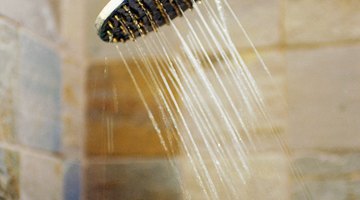
Purpose of a Walk In Shower
The bottom of a walk-in shower is even -- or close to even -- with the floor of the bathroom. It is called a walk-in because you barely have to lift your feet to step in for your shower — just open the door and walk in. A walk-in shower is a convenience for the elderly or people with disabilities who find it difficult to step into a tub.
Water Leakage
One major problem with a walk-in shower is that it is more prone to leakage than a tub. A tub helps guard the bathroom floor against moisture build up due to sprinkles of water from the shower head. With a walk-in shower, the water can build up on the shower floor and eventually overflow. The water can also drip down the shower door and onto the floor if there’s a leak. Over time, the water can encourage the growth of mildew and even mold.
No Tub No Baths
The obvious disadvantage of a walk-in shower is that you do not have a tub to soak in. Whenever you shower, you have to stand up. So, when you decide to install this type of shower you have to either install a separate tub at an additional expense or not take any baths in your bathroom.
Privacy Issues
A walk-in shower provides less privacy than a tub shower. With a tub shower, you can hang multiple curtains to enjoy more privacy. Most walk-in showers have sliding doors with privacy doors, but they still clearly show a silhouette of the person inside. The door exposing the user’s silhouette goes from ceiling to the floor. To get more privacy you would have to place tape or opaque contact paper on the outside of the shower doors, which is not always ideal for attractive bathroom decor.
References
Writer Bio
Louise Balle has been writing Web articles since 2004, covering everything from business promotion to topics on beauty. Her work can be found on various websites. She has a small-business background and experience as a layout and graphics designer for Web and book projects.
Photo Credits
- Thinkstock Images/Comstock/Getty Images
- Thinkstock Images/Comstock/Getty Images
More Articles

