

How to Extract Mint Oil From Mint Leaves

Oil extracted from mint leaves has many uses. In addition to acting as a flavoring agent for foods, mint oils are also used in lotions, medicines, and candy. If you grow your own mint at home, you can use the herb to create fresh mint oil in a matter of weeks with the help of some high-proof alcohol.
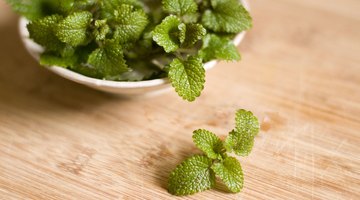
This age-old method of herbal extraction is easy to execute.
-
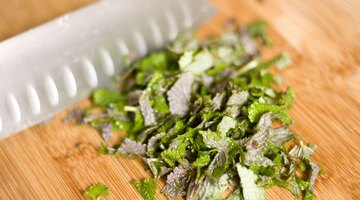
Mince fresh mint leaves with a knife. The finer the leaves are chopped, the more surface area will be available for oil extraction.
-
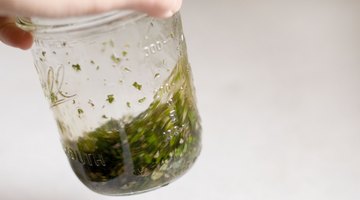
Place the chopped leaves into a glass mason jar. Fill the jar with three parts of a high-proof alcohol such as grain alcohol or vodka for every one part minced leaves.The alcohol will act as an agent to pull the oils out of the mint.
-
Cap the jar and shake well. Leave the container of herbs to sit in a dark place for the next four to six weeks. Shake the jar to stir up its contents every few days.
-
After the mint has soaked for four to six weeks, separate the plant material from the liquid by pouring the mixture into a clean bowl through a sieve or strainer. Wrap the soaked leaves in a piece of fine cheesecloth and squeeze out any captured extract.
-
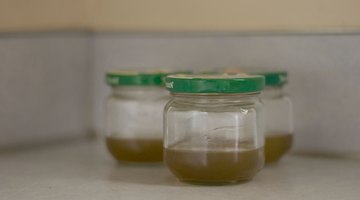
Store the mint extract in small glass bottles or jars in a cool dark place.


Things You Will Need
- Mason jar
- Mint leaves
- Grain alcohol or high-proof vodka
- Sieve, strainer, or cheesecloth
- Knife
- Funnel
Tip
Before sealing the bottles or jars, you may wish to leave the strained extract open to allow some of the alcohol in the mixture to evaporate.
Warning
Only use grain alcohol or a similar drinking alcohol if you plan on using your extract in food preparation. Rubbing alcohols should only be used when preparing an extract that will not be ingested.
References
Writer Bio
Hailed as one of his native Baltimore's emerging writers in Urbanite Magazine, for the past five years Kevin Krause has been writing everything from advertising copy to prose and poetry. A recent grad holding a degree in English and creative writing from University of Maryland, Baltimore County, his most recent work can be found in The Urbanite.
Photo Credits
- Shizuka Blaskowsky/Demand Media
- Shizuka Blaskowsky/Demand Media
- Shizuka Blaskowsky/Demand Media
- Shizuka Blaskowsky/Demand Media
- Shizuka Blaskowsky/Demand Media
- Shizuka Blaskowsky/Demand Media
- Shizuka Blaskowsky/Demand Media
More Articles

