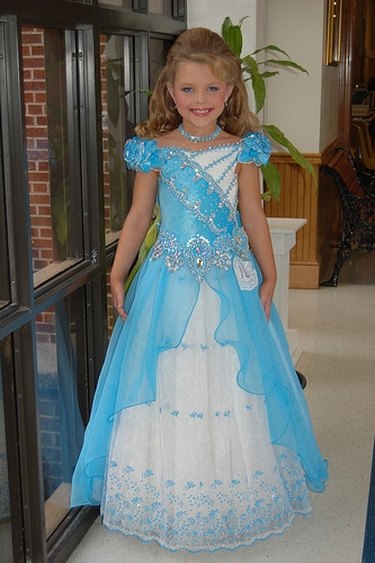
How to Design a Girl's National Pageant Dress

How to Design a Girl's National Pageant Dress thumbnail
Beauty Pageant Crown

In today's world of pageantry, everyone wants a new and one-of-a-kind dress that will stand out and wow the judges. Designing a dress can be overwhelming and difficult at first, but it often becomes easier the more practice you have. Many factors are at play when designing a dress. Keep in mind what is in style in pageantry, the color and the cost, which can be a lot to keep track of.

Things You'll Need

  • Scissors (for swatching)
  • Pencil
  • Paper
  • Colored pencils
  • Computer (optional)
  • Swatch cards
Show More

Instructions

    • 1

      Investigate the pageant scene before you begin. Ask yourself what type of dress you're looking to create. There are many styles represented in pageantry, so it is important to choose a style you like and think will win points.

    • 2

      Decide which event you're creating the gown for. If you're doing talent, have the dress complement her chosen talent---like cowgirl for a rodeo song or a simple, but embellished dress for playing the violin.

    • 3

      Think about what you or your child will be doing in this dress. It is important not to restrict necessary movement, but not be too revealing or low-cut. Younger girls tend to wear short and fluffy dresses with lots of tulle, while older girls often wear a more traditional ballgown. The ballgown can be low-cut, but not obscenely so. The cut of the dress should be cut to the middle of the breasts at the lowest. Generally, it is best to avoid showing too much skin.

    • 4

      Think about the color you'd like to use. What color looks best on you or your child? Does this color fit with her talent? In the world of pageantry, younger girls tend to have dresses with more color on them and wear colors like deep blue, deep purple, orange, bright green, bright yellow and bright pink. The older girl's gowns tend to be more subdued and muted. Whites, soft pinks, purples and yellows are all good colors to start off with.

    • 5

      Decide if you'll be making the pattern and dress yourself or will be working with someone to do it for you. If someone is making it for you, it is of utmost importance that you stay in communication with her about your design and materials. A good company will be flexible, but like all humans, has its limitations.

    • 6

      Begin to think about embellishments for the dress. Younger girls' dresses tend to have much more embellishment while older girls' dresses typically will only have a small pattern of embellishment or none at all. The younger girls may have decorations on their formal wear or talent outfit. The younger girl's dress should be flashy, but not so flashy that it distracts from the talent or her natural beauty. Embellishment for a younger girl is typically done on the tulle and her bodice. Sequins, beads and crystals are used the most. An older girl's dress doesn't need much embellishment, but if you do decide to do it, keep it simple. The older girl's embellishment is usually on her straps (if there are any), on the bodice or the skirt itself, but it usually not distracting.

    • 7

      Sketch your dress once you've decided on what style you'll use. Do several sketches so that you find one you're sure of. Sketch the front and back (and the sides, if you want something special on them). You can also include accessories in your draft so you'll know what to make or be on the lookout for.

    • 8

      Go to a fabric store and swatch your dress. Find the right materials and trimmings you've envisioned for your creation. Write down the price per yard, where you swatched it and the call number. Many stores have cards you can fill out for your sample fabric so you'll know where to come back to make your final purchase.

    • 9

      Decide on the exact materials you will be using for embellishment. Trimming stores and trimming sections of fabric stores have different rules about swatching, so it is important to ask if you can take a sample. If you can't, just write down the product number of what you want.

    • 10

      Show the swatches to the person who is making the dress or start the pattern on your own.

Tips & Warnings

  • Pageant dresses can run into the thousands of dollars with materials and labor. Make sure you set a budget so you're not overwhelmed with costs later. An alternative to freehand sketching your design is doing it on the computer. You can find patterns online and use photo editing software to customize it. When swatching for the first time, ask for help from a fabric store employee. There is nothing worse than someone coming and and destroying their fabric because they were unable to swatch correctly. On an older girl's dress, never make cut-outs in the bodice. Stick to classic formal styles like strapless or halter-top gowns that are minimally low-cut.

  • Always let someone at the fabric store know you are swatching. Sometimes it is free and sometimes they will charge you 25 cents (or less) per swatch. Know the rules before you go.

Related Searches:

References

  • Photo Credit Image by Makani5

Comments

You May Also Like

Related Ads

Featured