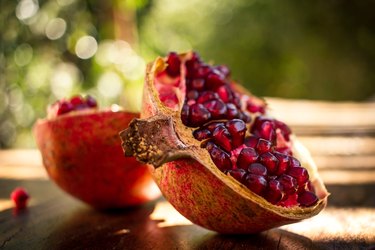
The glistening, edible, ruby-red seeds of the pomegranate (Punica granatum, USDA zones 8-10) are delicious and healthy, and pomegranate shrubs are really easy to grow from seedlings if you use the correct mix of soil, sun and fertilizer. Actually, the pomegranate seed is so forgiving, it will allow for an oops here and there from the gardener when it comes to added soil nutrients or water levels.
It's important to note that seed-started pomegranate plants may bear fruits that are quite unlike the fruit from which you harvested the seed. A more reliable propagation method is to start pomegranate shrubs from cuttings, which produce cloned plants that have the same characteristics as the mother plant, including fruit quality.
Video of the Day
Video of the Day
Begin at the Break
Once you break open the papery skin of a mature pomegranate fruit, the seeds are ready to sow. Scoop out the seeds from the fruit and rinse them off in cold water to remove the finer membranes of the inner fruit shell. Rub them with a paper towel to remove the colored pulp. If you use a towel, be prepared for serious stains as pomegranate seeds are known for their staining properties. Let the seeds dry out on the counter for a few days.
Sowing Pomegranate Seeds
Start in mid-winter when the fruit is ripe. It will take the seeds a few months to sprout before the spring planting season. Push the seeds about a quarter-inch deep into the soil that fills a container. The soil should be a seed-starting mix or a lightweight type of soil that drains well. Keep the soil moist and in a sunny spot next to a window that gets a good amount of daily sunshine. Cover the pot or pots that the seeds are in with a plastic bag or layer of plastic wrap. Be gentle and loose with the plastic wrap so that air can freely circulate around and over the pots.
A pomegranate seedling will look spindly, but they'll produce plants that are winter-hardy in zones or 8 through 10. They don't like a lot of water, so only water when the top layer of the soil seems dry. Wait until after the last expected freeze passes in your area before transferring the tiny sprouts to the outdoors. You may want to cover them loosely with plastic or a gardening net through the first week to help them grow strong and steady in the outdoor weather.
Pomegranate Plant Care
It may take up to four years to get your seedling to the stage where it will produce fruit. You can also take a cutting from a grown pomegranate tree if you want quicker results. Take a pencil-sized cutting from a mature shrub in February or March when the plant is dormant for best results. Add a little growth hormone to a wet paper towel and cover the bottom of the branch as you wait for it to sprout roots. Plant your seedlings or cuttings in soil with good drainage and in a spot that receives full sun.