How to Use Lag Bolts

Lag bolts are used to connect large and heavy timbers, such as beams to posts. They are used in railway trestles, bridges and other structures in which timbers are used. Lag bolts can also be used in masonry, in which case they are used with an insert, called a lag. The thread of the lag bolt meshes with the metal lag, resulting in a secure fastener. Does this Spark an idea?

Things You'll Need

  • Marker
  • Ratchet
Show More

Instructions

    • 1

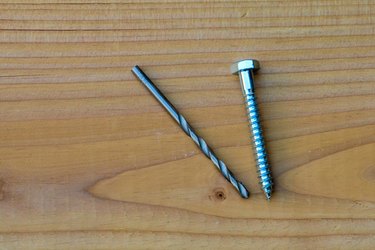
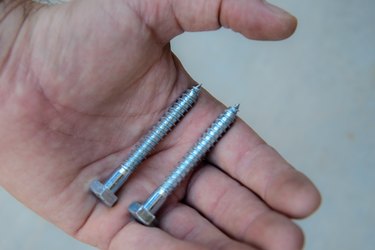
      Determine the type of lag bolt you need. A zinc-plated lag bolt provides the minimum amount of protection against rust, while stainless steel is highly resistant to corrosion from moisture and saltwater. Silicone-bronze lag bolts are typically used for fastening wood timbers together and are resistant to corrosion. Galvanized lag bolts are highly recommended for use in coastal regions.

    • 2

      Determine the size of lag bolt you need. The length of the lag bolt must be able to penetrate the first timber and fasten the second timber to it. The lag bolt should penetrate approximately 1/3 to 1/2 of the second timber. The diameter of the lag bolt should be proportionate to the size of the timbers being fastened. For example, if fastening 2-by-4 lengths of lumber, use a 1/2-inch diameter lag bolt.

    • 3

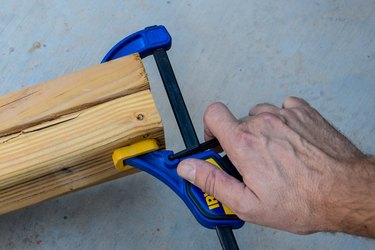
      Line up the timbers to be fastened. Before marking and fastening the timbers together, line them up, using a clamp if necessary. Mark the entry point of the first timber for the lag bolt. If securing timber to masonry, position the timber against the masonry and mark the point of entry.

    • 4

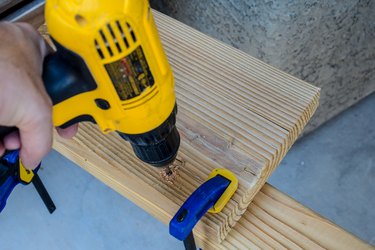
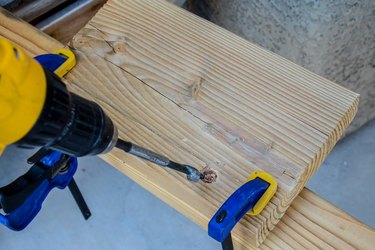
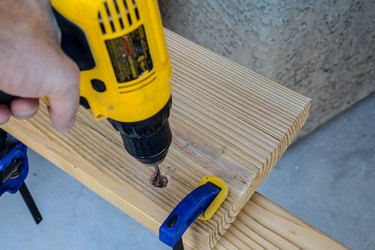
      Drill a pilot hole into the timber on the mark. Make the pilot hole 3/4 the size of the diameter of the lag bolt. For example, for a 1/2-inch lag bolt, the pilot hole should be 3/8 inch in diameter. The depth of the pilot hole should be 1/4 to 1/2 inch short of the length of the shank of the lag bolt. If the shank is 5 inches in length, drill 4 1/2 to 4 3/4 inches in depth.

    • 5

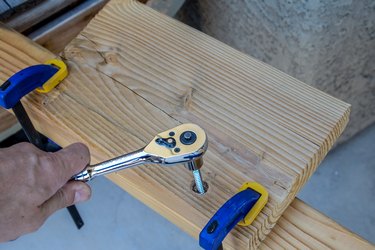
      Insert the lag bolt into the pilot hole. If securing the timber to masonry, insert the lag into the pilot hole before inserting the lag bolt. Use a ratchet to tighten the lag bolt and secure the timbers together. Fitting the ratchet onto the head of the lag bolt, turn in a clockwise direction until the bottom of the head of the lag bolt touches the wood. If you do not have a ratchet, you can use an open-end wrench or a box wrench.

Related Searches:

References

Resources

Comments

You May Also Like

  • How to Install a Lag Bolt

    For sheer holding power and ease of installation, it's tough to beat lag bolts. Sometimes referred to as lag screws, these fasteners...

  • Lag Bolt Installation

    A lag bolt is a large, pointed tip bolt with coarse, wood screw type threads. They are typically fitted with a hex...

  • How to Use Lag Bolts for Tree Climbing

    If you've ever noticed the steel L-shaped metal shafts that are positioned on utility poles, you get a sense of what a...

  • How to Install Lag Bolts

    Standard wood screws do not have the tensile strength to make a structural wood connection. Lag bolts, with large coarse threads and...

  • Wood Screw Vs. Lag Bolt

    Wood screws and lag bolts have a lot in common. In fact, a lag bolt is often, and more accurately, called a...

  • How to Tighten Lag Bolts

    Easy to use, lag bolts are large screws that fasten large pieces of wood, including beams and playground equipment. Lag bolts come...

  • How to Install a Lag Screw

    A lag screw or lag bolt is used to provide a structural connection between two or more pieces of lumber. A lag...

  • How to Use Bolt Cutters

    Sometimes, the simplest tools are the best. Bolt cutters are a great way to cut chains, locks, fences, and hinges using simple...

  • How to Calculate the Hole Size for Screws

    Screws go in more easily and hold more tightly if you drill the right hole size. Wood screws may need three different-sized...

Related Ads

Featured