How to Glue Rubber

How to Glue Rubber thumbnail
Gluing rubber is a sticky process

Gluing rubber is difficult since rubber stretches and is flexible. The problem that most people find when gluing rubber is that the glue they use is not flexible, and the rubber will not stay attached because they are using the wrong glue or the wrong technique. Most people do not know that gluing rubber is simple to do and does not require exotic materials.

Things You'll Need

  • Rubber (pieces to glue)
  • Dish soap
  • Rag
  • Paper towel
  • Sand paper (600 Grit)
  • Rubber cement (tube)
  • Cardboard scrap (paintbrush size)
Show More

Instructions

    • 1
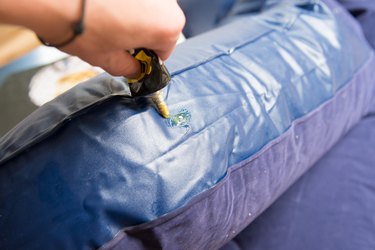
      Silicone glue works as an adhesive when grubber tubing.
      Silicone glue works as an adhesive when grubber tubing.

      Get the piece(s) of rubber that you are going to glue. Put the rubber under the same amount of stress and the same condition that it will be under when it is glued. This means that you may need to stretch the rubber so that excessive stretching does not interfere with the adhesive. For example, if you are gluing an inner tube, you would want to inflate it at this point.

    • 2

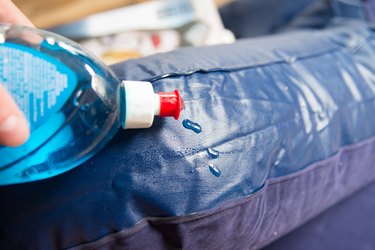
      Wet the surface of the rubber where you intend to glue the rubber. Apply dish soap to the wet rubber surface. With a rag, scrub the surface of the rubber to a lather. Rinse off the soap with a generous amount of water.

    • 3

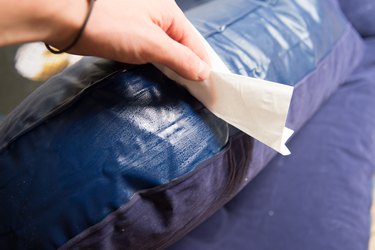
      Dry the surface of the rubber. Blot the area with a paper towel until there is no sign of wetness. Make sure that the surface of the area that you wish to glue is completely dry before applying the adhesive. Gluing rubber to a wet surface will interfere with the adhesive setting properly.

    • 4

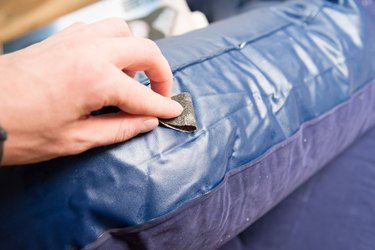
      Sand the surface of the area that you will glue with the sand paper. Make the surface rough so that the glue has a nice surface to which it can adhere. Do not make an indentation in the rubber; merely scuff the surface.

    • 5

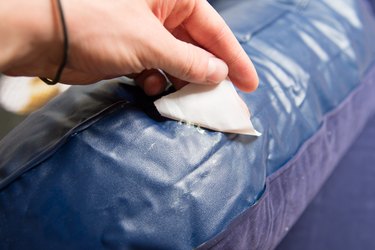
      Apply a thin layer of rubber cement to the surface(s) that you wish to glue. Scrape away the excess with the scrap of cardboard. Press the surface(s) into position. Allow the rubber cement to cure according to the instructions on the tube. Force out air bubbles to the edge of the patch by pressing them on one edge.

Tips & Warnings

  • This method can also be used to patch holes in rubber if you glue a patch over a puncture or hole. This works best if both pieces of rubber have the same amount of stretchiness. People use this method to patch bicycle inner tubes. Rubber cement can also glue rubber to non-rubber objects if the adhesive will bond.

  • Wear goggles and follow all instructions that come with the rubber cement.

  • Only attempt this procedure in a well ventilated location.

  • The rubber cement may not be appropriate for all applications, and the rubber may have to be melted together or replaced. Melting rubber is a dangerous activity and should only be attempted be a skilled expert.

Related Searches:

Resources

  • Photo Credit Photo by Jupiterimages/Photos.com/Getty Images

Comments

You May Also Like

  • How to Glue Rubber to Metal

    Household projects often involve affixing one item to another item securely with glue. When the bond must be tight and secure, use...

  • How to Remove Rubber Contact Glue

    You may use a rubber contact glue, such as rubber cement, if you do a good deal of arts and crafts. Rubber...

  • Can You Glue Rubber to Rubber Cement?

    The name "rubber cement" can be misleading, since rubber is not the best surface to use the cement on. Rubber cement is...

  • How to Glue Rubber to Belts

    Gluing rubber to belts must be accomplished by using an adhesive intended for gluing rubber to whatever material the belt is made...

  • How to Get Adhesive Off of Rubber

    Getting adhesive off of rubber (specifically, the sticky residue that adhesive strips can leave behind when removed) is not all that difficult....

  • How to Glue Rubber to Aluminum

    An epoxy glue will be able to permanently bond rubber to aluminum if done correctly. This may be helpful when performing renovations...

  • How to Glue Rubber to Steel

    Many types of crafts and projects call for gluing steel and rubber together. Because there are many rubber variations, not all glues...

  • How to Glue Rubber to Wood

    If you have a project that requires you to glue rubber to wood, such as in stamp-making, it can seem a little...

  • How to Bond Butyl Rubber

    Butyl rubber is one of the most durable sealing compounds on the market. This particular type of caulk is intended for applications...

  • What Type of Glue to Use for Foam Rubber

    Because it is porous and flexible, foam rubber can be particularly tricky to glue. However, the flexibility and versatility of this material...

  • How to Remove Glue From Rubber

    Rubber is used for a wide variety of tasks and objects. Rubber is often glued to another material as a protective barrier...

  • How to Remove Rubber-Based Glue From Stone

    If a rubber-based glue, such as contact cement, is spilled on stone or stone tiles, clean it up right away. Allowing the...

  • How to Install a Roof Rubber Membrane

    Flat roofing methods are susceptible to leaks caused by inflexibility, weathering, and failing joints. Ethylene propylene diene Monomer (EPDM) rubber roofing is...

  • Acoustic Foam & Glueing

    Installing acoustic foam in a car will improve your stereo sound by dampening noise from the road and silencing vibrations. It is...

  • How to Glue Foam Rubber Together Side-by-Side to Make a Cushion

    Foam rubber consists of thick blocks cut into various thicknesses and sizes. It is a common material for cushions for furniture and...

  • Butyl Rubber Vs. Natural Rubber

    Natural rubber (also called India rubber) was originally tapped from the plant secretion latex. Its chemical composition gives it an elasticity, which...

  • How to Get Rubber Cement Off Skin

    Rubber cement is an adhesive with countless uses. However, when working with rubber cement, you might accidentally get some on your skin,...

  • How to Install Roofing Adhesive

    Comments. You May Also Like. How to Apply a Rubber Roof. Flat roofs are a hallmark of architectural design in the American...

  • How to Glue Rubber to Leather

    When it comes to gluing things together, the types of material to bond determine the type of adhesive to use. Porous materials...

Related Ads

Featured